

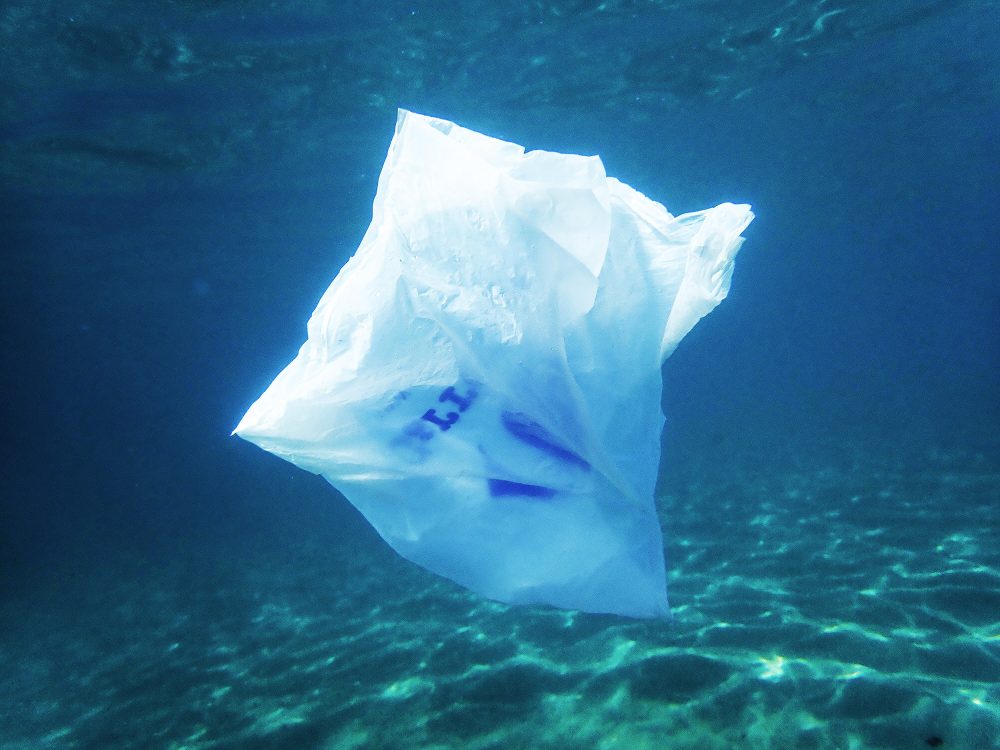
Plastic pollution can feel distant – until it shows up in places it shouldn’t, like human blood. Most plastics don’t truly go away. Instead, they break into microplastics that drift through oceans, move up the food chain, and linger for decades.
Now, researchers in Japan say they may have a better option. They have created a plant-based plastic that dissolves completely in seawater within hours, leaving no microplastic fragments behind.
The material is made from cellulose, the most abundant natural polymer on Earth, and is designed for everyday packaging. It remains strong during use but breaks apart safely if it escapes into the ocean.
Led by Dr. Takuzo Aida at the RIKEN Center for Emergent Matter Science (CEMS), the work points to a new way of thinking about plastic – one that focuses on how materials actually behave once they leave our hands.
From plastic to particles
Sunlight and wave action can wear larger plastic items into smaller fragments, which then mix into sand and surface waters.
Fish and shellfish can swallow these particles, and people may later consume them without realizing what else came with dinner.
Tracking microplastics is difficult because laboratories rely on techniques such as pyrolysis – heating a sample until it breaks into simpler gases – as well as other analytical methods.
Building plastic from plants
The team began with carboxymethyl cellulose, a chemically modified form of cellulose that dissolves in water, thickens liquid mixtures, and is already produced at industrial scale.
Still, using plant-based feedstocks does not automatically guarantee clean breakdown, because some chemical bonds can resist microbes and harsh saltwater conditions.
To turn this cellulose derivative into plastic, CEMS researchers used ionic polymerization, a process in which charged chemical groups drive chain formation in plain water at room temperature.
A second polymer carrying positively charged guanidinium ions bound to acidic sites along the cellulose chains, allowing the components to latch together.
The result was a densely cross-linked network – a web of interconnected chains – that gives the clear film its strength and rigidity.
Salt and CMCSP
The material’s strength comes from salt bridges – temporary links between opposite electrical charges that hold the polymer network together.
When seawater seeps in, sodium and chloride ions crowd those links and weaken them, allowing the network to fall apart into water-soluble pieces.
To keep the plastic from breaking down too soon, the team added a thin barrier coating that slows the entry of water and salts during normal use.
Early versions of the film were clear and strong but also brittle, cracking easily because the stiff cellulose chains could not move past one another.
To fix that, researchers added choline chloride as a plasticizer – small molecules that let polymer chains bend instead of snap.
By adjusting how much of this salt they used, the team could tune the material from rigid sheets to softer, more stretchable films.
Strong enough for packaging
In the paper, the team describes CMCSP as mechanically strong and says they can tune its flexibility by adjusting the additive. With enough of that component, CMCSP stretched to 130 percent of its original length before breaking in tensile tests.
The researchers also produced a clear, easy-to-handle film just 0.003 inches (0.07 mm) thick.
To show the chemistry could move beyond small lab samples, the team processed CMCSP into a lightweight plastic bag for fruits and vegetables.
In a demonstration video, the bag successfully held tomatoes, a simple but practical test of real-world packaging.
Such thin bags are especially relevant, since they are prone to escaping trash bins and landfills and are a common source of plastic pollution in waterways.
No microplastics left behind
The key step is dissociation – breaking into separate molecules instead of smaller fragments – which blocks the usual path to microplastics.
Once in solution, the ingredients expose all surfaces, allowing natural chemical reactions to proceed faster than they do on solid materials.
The authors describe it as closed-loop recyclable, because the dissolved components can be collected and recombined to form the same material without new feedstocks.
Recycling dissolved plant-based plastic
The researchers recovered CMCSP by adding an electrolyte, a salt that splits into charged particles in water, which pulled the components back together.
That pathway matters because fast ocean breakdown is a safety net, not a plan for managing most plastic waste.
In practice, recycling would need collection systems that keep the dissolved mixture from spreading and losing value downstream.
What makes it different
Many compostable items break down well only in hot industrial facilities, so they linger when they end up in cold seawater.
Instead of relying on hydrolysis, bond breaking driven by water and enzymes, CMCSP falls apart when salts disrupt its charge links.
Because salts exist in soil too, land disposal could also trigger breakdown, although real soils vary widely in moisture.
Limits of biodegradable plastics
A field study that tracked polylactic acid textiles in seawater found little visible change after 428 days, illustrating why the term “biodegradable” can mislead consumers when labels fail to consider marine conditions.
Such results highlight the need for real-world trials that measure not only whether materials break down, but also whether their byproducts remain safe for marine life. At the same time, any new packaging material must meet practical demands.
Coatings and films still need to block gases and water vapor. Food producers must also be confident that chemicals will not migrate into food or alter taste.
Costs must remain competitive with paper, recycled plastic, and other plant-based polymers already competing for shelf space.
Future of CMCSP
Scaling CMCSP will require steady material supplies, predictable film performance, and disposal rules that reflect how people actually discard packaging.
“This study shows that our work is now at a more practical stage,” said Dr. Aida.
The water-based mixing process avoids many chemical solvents commonly used in plastics manufacturing, although factories would still require energy for processing and drying.
If successfully scaled, CMCSP could deliver packaging that remains durable in everyday use but breaks down more quickly once it enters seawater.
Even so, reducing plastic pollution will still depend on cutting single-use consumption, improving waste collection, and adopting policies that reward cleaner, more recyclable materials.
The study is published in the Journal of the American Chemical Society.
—–
Like what you read? Subscribe to our newsletter for engaging articles, exclusive content, and the latest updates.
Check us out on EarthSnap, a free app brought to you by Eric Ralls and Earth.com.
—–
First Appeared on
Source link






Leave feedback about this