

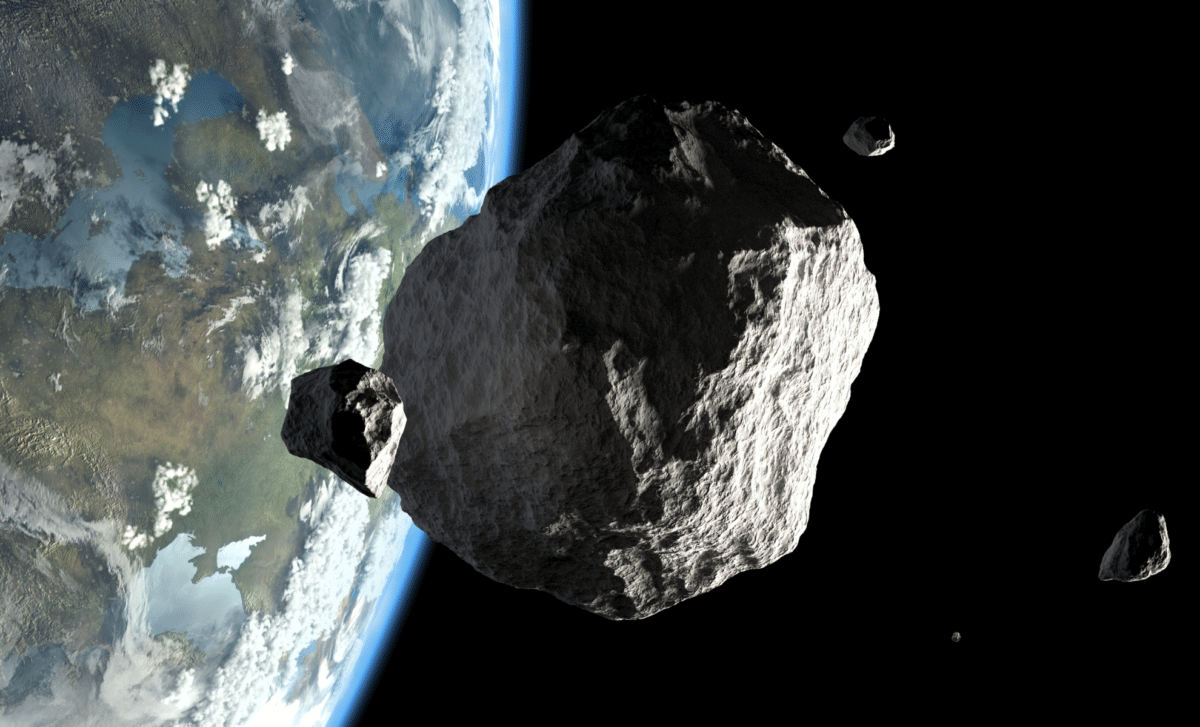
MIT researchers have unveiled a cutting-edge method to detect and track smaller asteroids that could potentially disrupt Earth’s space-based infrastructure. Published in the Research Notes of the AAS, the study highlights the potential dangers of decameter-scale asteroids, which, while smaller than the destructive “dinosaur-killer” asteroids, pose a serious risk to the satellites and communication systems that modern society depends on. This new method uses data gathered from the James Webb Space Telescope (JWST) to identify asteroids that are too faint to be detected by ground-based telescopes. The research marks a milestone in the ongoing effort to bolster planetary defense capabilities.
The Growing Threat of Smaller Asteroids
Asteroids are often associated with large-scale, civilization-ending impacts, like the one that caused the extinction of the dinosaurs. However, smaller asteroids, which are much more common, can also pose significant threats. These decameter-scale asteroids, roughly the size of a building, are far more likely to strike Earth, and their impacts could cause major damage to satellites and space infrastructure. Unlike the larger asteroids, which only strike Earth once every tens of millions of years, these smaller objects strike our planet every couple of decades. The consequences, while less likely to cause human casualties, could lead to massive disruptions in global communication, navigation, and security systems.
As society becomes increasingly reliant on space-based technologies, the detection of these smaller asteroids becomes more critical. The study from MIT underscores the urgency of developing methods to monitor these objects in order to mitigate their potential impact on Earth’s delicate infrastructure.
How MIT’s New Method Could Change Planetary Defense
The new technique developed by MIT researchers, and detailed in a study published in the Research Notes of the AAS, employs the James Webb Space Telescope (JWST) to detect asteroids far beyond the immediate vicinity of Earth. Traditional ground-based telescopes struggle to detect these smaller, faint objects due to their size and distance from Earth. JWST’s infrared capabilities, however, allow it to observe objects that are otherwise nearly invisible. By harnessing the power of JWST’s high-resolution imaging, researchers have successfully detected the asteroid 2024 YR4, a decameter-scale asteroid, and tracked its movement through space.
This detection method has far-reaching implications for planetary defense. By identifying smaller objects that could impact Earth’s satellite systems, researchers can better assess potential threats and determine appropriate responses before it’s too late. The study also highlights the importance of characterizing these objects, understanding their size, trajectory, and composition, so that we can formulate effective strategies for mitigation if necessary.
The Importance of Collaboration in Planetary Defense
While the JWST provides unprecedented observational capabilities, other observatories and research institutions are also playing vital roles in the global effort to protect Earth from asteroid impacts. The Vera Rubin Observatory, set to begin operations in Chile, will increase the detection of small asteroids by a factor of 10. However, as MIT researchers point out, simply detecting these objects is not enough. Characterizing them quickly and accurately is equally important. For this reason, MIT has integrated ground-based observatories such as the MIT Haystack Observatory and the Wallace Observatory into its planetary defense strategy.
The collaborative nature of this research is critical, combining expertise from different scientific fields, from astronomy to engineering, to develop comprehensive defense strategies. Researchers are working together to create a robust detection-to-mitigation pipeline that can respond to potential threats with speed and precision.
The Role of MIT in Planetary Defense: A Forward-Looking Vision
MIT’s contribution to planetary defense is not limited to research; it is also shaping the future of the field. As Professor Julien de Wit explains, the occurrence of smaller asteroids, coupled with the rise of advanced telescopes like the JWST, means that within the next decade, humanity could face the very real prospect of asteroid impacts. These impacts may not be extinction-level, but they could have serious consequences on satellite infrastructure.
At MIT, the Planetary Defense at MIT Project aims to design cost-effective, rapid-response mitigation strategies. These strategies could include innovative technologies that prevent or alter the course of small asteroids before they collide with Earth’s orbit. By assembling a team of researchers from various disciplines, MIT is positioning itself at the forefront of this emerging field, preparing for an era where smaller asteroids are detected and dealt with quickly and effectively.
Involving the Next Generation of Scientists
MIT’s commitment to planetary defense also extends to the next generation of scientists. The institution is engaging undergraduate students in hands-on research through programs such as the Student Observing Lab at the Wallace Observatory. Students are trained to operate advanced telescopes and analyze real asteroid data, contributing directly to ongoing planetary defense research. This approach not only accelerates progress in the field but also inspires the next wave of scientists and engineers who will continue to advance our ability to protect Earth from asteroid threats.
As the field of planetary defense evolves, MIT is proving to be a pioneering force in advancing the technology and research necessary to safeguard Earth’s future. With a growing number of powerful tools at our disposal, including JWST and new observatories, the potential to prevent asteroid impacts, and mitigate the damage from smaller space rocks, has never been greater.
First Appeared on
Source link






Leave feedback about this