

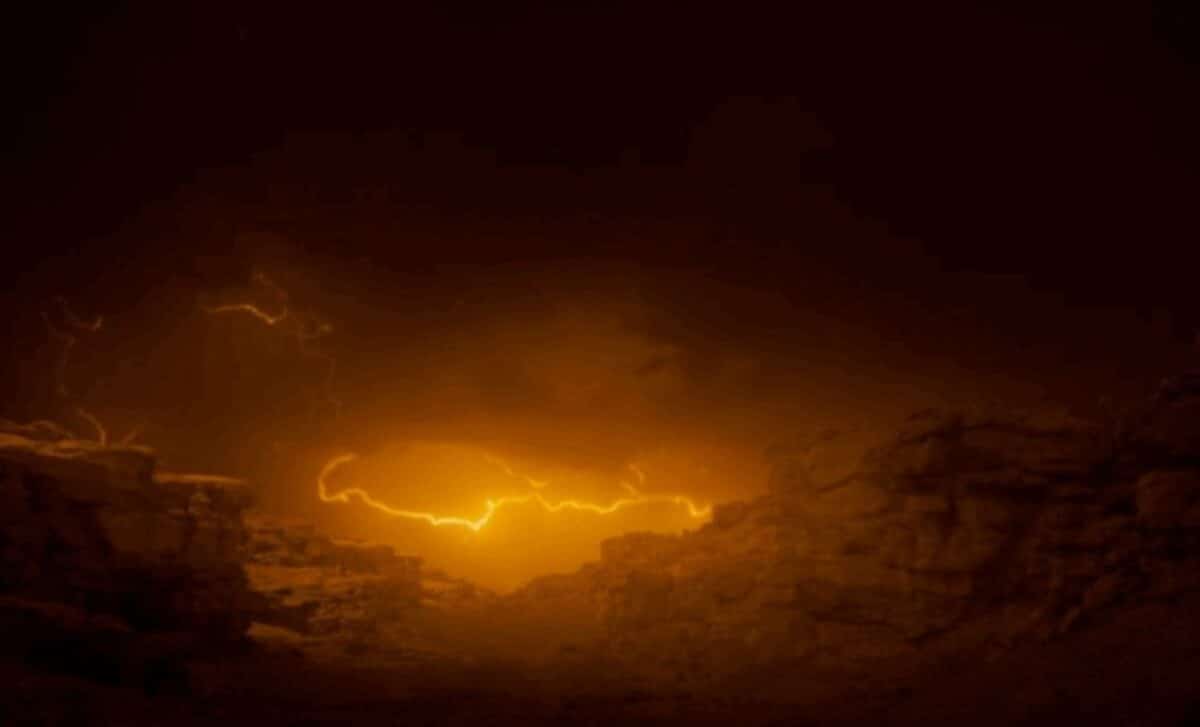
For decades, planetary scientists looked at the massive dust storms on Mars and wondered if they produced electricity. These storms can grow until they wrap around the entire planet, moving millions of tons of dry, abrasive sand through a thin atmosphere. On Earth, similar conditions in volcanic clouds or desert winds often trigger powerful electrical discharges.
Researchers monitoring the red planet previously searched for the telltale flash of a bolt or the crackle of a radio burst. Despite years of searching with orbiting cameras and ground-based sensors on rovers, the evidence remained thin. The Martian sky appeared to stay dark even during the most violent seasonal weather patterns.
In late 2024, a specialized instrument orbiting the planet began picking up a specific type of signal. This sensor was not looking for visible light but was instead tuned to low-frequency electromagnetic waves. These waves behave differently than standard radio signals and require very specific atmospheric conditions to form and travel.
The MAVEN spacecraft, which has been orbiting the planet since 2014, carries an instrument called the Langmuir Probe and Waves sensor. This tool was designed to study the upper atmosphere and how it interacts with solar wind. It continuously monitors the plasma environment around the planet to see how gas escapes into space.
How the MAVEN Spacecraft Captured the Signal
A team led by Dr. David Andrews at the Swedish Institute of Space Physics analyzed the data from the MAVEN spacecraft. They were looking for a phenomenon known as a lightning whistler. On Earth, these are very low-frequency radio waves created by lightning strikes that travel along magnetic field lines into the upper atmosphere.
The researchers found a single, clear signal that matched the mathematical profile of a lightning whistler. This signal started at a high frequency and quickly slid down to a lower tone over a fraction of a second. This whistling sound is caused by the wave dispersing as it passes through the charged particles of the ionosphere.
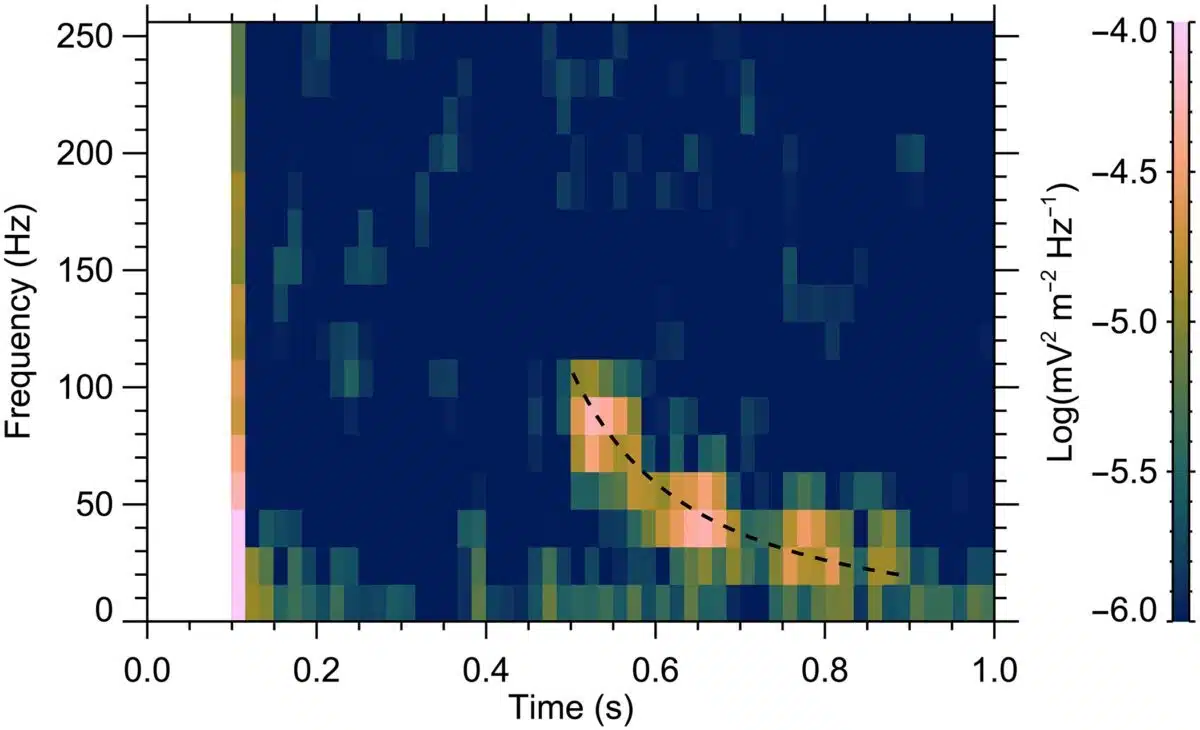
This discovery marks the first time a lightning whistler has been detected at Mars. While previous missions like the Viking landers and the Mars Global Surveyor found hints of electrical activity, they lacked the specific sensors to confirm the origin of the noise. The MAVEN spacecraft provided the high-resolution data needed to distinguish this from solar interference.
Electrical Activity in the Martian Dust
The detection suggests that lightning on Mars is not a giant, visible bolt like those seen on Earth. Instead, the discharges likely occur within the Martian dust storms. When dust particles rub together, they exchange electrons through a process called triboelectric charging, creating a buildup of static electricity that eventually snaps.
Dr. David Andrews noted that the Martian atmosphere is 100 times thinner than Earth’s, which changes how electricity flows. In this low-pressure environment, it takes less energy to start a spark, but the resulting discharge is much weaker. This explains why previous attempts to see a bright flash from the surface or from orbit were unsuccessful.
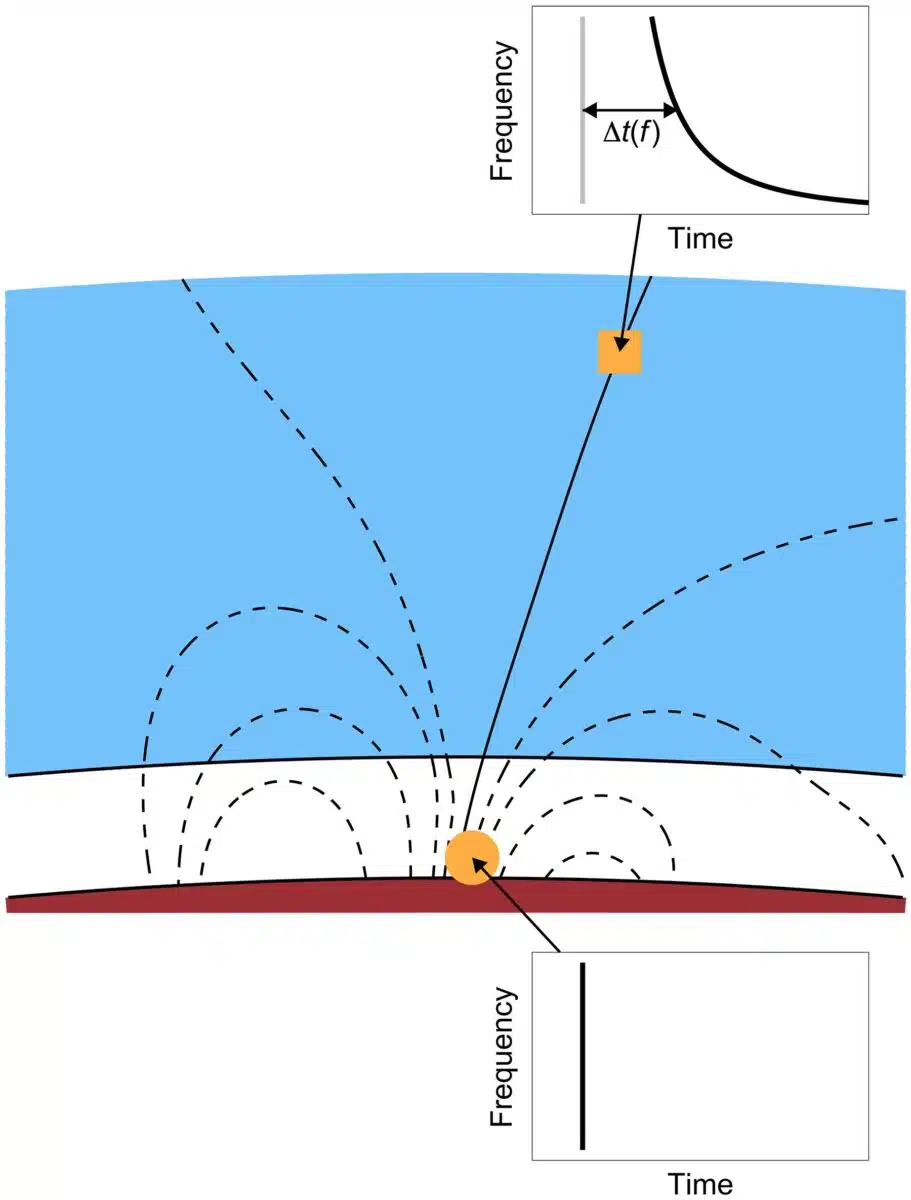
The MAVEN spacecraft detected the signal at an altitude where the atmosphere is transitionary. At this height, the magnetic field of Mars, which is patchy and localized rather than a single globe-spanning field, allows these waves to leak out into space. The signal traveled through a crustal magnetic field near the planet’s surface.
Measuring the Frequency of the Strike
Data from the Swedish Institute of Space Physics showed the wave frequency dropped from approximately 4,000 Hertz to 500 Hertz. This specific decay rate allowed the team to calculate the density of the electrons the wave passed through. It confirmed the signal originated below the ionosphere, deep within the weather-active layers of the planet.
Numerical models suggest that while these sparks are frequent, they may be more like a glow or a “St. Elmo’s Fire” than a jagged bolt. According to Science Alert, the energy released in this single event was significantly lower than a typical terrestrial lightning strike. However, the presence of any discharge has implications for Martian chemistry.
Electrons moving through the atmosphere can break apart molecules like carbon dioxide and water vapor. This process creates new chemicals, including perchlorates, which have been found in the Martian soil by various landers. As reported by Scientific American, the electricity acts as a catalyst for reactions that would not happen through sunlight alone.
Data Collected Over Five Years
The team at the Swedish Institute of Space Physics spent years filtering out noise from the MAVEN spacecraft power systems. Because the spacecraft generates its own electromagnetic interference, the researchers had to compare the signal against thousands of orbits to ensure the lightning whistler was a natural event.
The search for more signals continues as the MAVEN spacecraft adjusts its orbit. Scientists are now looking for clusters of these events to see if they correlate with specific regions of the planet known for high magnetic activity. This would help map where the Martian crust is most likely to guide electrical waves into space.
D. A. Gurnett, D. D. Morgan, L. J. Granroth, B. A. Cantor, W. M. Farrell, J. R. Espley, Non-detection of impulsive radio signals from lightning in Martian dust storms using the radar receiver on the Mars Express spacecraft. Geophys. Res. Lett. 37, 10.1029/2010GL044368 (2010).
First Appeared on
Source link






Leave feedback about this