

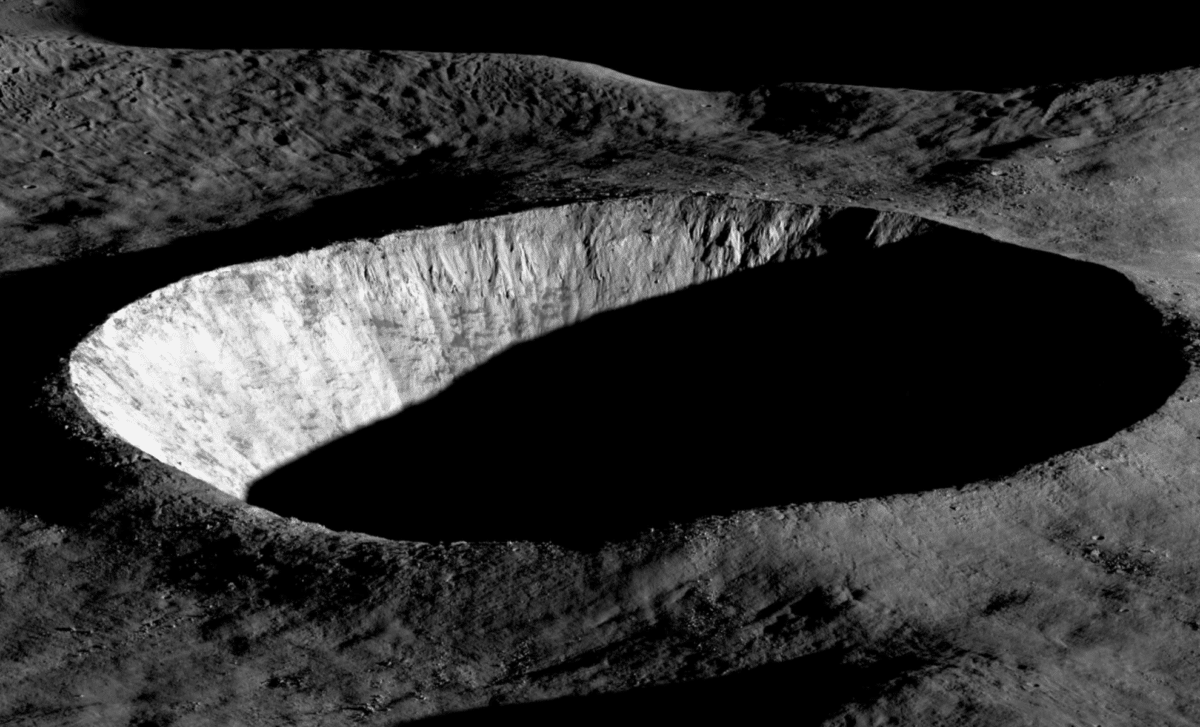
NASA’s Lunar Reconnaissance Orbiter (LRO) has captured an extraordinary image of the Moon’s surface. The photo, taken on August 30, 2023, offers a rare glimpse into an unnamed lunar crater, beautifully illuminated by the first rays of morning sunlight. The dramatic shadows and textures of the crater’s western wall reveal more than just the Moon’s surface; they provide scientists with a clearer understanding of the Moon’s geological past, hinting at its untold mysteries.
This image is part of NASA’s ongoing efforts to map the lunar surface in unparalleled detail, aiding future missions that could ultimately pave the way for human exploration of the Moon. With a high level of clarity, the photograph showcases the power of the LROC (Lunar Reconnaissance Orbiter Camera), which has been orbiting the Moon for over a decade. This imagery, now featured as NASA’s Science Image of the Month for March 2026, is just the latest milestone in the agency’s ambitious exploration goals.
The Lunar Reconnaissance Orbiter Mission
Launched in June 2009, NASA’s Lunar Reconnaissance Orbiter (LRO) has been instrumental in advancing our understanding of the Moon. Equipped with several sophisticated instruments, including the LROC, the mission has provided high-resolution images, 3D maps, and data crucial to future lunar exploration. Its primary goal is to identify safe landing sites, study lunar resources such as polar ice, and assess the radiation environment around the Moon, all in preparation for future robotic and human missions.
The LRO’s contributions have been monumental. The orbiter has helped produce the most detailed topographical map of the Moon’s surface and identified potential resources that could sustain future lunar bases. The new crater image adds to an extensive catalog of discoveries made possible by LRO’s camera systems, which have captured the landing sites of NASA’s Apollo missions, conducted experiments on lunar communication, and provided stunning, high-resolution images of previously unexplored areas.
NASA’s Breakthrough Image: What It Reveals
The image of the unnamed crater is a perfect example of how LRO continues to push the boundaries of lunar photography. The photograph, captured in the early morning light, showcases deep shadows and textures that would be impossible to discern without such advanced technology. It reveals the stark contrasts between light and dark that are characteristic of lunar topography, giving scientists a deeper understanding of the Moon’s formation and history.
This photograph is more than just a visual masterpiece; it’s a window into the geological past of the Moon. As sunlight slowly illuminates the western wall of the crater, it highlights details of the crater’s composition and structure, potentially shedding light on the Moon’s volcanic activity and surface erosion. This type of imaging plays a crucial role in selecting future landing sites for lunar missions, ensuring astronauts can safely explore previously inaccessible areas.
The Science Behind the Image
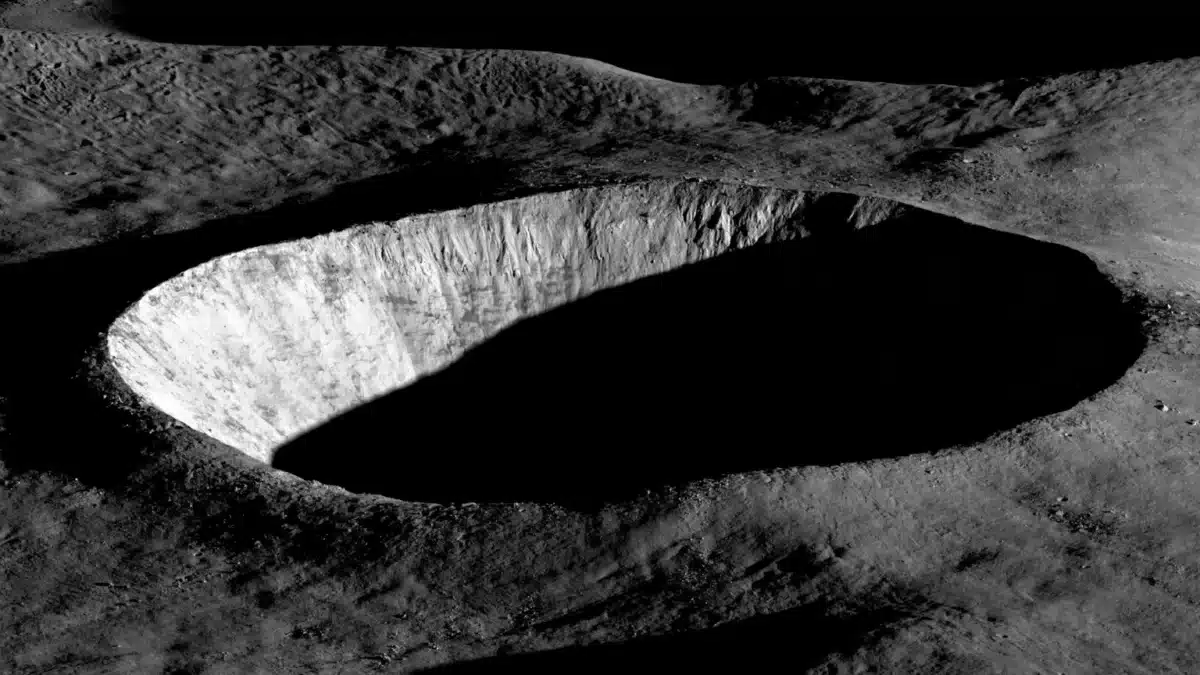
The image of the crater, captured by LROC, was taken with a high-resolution camera that allows scientists to capture images with unmatched clarity. The camera system’s capabilities are critical to the success of the LRO mission, as it provides data that helps to create detailed topographical maps and analyze the Moon’s surface features. By capturing images of the Moon at different times of day, LRO provides a comprehensive view of how sunlight interacts with lunar terrain, revealing hidden features like craters and ridges.
In addition to its scientific importance, the image also highlights the ongoing success of NASA’s technological advancements. The LRO has been in orbit for over 14 years, providing consistent and high-quality data on the Moon. The longevity and success of the LRO mission have set a new standard for lunar exploration, with each new image helping to build a more complete understanding of the Moon’s surface and its potential for future exploration.
How This Image Fits Into NASA’s Broader Vision
The release of this stunning Moon image is not just a scientific milestone—it is part of NASA’s broader vision for future space exploration. The data provided by the LRO, including the newly revealed crater, will be crucial for future lunar missions. NASA plans to return astronauts to the Moon under the Artemis program, which aims to establish a sustainable human presence on the Moon by the end of this decade. Understanding the Moon’s surface and its resources will be key to building long-term lunar habitats.
As NASA continues its exploration of the Moon, this image serves as a reminder of how far we’ve come in our understanding of space. It also emphasizes the importance of technology in advancing human exploration, providing the necessary tools to unlock the secrets of the lunar surface.
First Appeared on
Source link






Leave feedback about this