

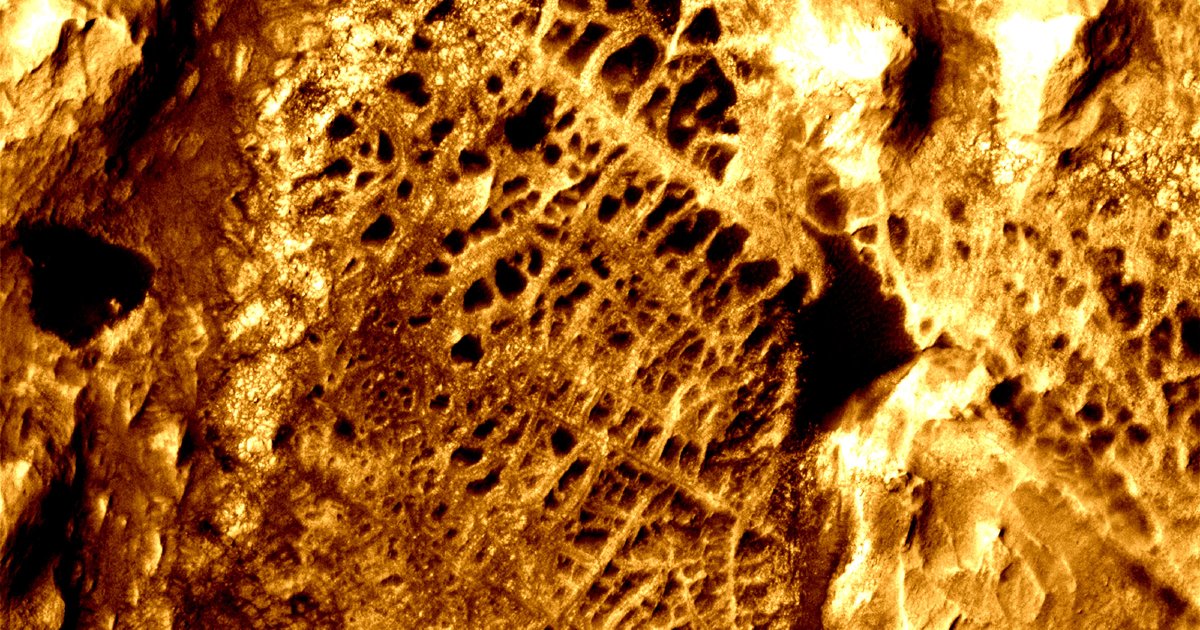
NASA’s Mars Curiosity rover has been exploring a curious geological formation made up of ridges up to six feet in height for the last six months.
Scientists theorize that the “boxwork” formations were left behind by lakes and rivers that dried up billions of years ago, making it a tantalizing place to look for signs of ancient microbial life. On Earth, similar structures form as groundwater flows through a network of rock fractures beneath the surface, coating the cracks with minerals and depositing them nearby. After the rock erodes away, these minerals are exposed.
When viewed from space, these formations take on an even more haunting appearance. As first spotted by the Mars Reconnaissance Orbiter’s HiRISE satellite in 2006, the boxwork resembles a spiderweb-like structure stretching across a barren landscape at the foothills of Mount Sharp, a gigantic mountain that towers to a height of three miles.
Now, scientists are hard at work finding a suitable place for their SUV-sized vehicle to navigate the narrow ridges.
“It almost feels like a highway we can drive on,” said NASA operations systems engineer Ashley Stroupe in a Jet Propulsion Lab (JPL) statement. “But then we have to go down into the hollows, where you need to be mindful of Curiosity’s wheels slipping or having trouble turning in the sand.”
“There’s always a solution,” she added. “It just takes trying different paths.”
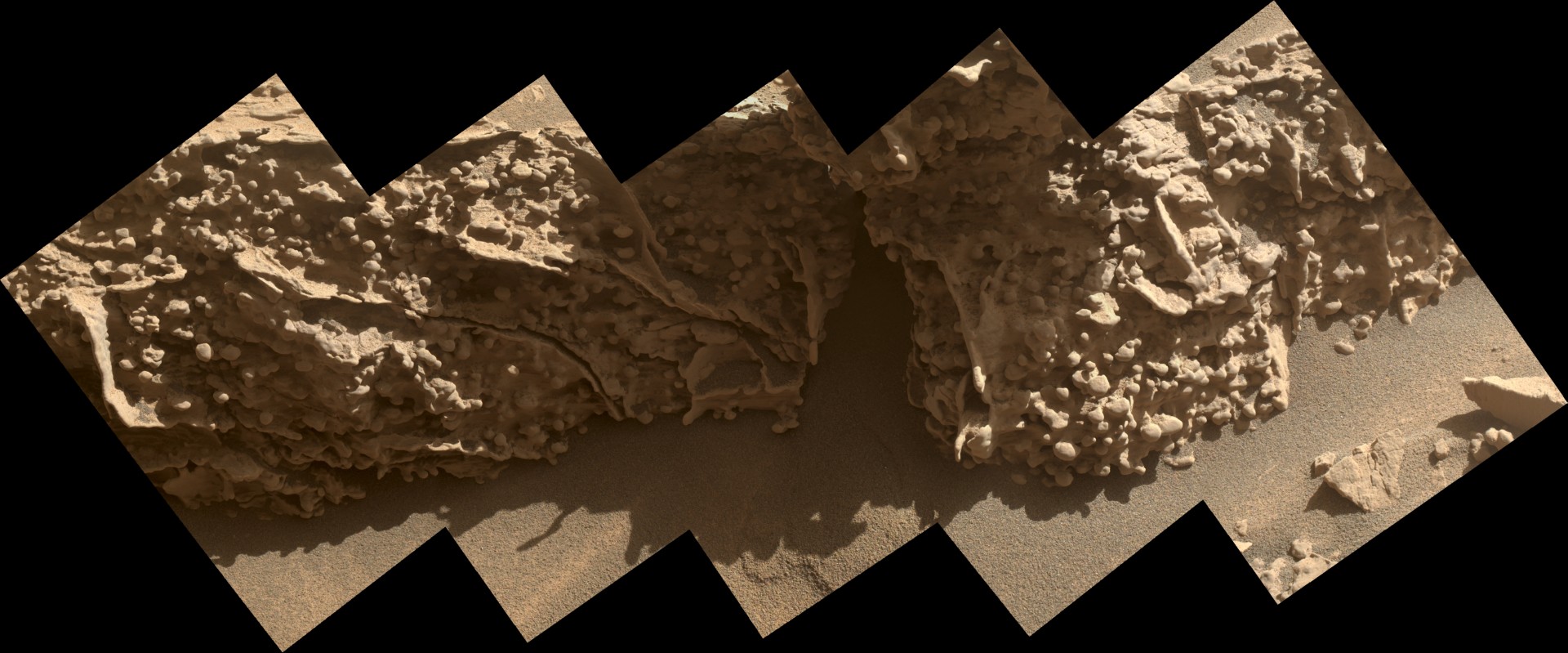
One major puzzle scientists are still trying to figure out is how such a boxwork formation could exist this high up. The implications of a much higher water line could be significant.
“Seeing boxwork this far up the mountain suggests the groundwater table had to be pretty high,” Rice University researcher and mission scientist Tina Seeger said in the statement. “And that means the water needed for sustaining life could have lasted much longer than we thought looking from orbit.”
The tantalizing possibility: evidence of ancient microbial life may be preserved in the boxwork itself.
“These ridges will include minerals that crystallized underground, where it would have been warmer, with salty liquid water flowing through,” said Rice University planetary scientist and Curiosity team member Kirsten Siebach in a 2024 statement. “Early Earth microbes could have survived in a similar environment. That makes this an exciting place to explore.”
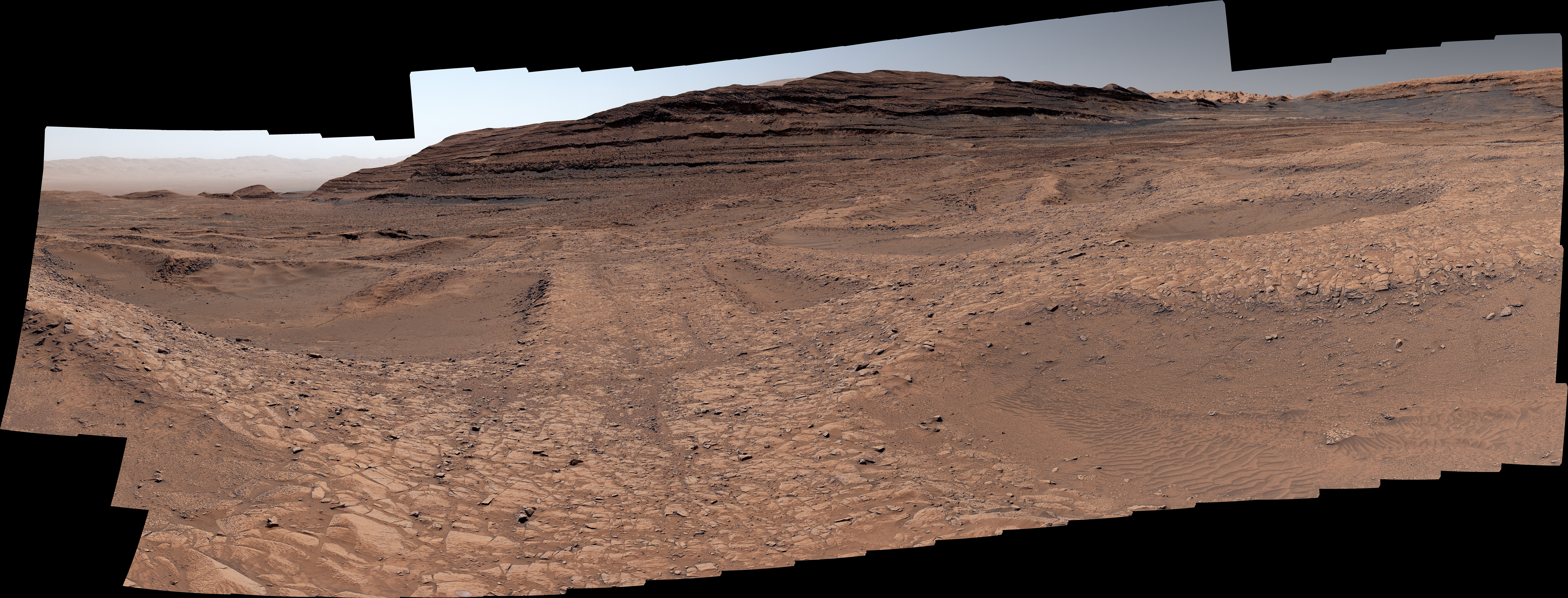
Meanwhile, Curiosity has been grinding up samples with the drill attached to the end of its robotic arm to study the rock’s mineral composition. After analyzing the resulting powder with X-rays and an onboard oven, the rover has discovered traces of clay minerals deposited in the boxwork ridges, allowing scientists to get a better idea of how these structures formed.
Next month, the robot is expected to leave the area, a bittersweet moment after many months of painstaking exploration. But its passage up the foothills of Mount Sharp is only getting started. The team at NASA’s JPL is hoping to explore many more miles of the sulfate-rich layer of the towering mountain to learn how the Martian climate changed so dramatically over billions of years — and whether it once harbored life.
More on Curiosity: NASA Running Out of Non-Life Explanations for What Its Rover Found on Mars
First Appeared on
Source link





Leave feedback about this