

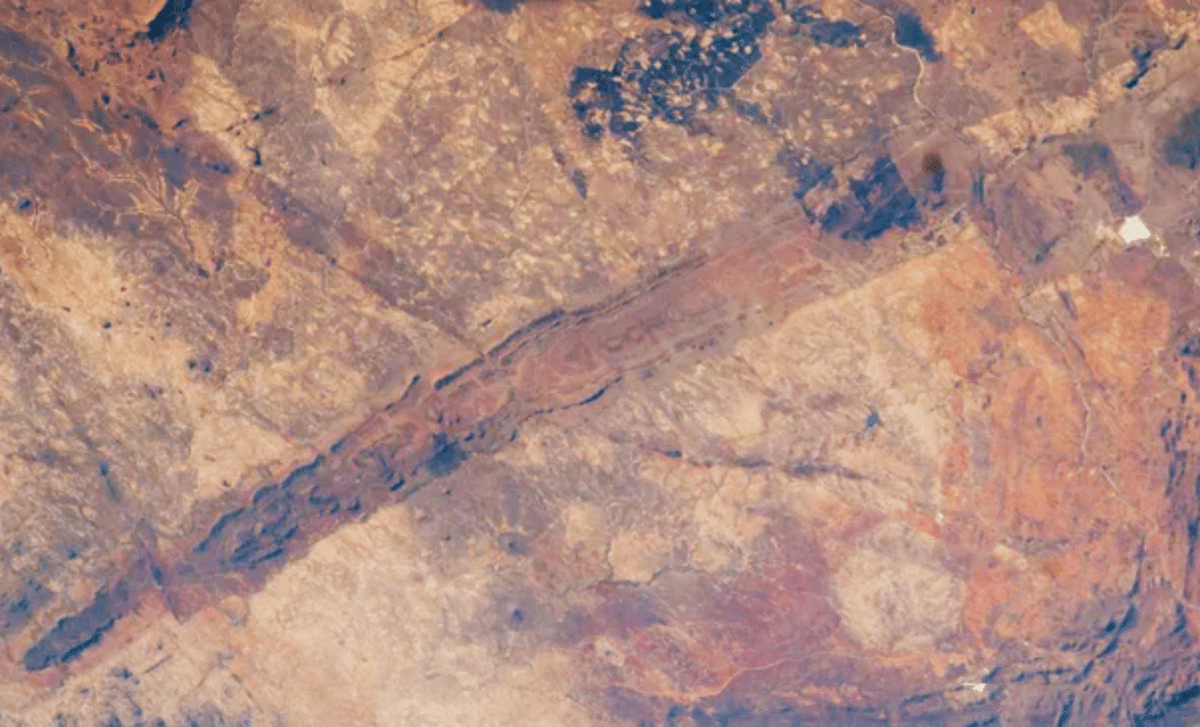
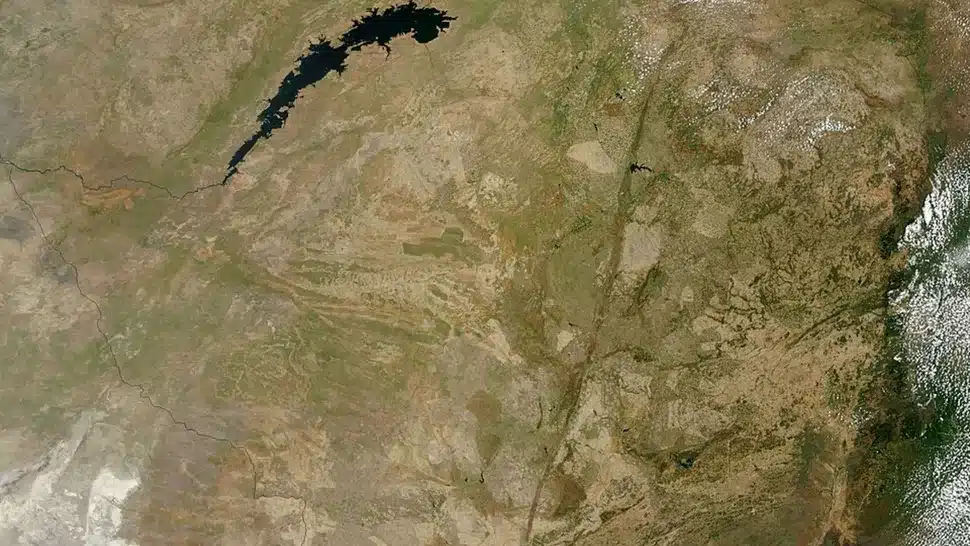
NASA’s stunning astronaut photo from the International Space Station unveils the breathtaking beauty of Zimbabwe’s Great Dyke, a geological wonder that has shaped Earth’s history for over 2.5 billion years. This massive, ancient rock formation stretches across central Zimbabwe, serving as a vital lifeline for the country’s mining industry while also providing valuable insights into Earth’s tectonic past. The Great Dyke, rich in minerals like platinum and chromite, continues to fuel Zimbabwe’s economy, making it not just a natural marvel but also a cornerstone of modern industry.
The Geological Significance of the Great Dyke
The Great Dyke is a remarkable geological structure that showcases the dynamic forces of Earth’s interior. Contrary to its name, it is not a typical “dike” but a lopolith, which forms parallel to existing rock layers, creating a flatter, more saucer-shaped formation. The Great Dyke began to form approximately 2.5 billion years ago, when magma from Earth’s mantle slowly pushed upwards through faults in the tectonic plates. This ancient process resulted in one of the largest and longest igneous intrusions on Earth.
Scientists consider it a living example of Earth’s ongoing geological evolution. The Great Dyke’s unique formation makes it an important area of study for geologists, offering insights into the early conditions of the planet and the forces that shaped its surface. Its continued existence over such an extended period speaks to the resilience of the Earth’s crust and the persistent tectonic activity beneath it.
A Rich Mineral Reserve with Global Economic Impact
The Great Dyke’s value is not only scientific but also economic. According to LiveScience, the region is home to some of the world’s most valuable mineral deposits. Rich in metals like gold, copper, iron, and nickel, the Great Dyke is best known for its enormous platinum reserves, which are among the largest on Earth. The platinum found here plays a crucial role in various industries, particularly in the automotive sector, where it is used in catalytic converters.
Additionally, the Great Dyke is rich in chromite, a key component in stainless steel production. These mineral resources have led to a thriving mining industry along the Dyke, providing jobs and supporting Zimbabwe’s economy. As Mining Zimbabwe notes,
“The Great Dyke of Zimbabwe is more than a line on a map — it’s a lifeline of economic opportunity [and] a geological marvel.”
The mineral wealth of the Great Dyke is a driving force behind the country’s mining boom. With several large-scale mining projects located along its length, Zimbabwe continues to capitalize on this natural resource to boost its economy and attract international investment.
NASA’s Role in Unveiling the Great Dyke’s Beauty
NASA’s contribution to understanding the Great Dyke extends beyond the photo taken by an astronaut aboard the International Space Station in 2010. This image provided a unique view of the structure, showcasing its massive length and intricate patterns from space. The photo helped highlight the vastness of the Great Dyke, giving both scientists and the public a new perspective on this ancient geological formation.
Space-based observations have become invaluable tools in geological studies. By capturing large-scale structures like the Great Dyke from orbit, scientists can better understand Earth’s geological features, monitor changes over time, and assess the environmental impact of human activity. The ability to study such large formations from space also aids in mapping mineral deposits, contributing to both scientific research and the mining industry.
First Appeared on
Source link






Leave feedback about this