

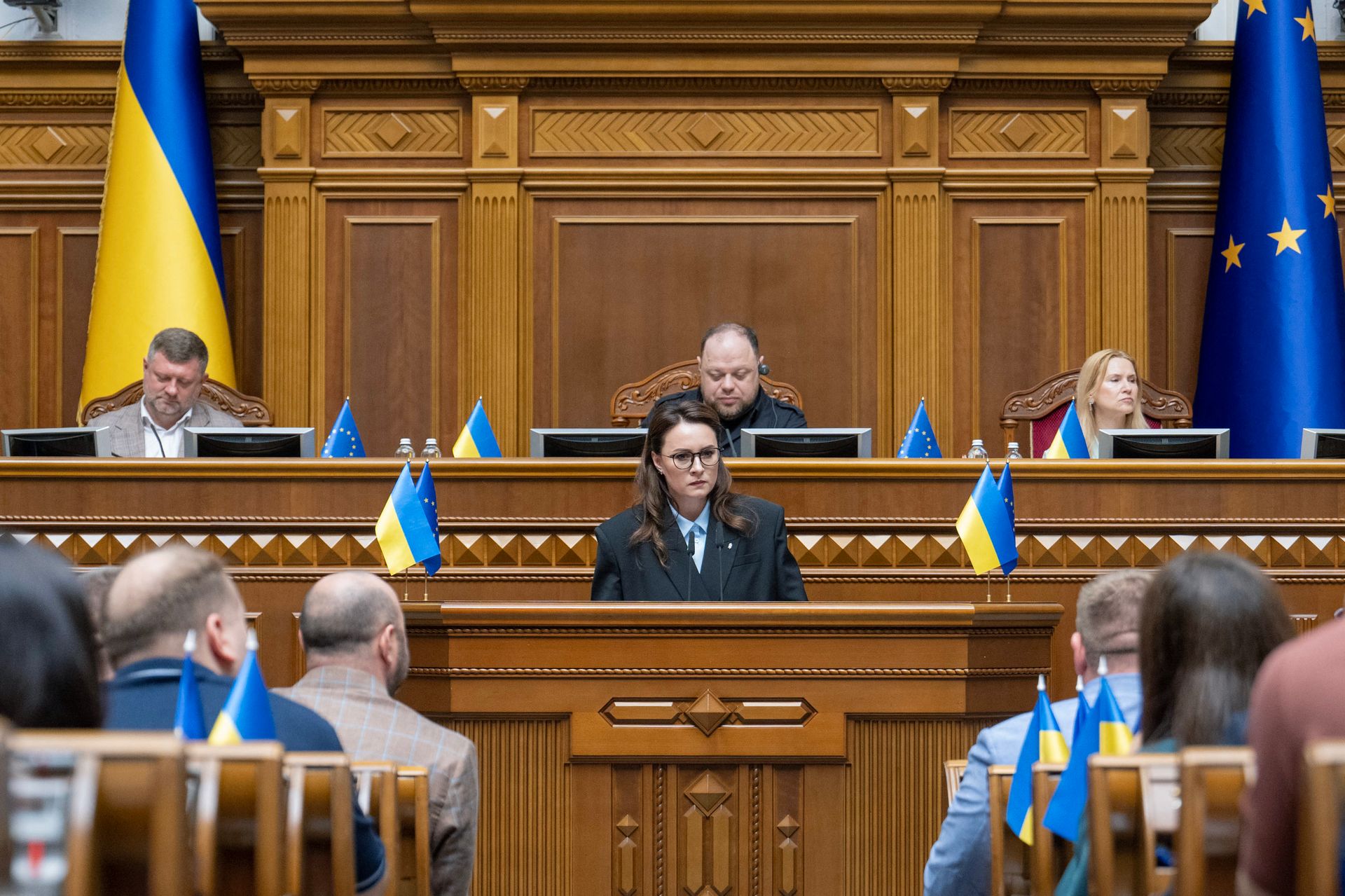
Prime Minister Yulia Svyrydenko attends a session of the Ukrainian parliament in Kyiv, Ukraine, on July 17, 2025. (Andrii Nesterenko / AFP via Getty Images)
As Ukraine pushes for a fast-tracked entry to the EU, senior European officials say they are worried about progress on key reforms needed to secure the country’s European aspirations.
Ukraine failed to complete 11 reforms in the last three months of 2025 required to unlock European funds, according to RRR4U, a consortium of Ukrainian think tanks, and is on track to miss more reforms in the first three months of 2026 — putting a total of five billion euros ($5.8 billion) of EU funding at risk.
Four senior EU officials working closely on Ukraine matters told the Kyiv Independent that the reduced appetite to pursue reforms could undermine support for the country’s EU membership, as well as future private sector investment in the country.
The slowdown came into sharper focus after Ukraine’s parliament failed earlier this year to pass a series of taxes required by the International Monetary Fund to unlock a $8.2 billion loan, eventually causing the Washington-based lender to cave and postpone their demands.
In a closed-door meeting with journalists on Feb. 13, attended by the Kyiv Independent, Prime Minister Yulia Svyrydenko questioned parliament’s effectiveness in tabling and passing any bills.
But others say that multiple factors are to blame, including poor communication from the government, lack of clarity from the European Union, and unrealistic reform demands during wartime.
What reforms has Ukraine failed to pass?
Ukraine is required to complete reforms to unlock funding from international partners. The country relies on continued injections of foreign cash to keep its finances afloat.
European reforms seek to more closely align Ukraine with European norms and standards in preparation for eventual membership, whereas IMF reforms are generally aimed at preserving economic stability.
Ukraine impressed partners with its progress on reforms in 2024, but started to slow last year — with a real deterioration across wide-ranging reforms in the second half of last year.
“If we look at the reforms that weren’t completed in 2025, they are really broad, ranging from energy to local authorities, deregulation to state aid,” Oleksandra Betliy, research fellow at the Institute for Economic Research and Policy Consulting, told the Kyiv Independent.
Betliy says that the country is on track to miss two further reforms concerning small enterprises and the division of powers between local and governmental authorities.
“There is a lack of political will and a lack of cooperation (between the government and parliament).”
While Ukraine can claw back the cash by completing the reforms within one year of the deadline, the country could, for the first time this year, permanently forgo funds after failing to increase the number of members of its high anti-corruption court — a reform required in the first quarter of 2025.
If still incomplete by the end of March, 300 million euros ($353 million) will expire, according to RRR4U.
Several European officials conceded that while the reforms are tough, Ukraine could not afford to slow down — especially following several corruption scandals last year.
Marta Kos, the EU’s commissioner for enlargement, emphasized in a speech on Feb. 13 that while the accession process would have to change to confront new geopolitical realities, full membership could only come after full reforms.
An official familiar with Kos’s thinking told the Kyiv Independent that, while the EU accession process may adapt, it will always remain merit-based.
Who's to blame?
Difficulties in Ukraine’s parliament, poor communication, and Russia’s continued full-scale invasion are cited as the key factors behind the slowdown.
While earlier reforms required simple governmental implementation, a higher share of recent reforms required for EU funding must go through Ukraine’s parliament, the Verkhovna Rada.
And while President Volodymyr Zelensky’s Servant of the People party has a majority on paper, it has seen mounting challenges in securing the 226 votes needed to pass laws.
Despite winning a super majority of 254 seats in the 2019 parliamentary elections, a growing number of lawmakers have resigned or left the parliamentary faction since the full-scale invasion.
Although the party still formally holds 229 seats, inconsistent attendance often leaves it relying on parliamentary groups loosely aligned around business interests rather than policy priorities, as well as former members of the now-banned pro-Russian Opposition Platform.
Lawmakers the Kyiv Independent spoke with say it became even harder to pass decisions after David Arakhamia, who leads Zelensky’s faction and oversees vote-gathering, started to participate in the peace talks from January this year.
They also acknowledge shortcomings within parliament itself — but argue that the government adds to the problem, submitting laws too late and leaving inadequate time for the parliament to meet deadlines.
Yaroslav Yurchyshyn, lawmaker from the opposition Holos party, told the Kyiv Independent that “there is a lack of political will and a lack of cooperation (between the government and parliament).”
“Very often, the negotiations with our international partners become politicized, and the government tries to push for measures that place more burden on society than they limit the monopoly on power, like the reform of the State Bureau of Investigations (SBI).”
In January, Zelensky ordered his administration to urgently submit a draft law to overhaul the SBI. The reform of the SBI is among the priorities outlined by Kyiv and the European Union for 2026 as part of Ukraine’s path to EU membership.
The president’s bill has yet to reach parliament.
Yurchyshyn says many bills tied to the IMF and Ukraine Facility, an EU financial assistance program launched in 2024, stall in committees due to opposition from some lawmakers before reaching the parliament floor.
According to Yurchyshyn, Ukraine Facility bills are often used by some lawmakers to advance energy or procurement schemes, with amendments inserted that can only be blocked by other MPs through amendments of their own, slowing down the process.
Lawmakers also said that the government often fails to clearly explain why a law is needed, or which specific components are critical to unlock EU funds.
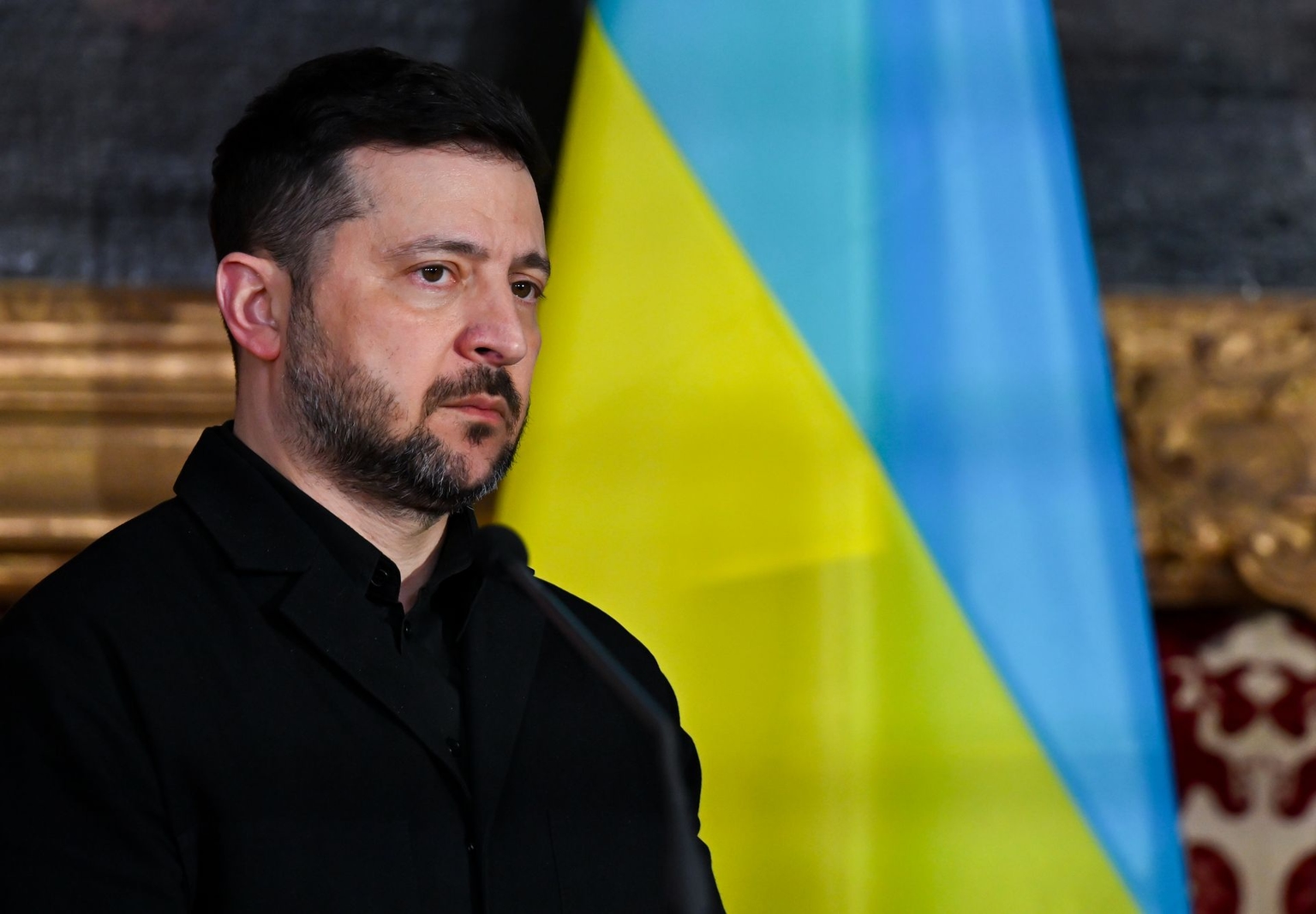
“The government will just tell MPs that they must vote, because EU funds are at risk, without offering detailed explanations,” Betliy told the Kyiv Independent.
“The MPs don’t want to play by that game,” she added.
Another member of parliament said on condition of anonymity that the government sometimes misleadingly cites the IMF or EU when tabling a piece of legislation.
“Very often there were situations when this wasn’t really a requirement, but it was beneficial to certain large (…) agro-industrial groups, and it was pushed through and presented as a demand from our partners.”
Additionally, the growing electoral ambitions of some lawmakers are shifting their focus from voting on unpopular reforms, as talks of elections picked up over recent months — even if they are still seen as a distant prospect.
But the problem does not only lie within Ukraine.
Four MPs told the Kyiv Independent that communication from the European Union could be better — and that it wasn’t always clear which components of a law tabled by the government were essential to the reform process, and which were extras added by the government.
“It would really help if the European Commission would explain directly to the parliament what the key elements of draft laws should be,” says Betliy.
“Even to us in civil society, it’s not always clear what the IMF or the EU expects from different laws,” she added.
Better coordination between the EU and the Ukrainian government on reforms would also help to allay the Eurosceptic view of “external governance,” according to Yurchyshyn.
As the war enters its fifth year, Betliy also said that some of the latest reforms are simply tougher to implement, since some upcoming reforms were expected to be implemented during peacetime — still a distant prospect.
First Appeared on
Source link




Leave feedback about this