

Key events
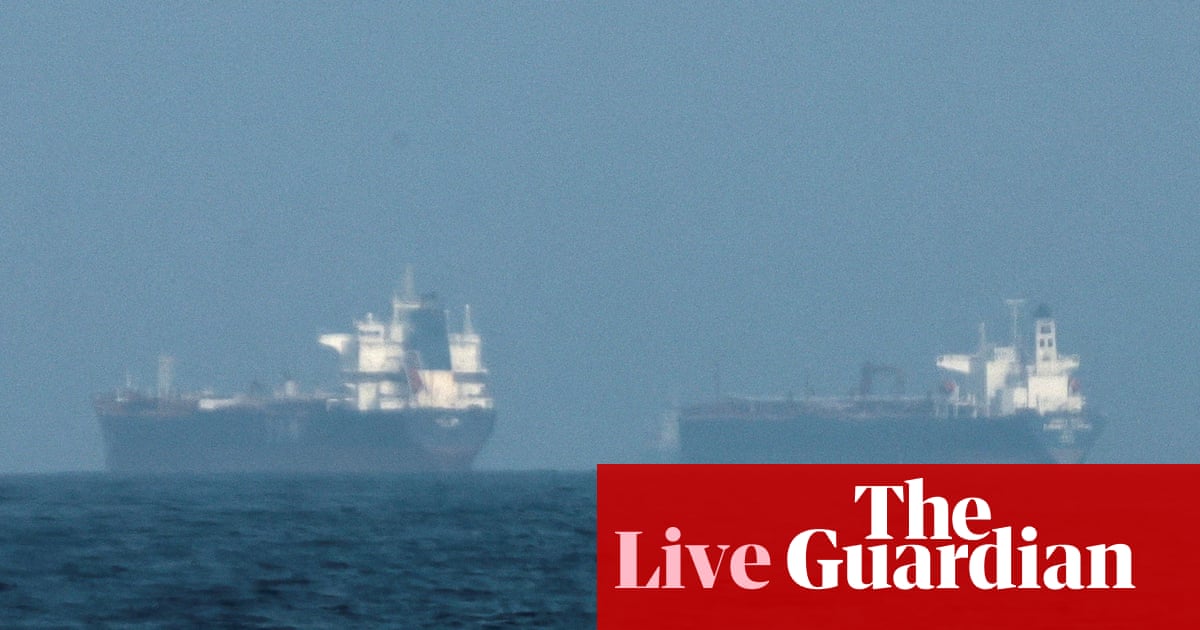
Iran’s Revolutionary Guards said Wednesday they control the Strait of Hormuz, a vital shipping route for oil and gas, and any vessels seeking to pass through the waterway risk damage from missiles or stray drones, Agence France-Presse reports.
“Currently, the Strait of Hormuz is under the complete control of the Islamic Republic’s Navy,” said Guards Navy official Mohammad Akbarzadeh in a statement issued on Fars news agency.
US president Donald Trump said Tuesday the US Navy was ready to escort oil tankers through the crucial Gulf shipping route.
Global markets tumbled further on Wednesday despite Donald Trump’s offer to have the US navy escort tankers through the strait of Hormuz and the US military’s claim that there is “not a single Iranian ship underway” in the crucial waterway.
The Middle East conflict has crippled the strait which was in effect closed by Iran after strikes by the US and Israel this weekend, raising fears of a sustained energy supply crisis that reverberated around the world.
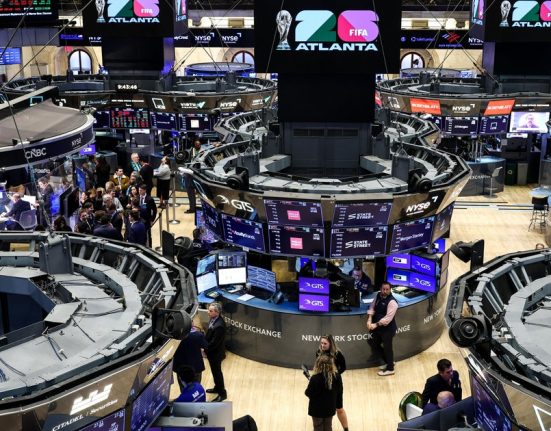
As Asian stock markets came under fresh pressure on Wednesday, trading in Seoul was suspended as South Korea’s benchmark Kospi share index fell by as much as 11.3%, before pulling back to trade down 7.7%. Japan’s Nikkei 225 fell 3.9% in Tokyo.
The Guardian’s Callum Jones looks at how the markets have been roiled.
Lebanese state media said that four people were killed and six more were wounded in an Israeli strike on a building in Baalbek in eastern Lebanon on Wednesday.
“The initial toll is four killed and six wounded, and work is underway to rescue families from under the rubble,” Lebanon’s state-run National News Agency said.
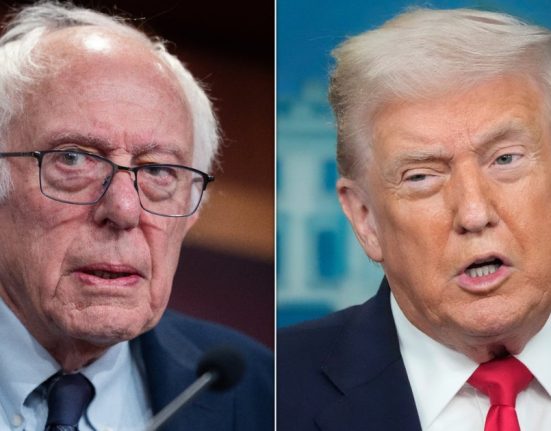
US president Donald Trump said “someone from within” Iran’s government might be best suited to take power once the US-Israeli war on the country ends.
His remarks came four days into a war that has killed hundreds, nearly all of them in Iran, as well as many of the country’s top leaders, including Supreme Leader Ayatollah Ali Khamenei.
As we enter into the fifth day of a conflict that has ramifications across the Middle East, here is a handy explainer of what we know so far.
The Saudi defence ministry said two cruise missiles were intercepted Wednesday over an area south of the capital Riyadh, and state media reported a separate drone attack was thwarted.
“Two cruise missiles were intercepted and destroyed in Al-Kharj” district, a defence ministry statement said. The official Saudi Press Agency cited a ministry spokesman as saying “nine drones were intercepted and destroyed immediately upon entering the Kingdom’s airspace”. The statements did not say who may be behind the attacks.
Explosions sounded in Iran’s capital city on Wednesday as its war with the US and Israel entered a fifth day after earlier strikes on an Iranian nuclear site and retaliatory strikes by the Islamic Republic across the Gulf region.
Iranian state television reported explosions around Tehran as dawn broke. Meanwhile, Israel said its air defenses were activated due to incoming missile fire from Iran.
Five days into a war that US president Donald Trump suggested would last several weeks or longer, nearly 800 people have been killed in Iran, including some Trump said he had considered as possible future leaders of the country.
Explosions also hit Lebanon, where Israel said it is retaliating against Hezbollah militants. Lebanon’s state-run media reported that at least four people were killed in an Israeli strike that hit a residential complex in the city of Baalbeck.
South Korea’s stock exchange has halted trading as the nation’s two major indexes plunged on uncertainty sparked by turmoil in the Middle East.
The Korean Stock Exchange called a temporary trading halt after the Kospi and Kosdaq each plunged more than 8% in Seoul morning trade.
In Tokyo, the Nikkei 225 continued to fall on Wednesday, and was down about 1.7% during early trading. But Wall Street looks set to open only marginally lower in New York, according to pre-market trading data.
Worries over the widening war with Iran have hammered most world markets. Higher oil prices and how much they might worsen inflation are among the central fears for investors.
With all eyes still on the Strait of Hormuz – one of the most important arteries for global trade, which has been in effect closed by Iran – oil prices remain in focus, after Donald Trump suggested the US could begin escorting tankers.
Lebanese state media are reporting that an Israeli strike hit a hotel in the Beirut suburb of Hazmieh on Wednesday morning.
The state-run National News Agency said that “an Israeli airstrike targeted a hotel in Hazmieh” adding that “ambulances were dispatched to the scene”.
The Guardian is unable to confirm the report. Israeli has been launching strikes around Beirut in the last few hours, with Lebanon’s health ministry saying at least 6 people had been killed in the most recent wave.
The UK foreign office has said that British nationals, their partners and children under 18 are eligible to travel on a chartered flight from Muscat on Wednesday, as long as they have a valid travel document.
The foreign office said priority will be given to the most vulnerable and they will contact British nationals in Oman. Anyone who registered their presence in the United Arab Emirates and are now in Oman is asked to register for a place on a flight.
They asked people not to travel to Muscat International Airport in Oman unless they are contacted by officials.
Around 130,000 Britons have registered their presence in the Middle East with the Foreign Office amid evacuation planning.
Six killed in Israeli strikes south of Beirut
Israeli strikes on two towns south of Beirut have killed six people and wounded eight, Lebanon’s health ministry has announced.
In a statement, the ministry said that “the Israeli enemy’s attacks on the areas of Aramoun and Saadiyat” killed six people and wounded eight others “in a preliminary toll”.
Aramoun and Saadiyat are both towns outside Hezbollah’s traditional strongholds, according to the AFP news agency.
The regional war sparked by the US and Israel’s attack on Iran spread into Lebanon on Monday after Hezbollah – who have long been aligned with Tehran – launched drones and rockets at Israel.
Israeli strikes have killed more than 50 people in Lebanon, according to the government, while the United Nations said that more than 30,000 people have been displaced.
Opening summary
Hello and welcome to our live coverage of the Middle East crisis as it enters day five.
The US military has claimed that the number of strikes carried out on Saturday in the first 24 hours of its war on Iran was nearly double that of the “shock-and-awe” strikes on Iraq in 2003, and that nearly 2,000 targets had been hit so far in Iran.
Admiral Brad Cooper of US Central Command did not give a figure for the number of strikes carried out in the first 24 hours of the war, or stipulate whether he was including the Israeli strikes.
He said the attacks were carried out “as part of the largest firepower buildup in the region in a generation”.
Cooper also said the US was also sinking “all of the Iranian navy” and had already destroyed 17 Iranian ships. “For decades the Iranian regime has harassed international shipping. Today there is not a single Iranian ship underway in the Arabian gulf, Strait of Hormuz or Gulf of Oman.”
The US navy could begin escorting oil tankers through the strait of Hormuz if necessary, President Donald Trump said on Tuesday, in one of the administration’s most aggressive steps yet to attempt to contain soaring energy prices sparked by the war.
Here is a summary of other recent developments:
-
Donald Trump has attempted to counter a simmering anti-Israel backlash in Congress and among his own Maga supporters by denying suggestions that he had been forced into attacking Iran because Israel had already decided to do so. Asked whether Israel had pushed him into launching military action, Trump told reporters: “No. I might have forced their hand.”
-
The Iranian Red Crescent Society said at least 787 people had been killed since the conflict began. The worst mass casualty event of the US-Israeli military assault so far has been the direct strike on a girls’ elementary school in Minab on Saturday, which killed up to 168 people. You get a sense of the devastation through our visual guide, here.
-
Israel said it has launched a ‘broad wave’ of strikes on Iran that were targeting launch sites, defense systems, and additional Iranian infrastructure.
-
Global oil and gas prices have spiked as the US-Israeli war on Iran has halted energy exports from the Middle East, with Tehran attacking ships and energy facilities, closing navigation in the Gulf and forcing production stoppages from Qatar to Iraq.
-
The conflict has caused turbulence on global markets. In Tokyo, the Nikkei 225 continued to fall on Wednesday, and was down about 1.7% during early trading. In Seoul, the Kospi – which dropped 7.2% on Tuesday – fell by a further 3.1% at the open. But Wall Street looks set to open flat in New York, according to pre-market trading data.
-
At least 30,000 people have been displaced in Lebanon, according to the United Nations, following heavy Israeli airstrikes in the country.
-
Trump also said he was upset with British prime minister Keir Starmer, who has not joined the US-Israeli attack on Iran but did let US forces use UK bases. “I’m not happy with the UK,” the US president said. “It’s taken three, four days for us to work out where we can land,” Trump said. Referring to Starmer, he added: “This is not Winston Churchill that we’re dealing with.”
-
Canadian prime minister Mark Carney called on Wednesday for the rapid de-escalation of the conflict unleashed by US-Israeli strikes on Iran, urging all parties to respect the international rules of engagement.
We will bring you latest as soon as we get it.
First Appeared on
Source link



Leave feedback about this