

Microsoft has announced two new updates at GDC 2026: ML-Powered DirectX & Advanced Shader Delivery for the next chapter in gaming.
Microsoft DirectX Goes Full ML While Advanced Shader Delivery Solves Windows Gaming Stutters & Load Times
Machine Learning or ML has taken the center stage as the path to evolve gaming visuals & performance for next-gen experiences. At GDC 2026, Microsoft disclosed how it is leveraging ML in its DirectX API for enhanced capabilities moving forward.
Microsoft DirectX Goes ML
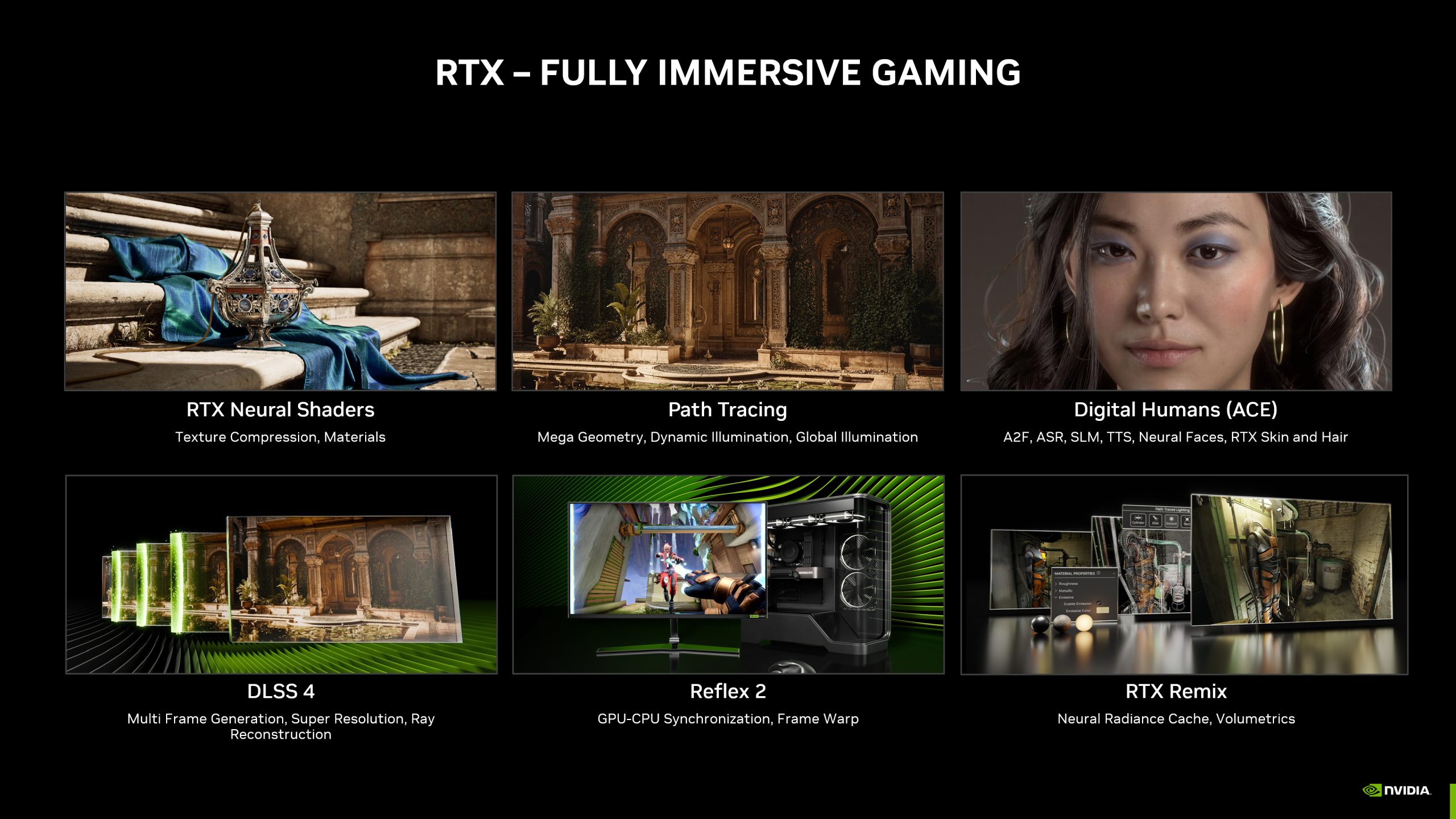
The first part of ML-powered DirectX comes in the form of Cooperative Vectors in Shader Model 6.9. This has already been introduced in the latest Agility SDK 1.619 release, enabling various neural rendering techniques such as Neural Texture Compression and Neural Radiance Caching. NVIDIA already enables support for these technologies with its Blackwell architecture, while AMD is working to support them in upcoming architectures, as pointed out in the FSR Diamond announcement.
The ever-increasing use of ML and its reliance on matrix-matrix operations means that workloads such as denoising, temporal upscaling, etc, cannot fit within existing execution models. To tackle this, Microsoft is rolling out DirectX Linear Algebra, which is designed to support both vector & matrix-based ML workflows under a single programming model. DirectX Linear Algebra gives developers explicit control over math, data flow, and execution for shader-level ML scenarios.
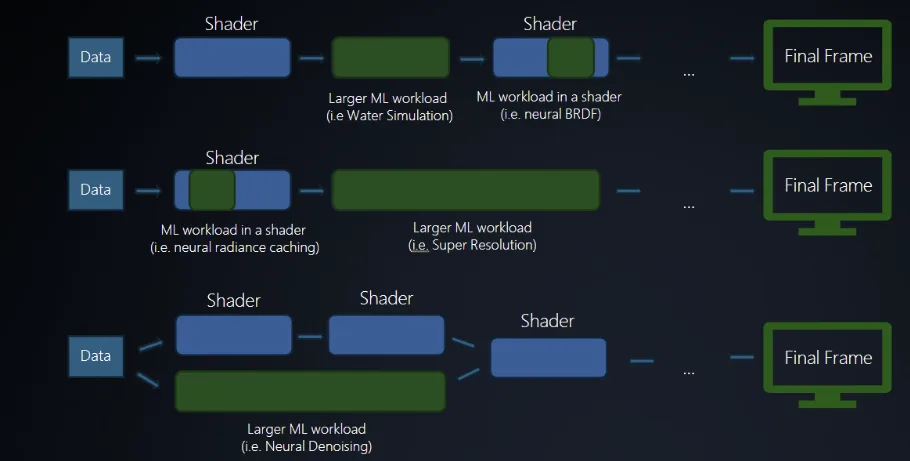
Another feature being added to Microsoft’s DirectX API is DirectX Compute Graph Copilier, which is a new DirectX ML compiler API that executes full model graphs with native-class GPU performance. Key benefits include:
- Unified tooling with PIX, showing graphics and ML workloads in a single capture
- Dropping full models into engines without shader rewrites
- Automatic graph optimization, memory planning, and operator fusion
- Portable performance across IHVs
The following is what major GPU vendors have to say about the recent updates to DirectX:
AMD: “DirectX Linear Algebra and DirectX Compute Graph Compiler give developers new ways to integrate machine learning directly into their graphics pipelines while retaining the control and performance characteristics they expect from modern GPUs. We’re excited to collaborate with Microsoft on advancing ML-driven graphics on Windows.” – Robert Shearer, CVP Silicon Design Engineering, AMD
Intel: “DirectX Linear Algebra gives developers a powerful new foundation for bringing matrix-based machine learning directly into real-time graphics workflows. We’re excited to support Linear Algebra on day one.” – Lisa Pearce, Corporate Vice President, Software Group, Intel
NVIDIA: “With DirectX Linear Algebra and DirectX Compute Graph Compiler, developers gain flexible paths to integrate both shader level and model level machine learning seamlessly into their graphics pipelines. We’re pleased to support both capabilities and to collaborate with Microsoft on accelerating ML driven rendering and inference workflows on NVIDIA GeForce RTX GPUs.” – Patrick Neill, Distinguished Engineer, NVIDIA
Qualcomm: “DirectX Compute Graph Compiler is a meaningful step toward making full model ML feel native inside real-time engines. We’re excited to collaborate with Microsoft on a compiler-based approach that takes modern model graphs and produces optimized GPU workloads that integrate directly into DirectX.” – Balaji Calidas, Senior Director of Engineering, Qualcomm
These are only some of the enhancements coming to Microsoft’s DirectX API with Compute Graph Compiler, all set to be available as a private preview this summer, and Linear Algebra rolling out for a public preview in April this year.
Microsoft’s Advanced Shader Delivery Saves Gamers From Shader Compilation & Long Load Times
In addition to DirectX, Microsoft also talked about its Advanced Shader Delivery for Windows, which has been available on Xbox ROG Ally & Ally X. Today’s announcement is about uniting these ecosystem pieces between game developers, IHVs, and game stores to solve shader compilation on PC going forward. Game devs can enable gamers to download fully compiled shaders in advance for their PC hardware. With AgilitySDK 1.619, there are two new APIs:
App Identity API: This API enables applications to declare their own application identity to D3D12 and the underlying graphics drivers in a standardized way. Allocations can set a default D3D12_APPLICATION_DESC and GUID to self-identify before a D3D12 device is created. Attaching application identity to the SODB will be a requirement for submitting an SODB file to the Xbox Partner Center for your title.
Stats API: This API gives game developers visibility into how well a precompiled shader database (PSDB) performs. If you are looking to see how well a given PSDB will work for a specific hardware configuration, these APIs will give game developers information on the shader cache hit rate.
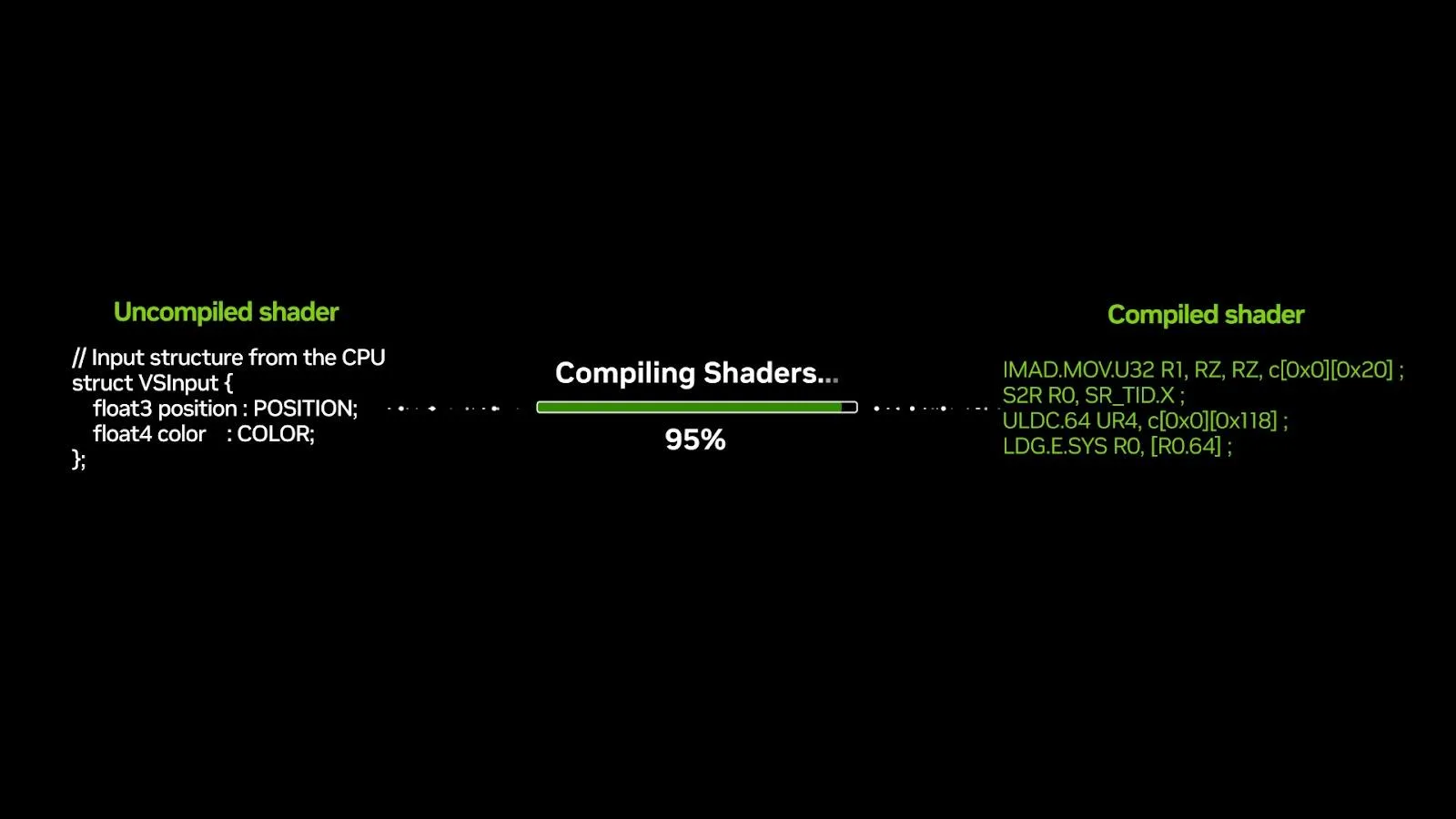
Devs will be required to integrate the SODB collection into the game engine and submit it along with the game package to the Xbox Partner Center to enable Advanced Shader Delivery support for the game. Once again, the following is what hardware vendors have to say about Advanced Shader Delivery:
“Advanced Shader Delivery (ASD) is transforming the gaming experience, cutting load times and eliminating in‑game stutter on Xbox ROG Ally devices. It’s truly remarkable what the Microsoft and AMD engineering teams have accomplished in such a short period of time.”
-Rodney Andre, Corp. VP Software Development
“Intel is committed to solving shader compilation challenges on PC to improve the overall gaming experience. Microsoft Advanced Shader Delivery is a critical step toward reducing shader load times and compilation stutters, and Intel is pleased to release drivers supporting this feature on our Lunar Lake and Panther Lake platforms.”
– Lisa Pearce – Corporate Vice President, Software Group, Intel
“To eliminate the shader-related stutters and load times that have plagued gamers for years, NVIDIA is working closely with Microsoft on launching Advanced Shader Delivery for GeForce RTX consumers later this year.”
Henry Lin, Director of Product Management, Gaming & AI at NVIDIA
“Advanced Shader Delivery is a key feature for Qualcomm Snapdragon® compute platforms. By reducing redundant shader compilation, it improves the overall gaming experience. We are partnering with the Microsoft DirectX team to debut this feature soon on Qualcomm Adreno™ X2 GPUs.”
– Nagendra Kumar, Senior Director of Engineering
NVIDIA has announced that it will be bringing Advanced Shader Delivery Support to GeForce RTX users later this year, while AMD and Intel are also focused on bringing support to a wider range of audiences soon.
Microsoft Preps DXR 2.0 With Shader Model 6.10 Support
Lastly, Microsoft is already cooking its next big version of DXR (DirectX Raytracing), called DXR 2.0. As per Microsoft, a device will be DXR 2.0 compliant if it has support for Opacity Micromaps and Shader Model 6.10. Partial support will be applicable in Tier 1.2 for hardware that lacks OMM, but should retain SER.

This also implies support for Shader Model 6.10 with the small HLSL portion of these features. Shader Model 6.10 also requires TriangleObjectPositions support, which a device could expose on its own without the above features.
There is a D3D12_RAYTRACING_TIER_2_0 which requires all of the above, in addition to all features from previous tiers. Some D3D12_RAYTRACING_TIER_1_1 hardware may support the feature caps described above, given they only require driver update, but not support Opacity Micromaps required with D3D12_RAYTRACING_TIER_1_2+.
These features are currently being developed. Release likely starts with a ~late summer 2026 preview. The spec is posted early given the features are aligned across hardware vendors, still subject to refinement before shipping.
D3D12_FEATURE_D3D12_OPTIONS_NNN, NNN to be determined. This lets devices support these features without having to meet all D3D12_RAYTRACING_TIER_2_0 requirements (in particular, Opacity Micromaps support from Tier 1.2). So while Tier 2.0 requires all features, a device could support everything except OMM by reporting Tier 1.1 and
ClustersAndPTLASSupported. This cap also implies Shader Model 6.10 support. A device can also just support Tier 1.1 plusTriangleObjectPositions()by supporting SM 6.10 only (which would also bring in SER from 6.9).
As of right now, DXR 2.0 seems to be scheduled for an initial rollout later this Summer (2026) along with the new Shader Model 6.10 support.
Follow Wccftech on Google to get more of our news coverage in your feeds.
First Appeared on
Source link






Leave feedback about this