

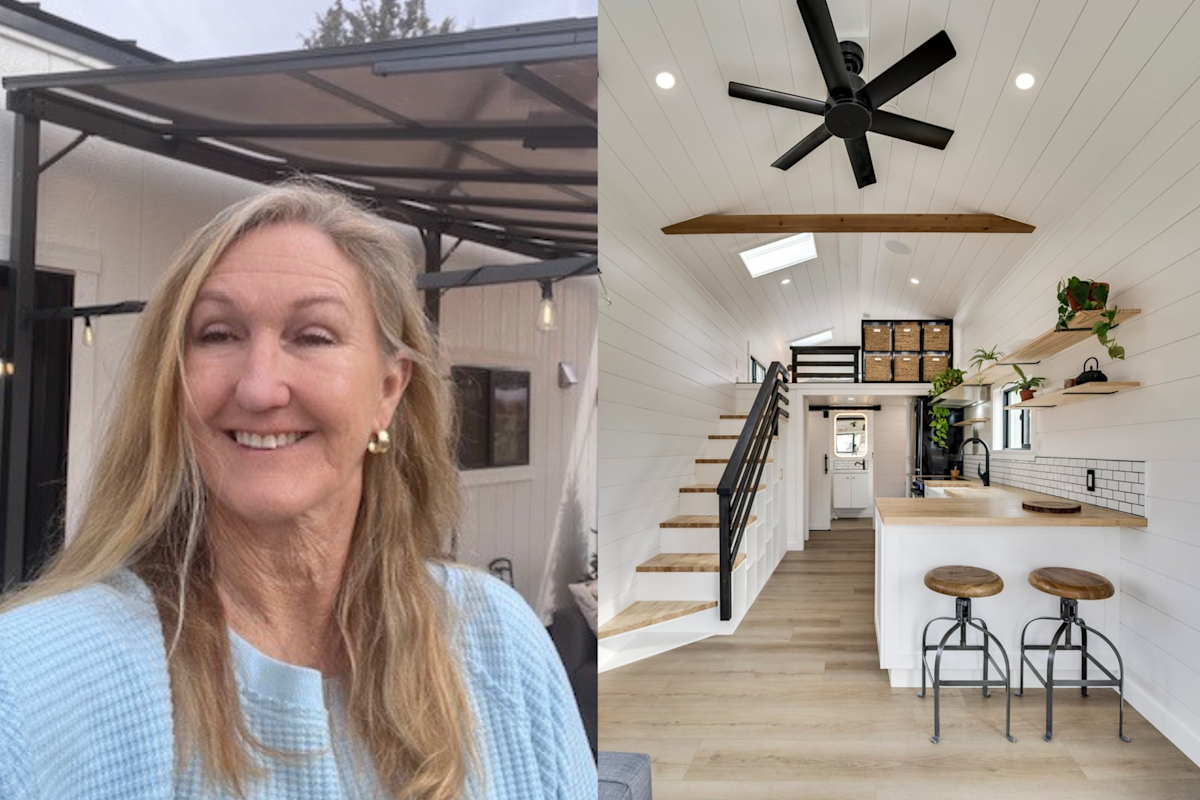
Tiny bungalows are popping up in back lawns across the U.S. as more American adults welcome their grandparents home with “granny pods.” Denise Martin, a 65-year-old retired financial advisor and grandmother of three, has been cozied up in her own miniature home for over a year—right in her daughter’s backyard.
“The primary reason why I relocated here was because I had a granddaughter, and I now have a second granddaughter who’s four months old,” Martin tells Fortune. Luckily her son-in-law, Bijan Taherkhan, just so happened to own his own micro-home business: Spindrift Tiny Homes. And with enough room on the family’s property in Bend, Oregon to fit another structure, Taherkhan built her a custom model suited to her needs: a 10-by-10 foot loft where she sleeps, hovering above a 300-square-foot living space.
Martin says it took less than three months to build her granny pod, which set her back less than $200,000. It took her six months to adjust to living in such a small space—but Martin believes it’s worth it to live near her family and save some coin in the meantime.
“There was room to put one on the property for me, and that enabled me to be close to the grandchildren, help out the family when needed, [and] just participate in all the things that go on on this property, and live very comfortably at the same time,” Martin says.
While grandparents like Martin get a sense of independence while still being able to connect with their families, there’s also another huge perk to tiny homes: a lower cost of living.
Jason Waugh, president of global real estate brokerage Coldwell Banker Affiliates, tells Fortune that he’s witnessed an influx of granny pod requests as families are trying to scrape by. He says multigenerational living is on the rise largely out of “economic necessity.”
“Whether it’s a tiny home or a granny pod, it’s a growing trend because of affordability issues and economic uncertainty that we’ve navigated over the last three years,” Waugh explains, pointing to “mortgage interest rates, or just overall economic conditions and shortage of [housing] inventory.”

Martin moved from Arizona into her Oregon granny pod back in December 2024. Spindrift Homes, which manufactures tiny homes for typically under $160,000, assembled the unit—flush with a deck—within a matter of months. She says it was a fairly painless process: there was no permitting or DMV registration required. It took her half a year to finally get used to her 400 square-foot micro living arrangement.
First Appeared on
Source link






Leave feedback about this