

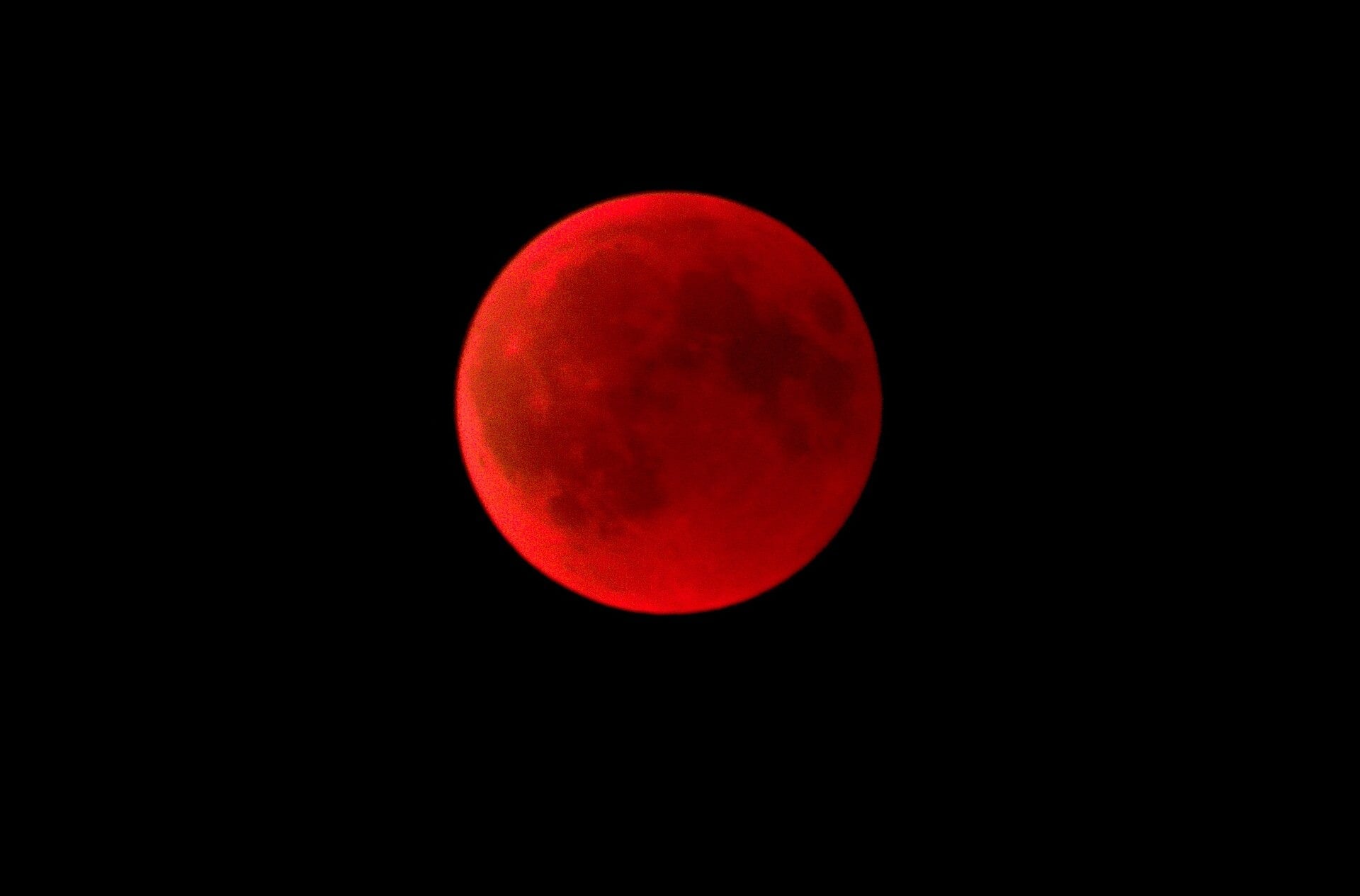
Skywatchers are in for a treat. On March 3, 2026, a spectacular total lunar eclipse will turn the Moon a deep reddish color, creating what is known as a “Blood Moon.” The eclipse will be visible wherever the Moon is above the horizon during the event. This includes much of the Americas, Australia and East Asia. This will be the last total lunar eclipse until late 2028.
What causes a total lunar eclipse?
Lunar eclipses happen only during a full moon, when Earth moves directly between the Sun and the Moon. This blocks some of the Sun’s light and casts a shadow on the Moon. But not all lunar eclipses look the same. During a penumbral lunar eclipse, the Moon passes through the outer, lighter part of Earth’s shadow. So, the change in color is very subtle. In a partial lunar eclipse, only a section of the Moon enters Earth’s darkest shadow. This causes that area to appear darkened.
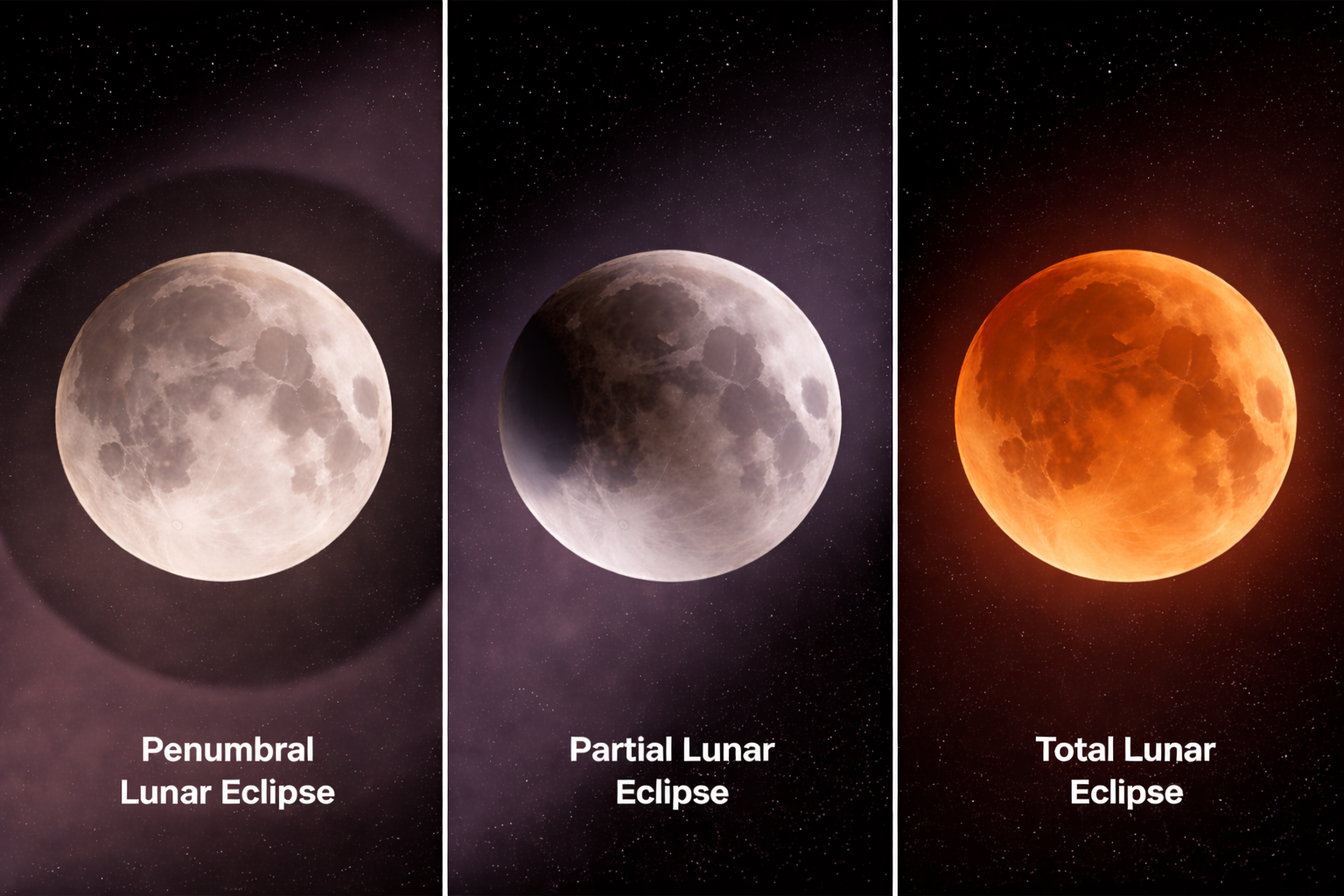
A total lunar eclipse is different. It occurs when the Sun, Earth, and full Moon are perfectly aligned. This causes the entire Moon to move into Earth’s darkest shadow. The Earth blocks the Sun’s direct rays, but some sunlight bends around the edge. As it passes through our atmosphere, the shorter green and blue wavelengths are scattered, while the longer red wavelengths continue on to the Moon. Hence, instead of going dark, the Moon turns into an orangish-red color, or what we call “Blood Moon.”
“The exact color that the moon appears depends on the amount of dust and clouds in the atmosphere,” NASA scientists told Space.com. “If there are extra particles in the atmosphere, from say a recent volcanic eruption, the moon will appear a darker shade of red.”
What time is the March eclipse?
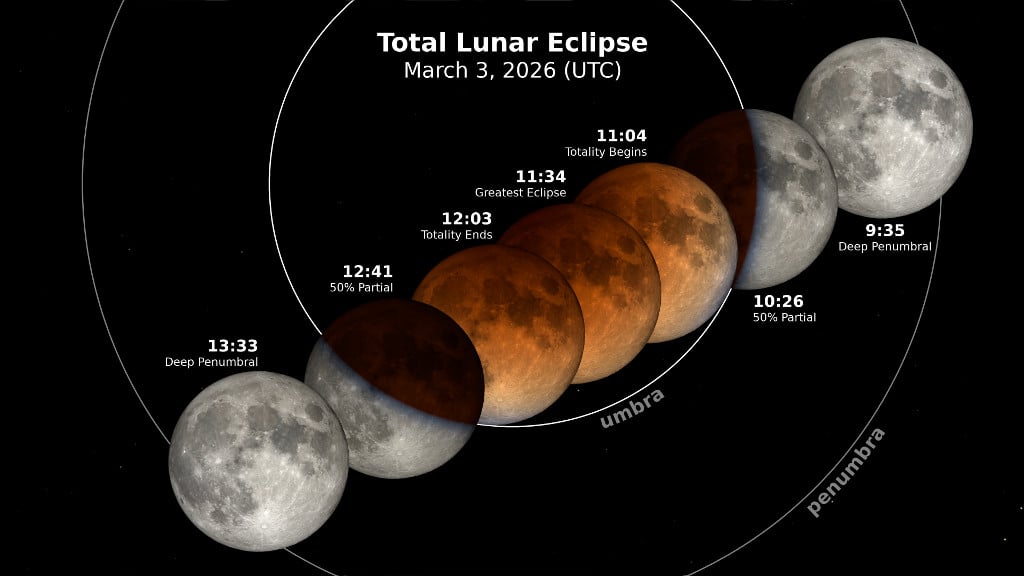
In the US, the eclipse will be best viewed along the West Coast, where the skies will still be dark. The Moon will enter Earth’s outer shadow at 12:44 am PST. By 3:04 am PST, Earth will completely cover the Moon for about 58 minutes, giving it an eerie reddish-brown hue. The eclipse will start to reverse at 4:02 am PST, and the Moon will be fully visible again by 6:23 am PST.
What do I need to watch the eclipse?
Unlike solar eclipses, lunar eclipses do not require special glasses. They also last several hours, giving fans plenty of time to enjoy the spectacle.
Resources: NASA.gov, Space.com
First Appeared on
Source link



Leave feedback about this