

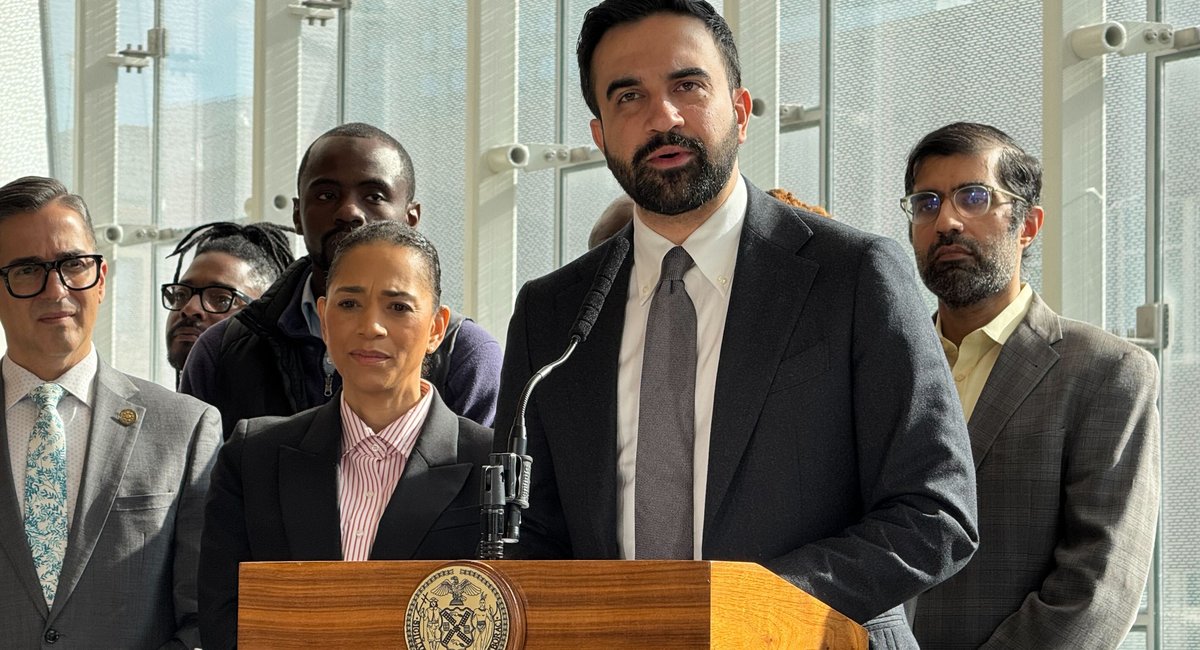
Mayor Zohran Mamdani’s administration on Monday morning released New York City’s first-ever racial equity plan, a list of goals for local agencies to combat racial disparities across the city.
Under the plan, the city would aim to improve pay equity in city roles, provide anti-racism training for city staff, and improve data collection across various demographics, among other goals.
“The neighborhoods hit hardest by rent and the rising nature of it, by childcare costs and the suffocating manner of it, are the same ones that have been hit for years by institutional neglect and racism,” Mamdani said at a press conference announcing the report, at Medgar Evers College in Brooklyn. “ In that way, New York City’s affordability crisis and its history of racial inequity are bound together.”
The racial equity plan is required by the city’s charter, under ballot reforms overwhelmingly passed by voters in 2022. A draft of the first racial equity plan was due in early 2024 under former Mayor Eric Adams — and a version of the plan was completed by the end of Adams’ tenure — but it was never released.
In August, the city’s racial equity watchdog, the Commission on Racial Equity, sued the city and Adams for failing to release the plan on time. Mamdani, earlier this year, vowed to publish the plan during his first 100 days in office.
The plan signals Mamdani’s embrace of racial equity programs at the same time President Donald Trump cracks down on anti-racism efforts on the federal level, and some companies and local governments are backing away from their diversity, equity, and inclusion initiatives.
The plan also marks a subtle shift in Mamdani’s policy approach, as he melds his affordability agenda with racial equity reforms. It comes after Mamdani faced criticism from Black political leaders over not initially hiring a Black deputy mayor and proposing a property tax hike. Mamdani recently appointed Renita Francois, a Black woman, as deputy mayor for community safety.
“It is not just a document,” said Afua Atta-Mensah, the city’s chief equity officer. “It is a commitment to confront institutional and systemic racism within our city and to begin the work of dismantling it.”
Mamdani also unveiled a report on the “True Cost of Living” in New York City, a publication also required under charter reforms passed in 2022 and delayed past its original due date. The analysis found that 62% of New York City residents, more than 5 million people, earn less than what is required to live in the city. The report found that the “true cost of living” for a family with children in the city is over $159,000, but in reality, local families only earn a median income of $124,000.
Jennifer Jones Austin, the chief executive of the Federation of Protestant Welfare Agencies, also chaired a charter revision commission that proposed the racial equity reforms passed in 2022. She said many government policy decisions are based on federal poverty measures, and a “true cost of living” metric is necessary to shift policy conversations.
“ We needed a measure that says, this is what it costs to live daily, what it costs to plan and save for your future, to weather an economic storm,” Austin said. And now we have that in New York City.
Jones Austin added, “ What this measure will now do, with the data that tells us how people are faring, will help to shape and inform policy — not just centered on affordability but true economic security.”
The racial equity plan calls for city agencies to direct resources to historically underserved communities, improve their own recruitment and retention of workers across demographics, and work with more minority- and women-owned businesses.
For example, the Department of Transportation will assess whether there are any racial disparities in the fines and fees it levies.
The Department for the Aging will aim to ensure the people served at its Older Adult Centers mirror the surrounding neighborhoods’ racial and ethnic makeup by 2028.
The Department of Sanitation also plans to collect and analyze data about its services in all of the city’s neighborhoods by the end of this year, to better address concerns in underserved neighborhoods.
The public is invited to provide commentary on the racial equity plan over the next 30 days via an online portal.
This story has been updated with additional information.
First Appeared on
Source link





Leave feedback about this