

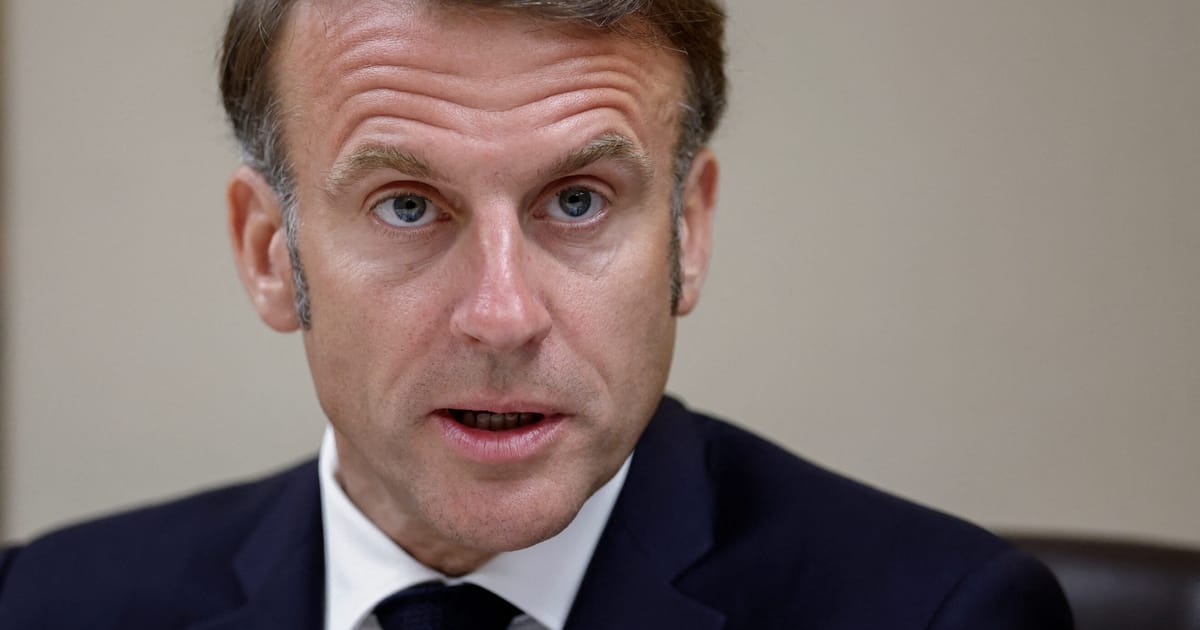
They will be paying close attention to how far Macron goes in Monday’s speech. With the war in Ukraine entering its fifth year and fears about U.S. President Donald Trump’s reliability as an ally, they will want pledges of action rather than the president’s traditional rhetoric.
Their big question, however, will be how much of a new European atomic architecture Macron can realistically lock in, with the NATO-skeptic, far-right opposition National Rally party of Marine Le Pen leading in early polls ahead of the 2027 presidential election.
European officials, military officers and diplomats who spoke to POLITICO for this article said they hoped he proposes something substantive. One senior EU government official said they had “great hopes,” while a European military officer expected “a major change.”
The speech will lay out whether Macron is willing to do something that the National Rally will find hard to unwind. Only the most far-reaching moves — deploying nuclear-capable Rafale fighter jets in European nations, for example, or stationing French nuclear warheads outside the country — would prove difficult for the next French president to reverse without weakening France’s credibility.
“It would appear that the president has a genuine desire to commit France to something that the National Rally would not be able to overturn if it came to power,” said Florian Galleri, a researcher at the Massachusetts Institute of Technology, who specializes in nuclear deterrence. However, he conceded, “under political or economic constraints, the speech may be much more cautious, even deliberately vague.”
France has long suggested its roughly 300 warheads could play a bigger role in a wider European security strategy, but Germany, with more developed transatlantic instincts, has traditionally been warier. That’s changing, though, and German Chancellor Friedrich Merz earlier this month opened the door to German forces operating with French and British nuclear weapons.
First Appeared on
Source link





Leave feedback about this