

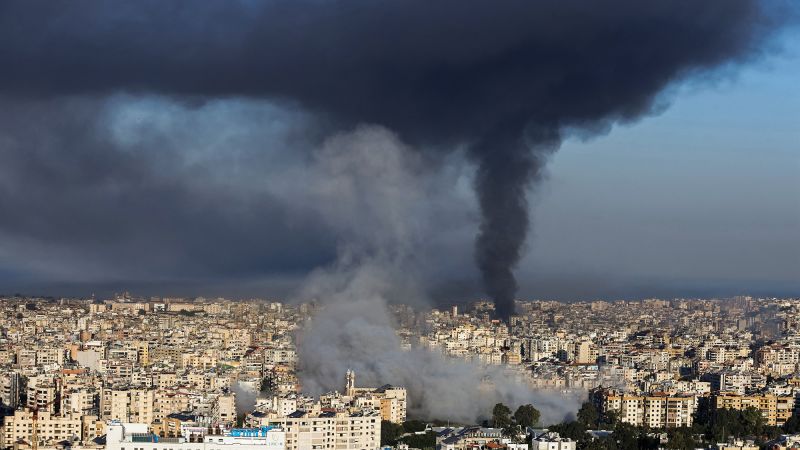
The widening conflict in the oil-rich Middle East has sparked concerns about potential petrol price spikes and fuel shortages – but how worried should consumers really be?
Prices at the pump could see limited pass-through from higher global oil prices, which have jumped this week on concerns about supply. A lot depends on how long the conflict, now entering its fourth day, lasts.
“The price of oil is actually a relatively small part of the price you pay at the pump,” David Oxley, chief commodities economist at Capital Economics, told CNN.
In the United Kingdom, for example, a $10 increase in the price of Brent crude, the global benchmark, adds only about 7 pence to the petrol price, currently sitting at around 133 pence per liter, he noted.
Brent oil is trading at $83 a barrel, up from $72.9 on Friday, before the conflict broke out, according to FactSet data.
The palpable, albeit limited, effect on UK fuel prices will arrive with about a two-week lag, Oxley added.
Risks to the availability of crude, meanwhile, come at a time when oil supply continues to outpace demand, according to the International Energy Agency. Developed economies are are also well-stocked with crude.
That’s because IEA member countries – which include the United States, Canada, Mexico, the UK and more than two dozen others – must hold oil reserves equal to at least 90 days of net imports.
If supply is severely disrupted, oil can be released from these reserves, a step many countries took in 2022 following Russia’s full-scale invasion of Ukraine.
First Appeared on
Source link




Leave feedback about this