

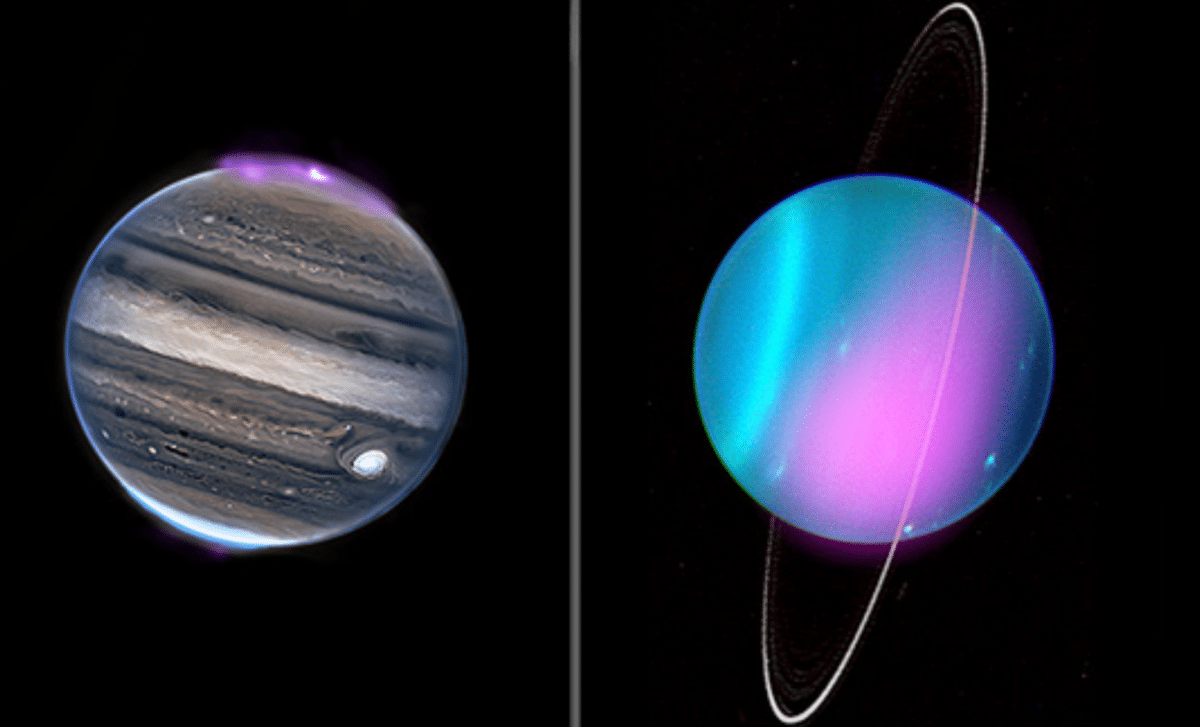
NASA’s Chandra X-ray Observatory has introduced an innovative way to explore the far reaches of our solar system. By converting telescope data into sound, they’ve created immersive sonifications that bring the planets to life through audio. This breakthrough not only adds an auditory dimension to the visual wonders of space but also expands the accessibility of space exploration. Now, you can hear the crackling auroras of Jupiter, the sweeping rings of Saturn, and the icy whispers of Uranus. These soundtracks offer a new way to experience celestial bodies, helping to deepen our connection to the cosmos.
The Process Behind NASA’s Sonifications: Turning Data Into Sound
The sonification process used by NASA to transform space data into sound is both fascinating and intricate. It involves converting high-energy radiation data, gathered by the Chandra X-ray Observatory, into sound waves. The data comes from solar X-rays that are reflected off planets, moons, and other celestial bodies in our solar system. By mapping brightness, position, and energy to specific sound qualities like pitch, volume, and instrument choice, scientists can produce sonic representations of astronomical phenomena. This method offers a fresh way to interpret the data collected by telescopes and makes it more engaging for those who may find traditional images or graphs challenging.
“Sonifications expand options for people to explore what telescopes discover in space, an example of NASA’s ongoing commitment to share its data as widely as possible,” said NASA officials in a statement.
The use of sound opens new doors for people to experience space through a more interactive and dynamic medium. The sonifications created by NASA have included the beautiful, yet powerful, auroras on Jupiter and the sweeping movements of Saturn’s iconic rings, each reflecting the unique characteristics of these planets.
Chandra X-ray Observatory: Pioneering the New Space Experience
The Chandra X-ray Observatory is central to the sonification process, as it captures high-energy radiation data from the planets. This observatory detects the X-rays produced by solar winds interacting with the atmospheres of various celestial bodies. These rays carry vital information about the energy, composition, and behavior of these distant worlds. NASA’s use of this data to create soundscapes highlights a forward-thinking approach to space exploration. By analyzing X-rays and translating them into audible sound, NASA is effectively making space data more accessible and engaging for a wider audience.
The observatory’s combination of X-ray radiation and imagery from other NASA sources like the Hubble Space Telescope allows for a richer, more detailed understanding of the planets. The synthesis of these various forms of data not only helps scientists interpret space more comprehensively, but it also offers the public an immersive experience of what the solar system sounds like. This innovative approach could revolutionize how we understand distant planets, turning abstract data into something tangible and visceral.
First Appeared on
Source link





Leave feedback about this