

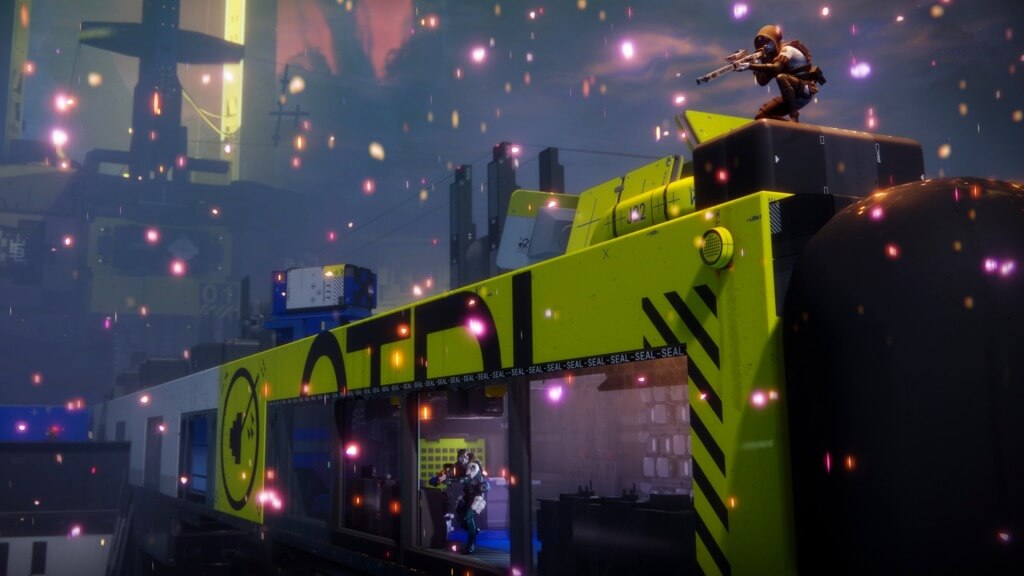
Bungie’s Marathon is autobiography. In 2022, Sony bought the developer behind Halo, Marathon, and Destiny as part of a larger movement into live-service gaming. Despite the success of 2024’s Helldivers 2, that effort has largely crashed and burned, claiming the likes of an online title set in the world of The Last Of Us, another in the God Of War series, a cancelled project at Sony’s Bend studio, Concord and the entire development team behind it, and, most recently, one of the publisher’s greatest assets, the accomplished remake studio Bluepoint Games. And now Bungie has released Marathon, a game about expendable mercenaries hired by uncaring corporations to scavenge what value they can from a failed project.
In Marathon, every player is a shell, an “unregistered biocybernetic entity” built to work outside the jurisdiction of spacetime law and “disqualified from human rights and wartime cruelty protection.” These shells harbor the consciousness of humans—freelance mercenaries known as runners—and diligently do the risky work of descending onto Tau Ceti IV, where a now-abandoned colony was meant to support humanity’s growth across the cosmos. In other words, these runners and their shells are a means to an end, weapons to be wielded by Marathon‘s various factions and corporations to extract anything and everything that they might salvage from Tau Ceti IV (be it arms, left-behind valuables, or samples of life) and the seemingly failed Marathon project that once sought to colonize the system.
Marathon itself is a finely tuned weapon—the extraction shooter (a niche genre about looting a map for the most prized possessions, surviving against other threats and players, and successfully exfiltrating with your bounty) that has finally made the genre’s prickly design principles click. Bungie’s signature polished gameplay lends a sheen to the genre that makes participating in its loop more exacting and precise than other games of this type, and also less susceptible to crude exploits and bugs. The studio’s ineffable pedigree for the fundamentals of the first-person shooter, from the audio-visual feedback of clipping an AI combatant to the tremendously propulsive whir of a powerslide in the Vandal shell, is as evident here as on Halo and Destiny, enriching the tense loop of successive runs. Each shell, complete with their own abilities and specialties, allows the player to chart a new course every run with a simple choice, and every one of its maps offers a varied sandbox in which to luxuriate. At a time when games feel increasingly generic and impersonal, these details show that Marathon is made by actual people with an eye and ear for what makes games special.
First Appeared on
Source link






Leave feedback about this