

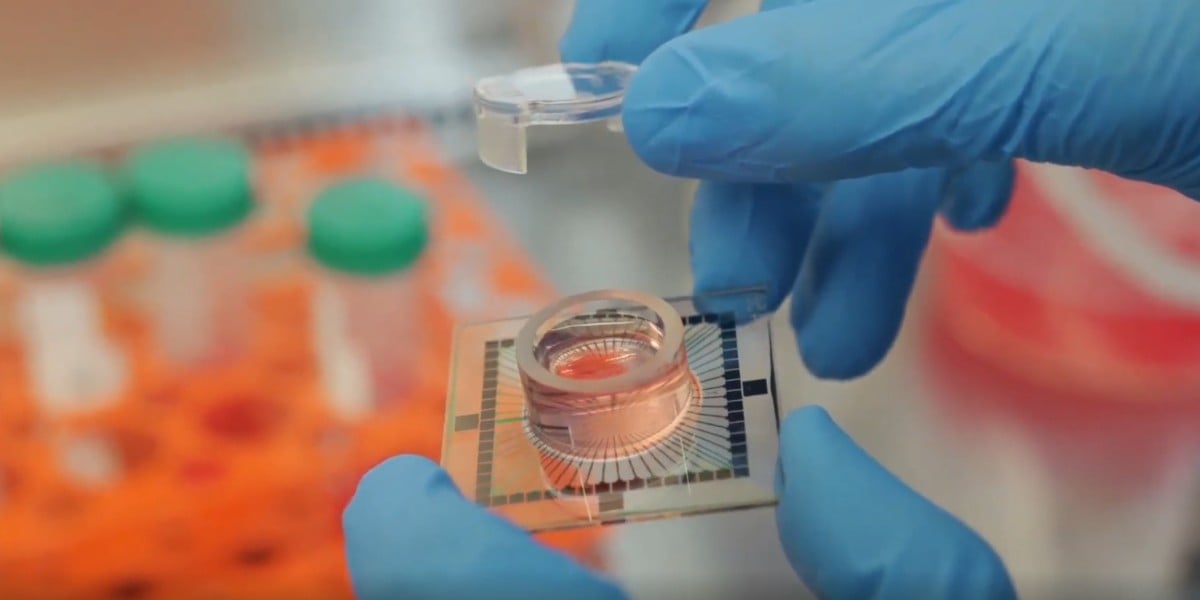
At the start of the working day at Cortical Labs’ datacenter in Melbourne, Australia, technicians top up the resident computers with a liquid modelled on the cerebrospinal fluid that surrounds the human brain.
“We remove the fluid every 24 hours,” Cortical Labs CEO and founder Hon Weng Chong told The Register, because the living neurons that power the company’s computers deplete the level of oxygen and glucose in the liquid. An employee therefore starts the day by adding fluid to the biological computers in the company’s datacenter.
Those admins also adjust the mixture of gases in the computers. Chong said the company adds nitrogen and carbon dioxide so the atmosphere around its computers comprises around five percent oxygen – prime conditions for biological computers to operate.
Biological computing is in its very early stages, but Chong claims the neurons in biological computers can learn about the simulated environments they inhabit and devise novel approaches to challenges the face within them. The CEO says they can do that faster than classical computers, create original ideas instead of regurgitating and re-ordering information like LLMs, and do it all while using less energy than conventional datacenters.


But few organizations provide cells or know how to handle them. Chong told The Register the nascent biological computing industry awaits the arrival of a cell foundry to provide its equivalent of TSMC and make biological computers accessible to the rest of us.
Cortical Labs has therefore launched a cloud service. The company racked and stacked 120 CL1 units and created an API and interface that allows users to create a Jupyter Notebook or upload python code, and have it run on a biological computer.
Users pay for the cloud with a credit card, but the similarities with hyperscalers end there, as it takes Cortical Labs around a week to prep its machines for each job. The company must source whatever cells a customer desires, then set up the physical environment so they’re ready for work. Chong said most users will rent three or four CL 1 units, because their work is experimental and they will need to duplicate results and run a control group.
The CEO therefore expects that early users of the cloud will either be scientific labs that can’t run their own CL1, or organizations that have unusual computing needs and decide to explore biological computing so they develop experience in the technology before more practical services become available. The Register shared an example of an Australian bank making very early investments in quantum computers. Chong said that’s the kind of early customer he hopes will dabble with Cortical’s cloud.
Readers may recall that we covered Cortical Labs recently after the company showed its machines learned how to play DOOM.
The methods the company used to achieve that feat derive from techniques described in a 2022 paper [PDF], titled “In vitro neurons learn and exhibit sentience when embodied in a simulated game-world.”
The paper explains how researchers placed a biological neural network (BNN) composed of human and rodent stem cells on high-density multielectrode arrays.
“This system … can leverage the inherent property of neurons to share a ‘language’ of electrical activity to link silicon and BNN systems through electrophysiological stimulation and recording,” the paper explains. That work saw neurons learn how to play Pong. Cortical Labs refined it and productized it into a device called the CL1 which is now on sale.
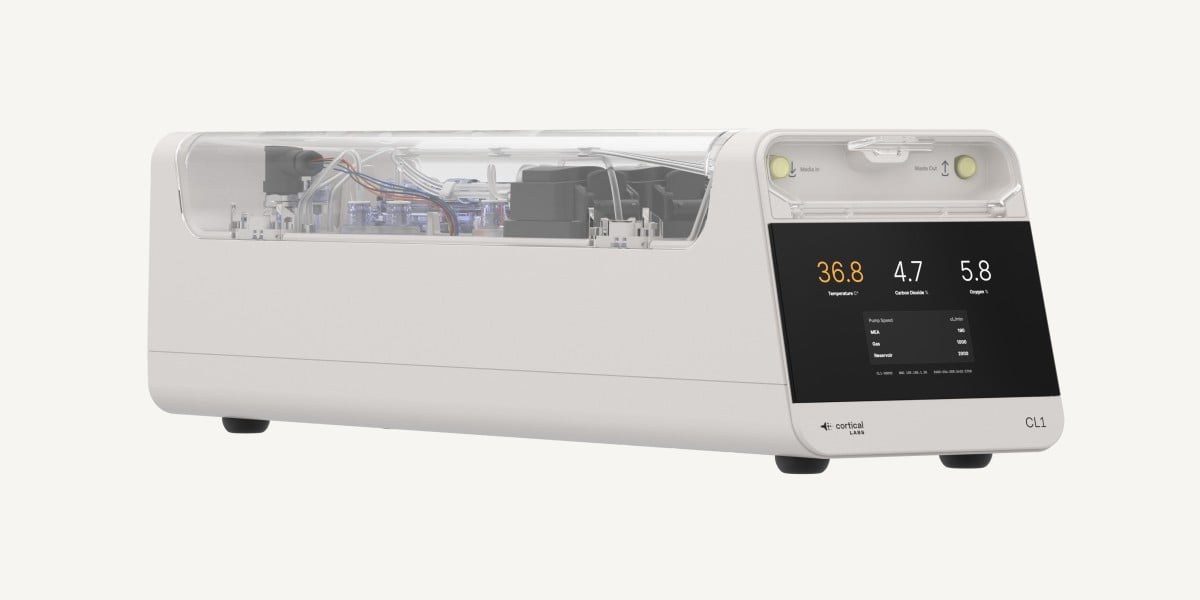
Cortical Labs’ CL1 biological computer – Click to enlarge
To use a CL1, you’ll need to choose a line of cells with genetic traits suited to a particular computing job – then do all that messing about with gases and peculiar fluids to prep the machine for work.
One day, he hopes automation will remove the need for messy work with fluids and gases. For now, Chong is content to have a colleague get hands-on with CL1 units every day because he thinks users will tolerate that. He also half-jokingly told The Register that he’s also just a little uncomfortable with giving biological computers the chance to control their own destiny. ®
First Appeared on
Source link






Leave feedback about this