

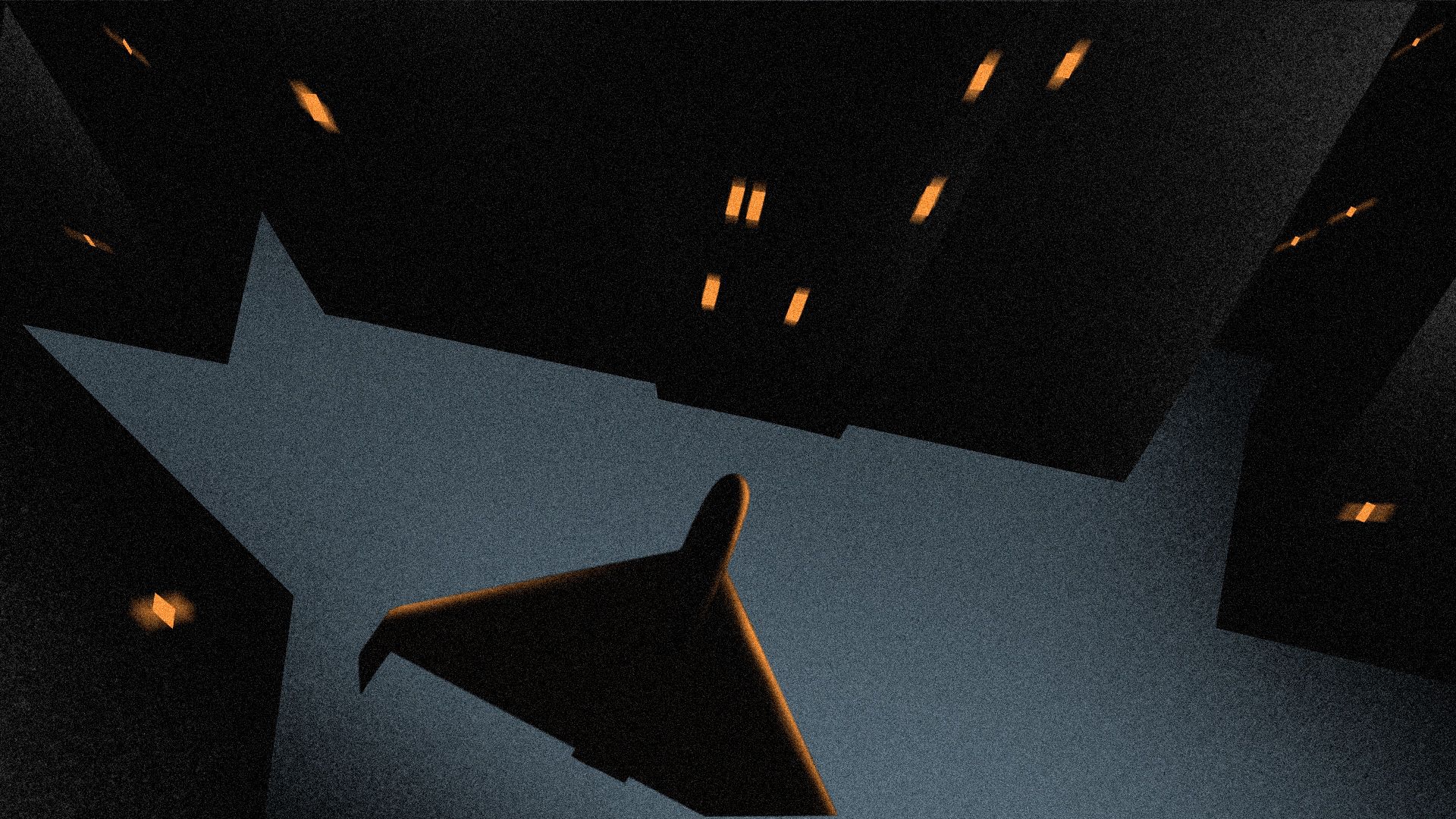
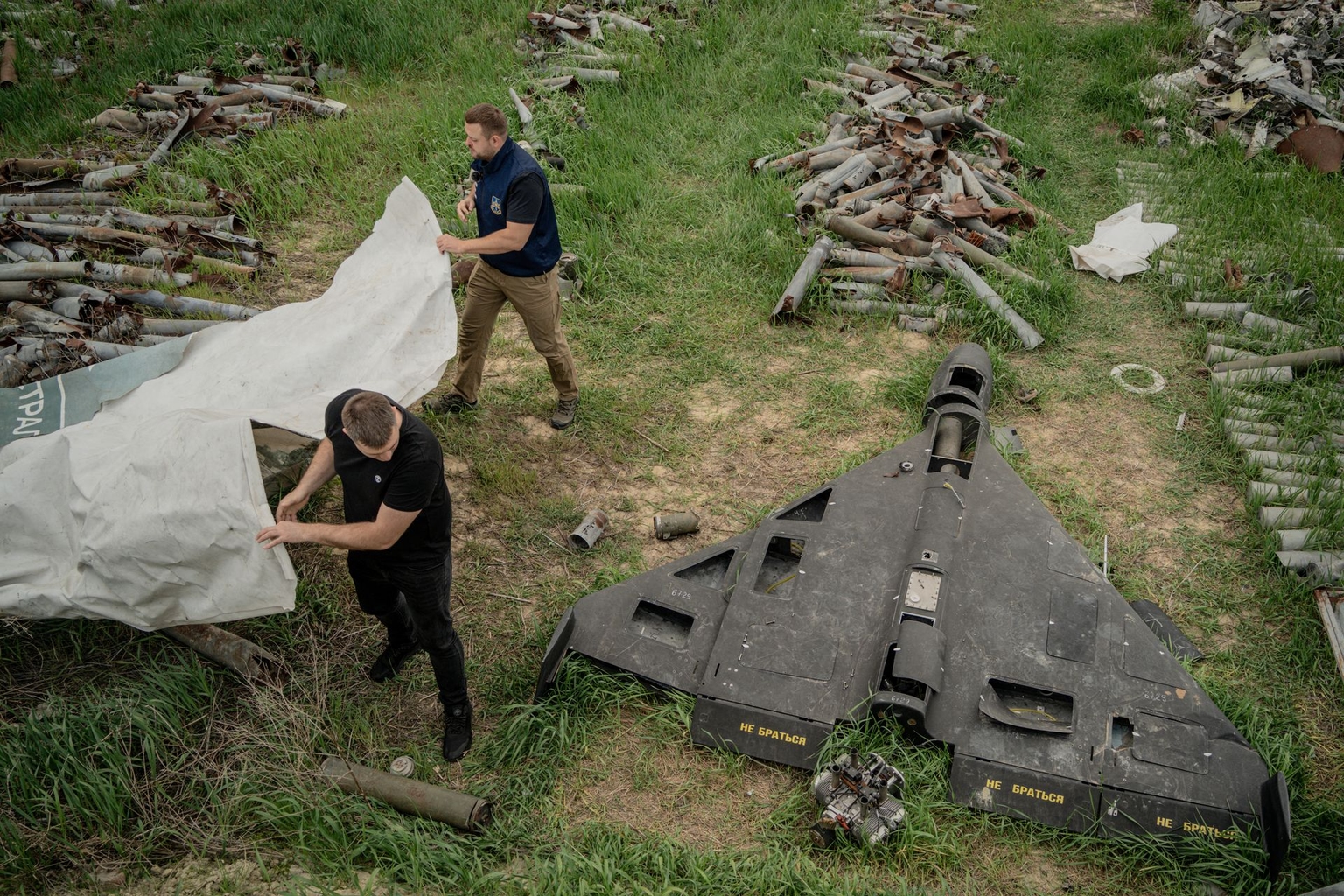
Russia has ramped up attacks on Ukrainian civilians with its Shahed (Geran-2) attack drones — still full of European-made components. (Nataliia Shulga/The Kyiv Independent)
Editor’s note: This story is part of a cross-border investigative project that involved eight newsrooms, initiated by De Tijd (Belgium) and coordinated by the Kyiv Independent and OCCRP. Other stories published within the project are linked at the bottom of this investigation.
A tiny Austrian sensor designed for precise motion control made an impressive journey across the globe. Some time after being sold to a company in Hong Kong, it turned up in Ukraine inside a long-range military drone launched from Russia.
Its path offers a case study in how European goods can still be incorporated into Russian weapons systems.
The drone was a Russian version of the Iranian Shahed-136, known as the Geran-2. After the start of its full-scale invasion of Ukraine in February 2022, Russia acquired Iranian Shahed technology and invested in mass production of the Geran-2.
This explosive drone has since become the most widely used long-range unmanned aerial vehicle (UAV) for striking targets deep inside Ukraine.
The Kyiv Independent has obtained Ukrainian military intelligence files documenting the remnants of several Russian-produced Shaheds found in Ukraine.
According to the documents, apart from Russian and Chinese parts, Geran-2 drones include numerous components from American, European, Japanese, and Taiwanese manufacturers. Notably, some of these components were produced in 2024 and 2025 — after the start of the full-scale invasion and the implementation of sanctions.
In collaboration with De Tijd, OCCRP, Paper Trail Media, Der Standard, The Times, The Irish Times, and InfoLibre, the Kyiv Independent has analyzed Russian customs records detailing shipments in Russia, reached out to the Western manufacturers and spoke to the EU and Ukrainian authorities, intelligence officials, military experts and sanctions specialists.
This investigation reveals how that Austrian sensor ended up in a Russian attack drone — and how many other Western components, including restricted ones, keep entering Russian drones through third countries.
According to the customs records, reviewed by the Kyiv Independent and its partners, thousands of units of Western components banned from export to Russia since 2022 have been routed through China, Hong Kong, and a handful of other countries to Moscow and other Russian cities.
Ukrainian intelligence files also indicate that some Western components enter Russian drones as part of devices manufactured and sold by China.
Using these supply routes, Russia has ramped up production of its domestic version of the Shahed drones to 3,000 units per month by the end of 2025, according to statistics kept by the Ukrainian Air Force. The figure will grow, a representative of the Ukrainian government believes.
European intelligence agencies are also concerned about the scale of Russia’s relatively inexpensive, mass-produced Shahed drones, the investigation found.
The Geran-2 drone is of great strategic importance to the European Union, partly because of its range of about 2,000 kilometers, according to a source in a European intelligence service.
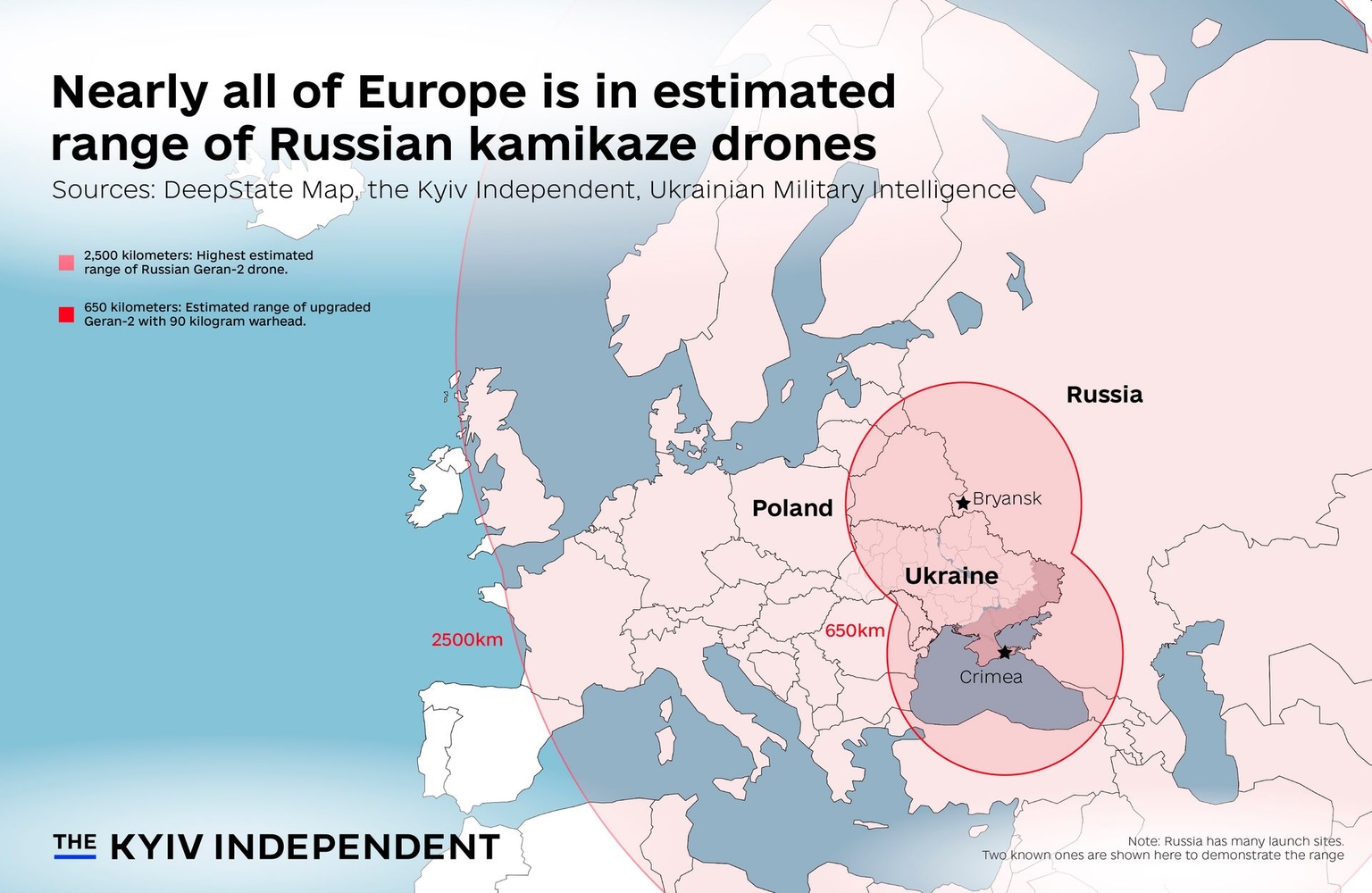
The question for EU governments and manufactures is whether they can stop the flow of European components feeding Russia’s drone production by way of China, Hong Kong and developing countries.
Russian Shaheds already seen in the EU
“There have already been several incidents with this drone across the border in Romania, in which Romanian airspace was violated or debris was found,” says a representative of a European intelligence agency, who speaks on condition of anonymity.
The spillover has reached other European countries as well. During Russia’s large-scale air assaults on Ukraine, Russian Shahed strike drones have entered the airspace of neighboring Poland, Romania, and Moldova.
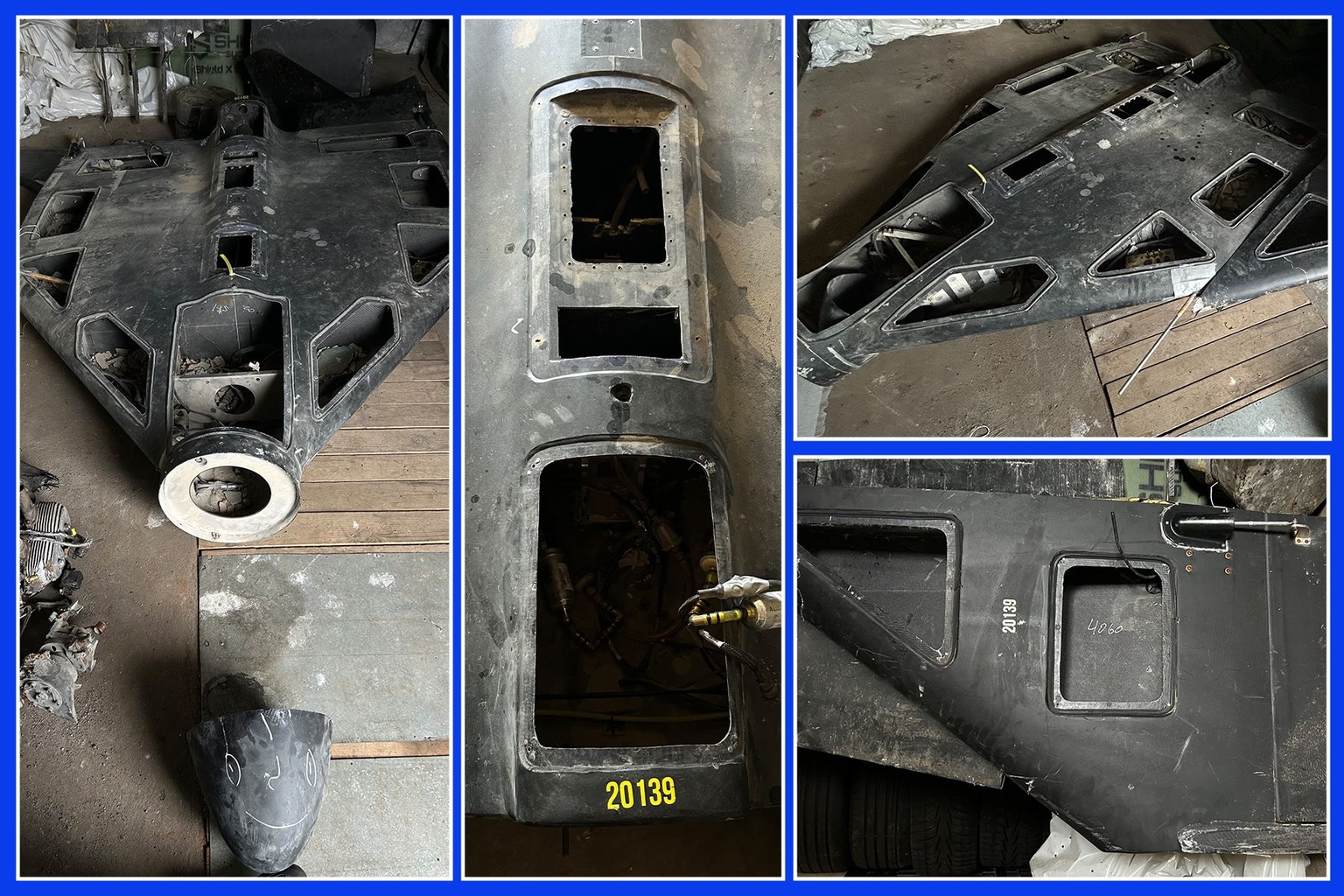
The main advantage of Shahed drones is their ability to carry explosives over long distances — no other kamikaze drone manufactured by Russia is capable of flying that far, weapons experts explain.
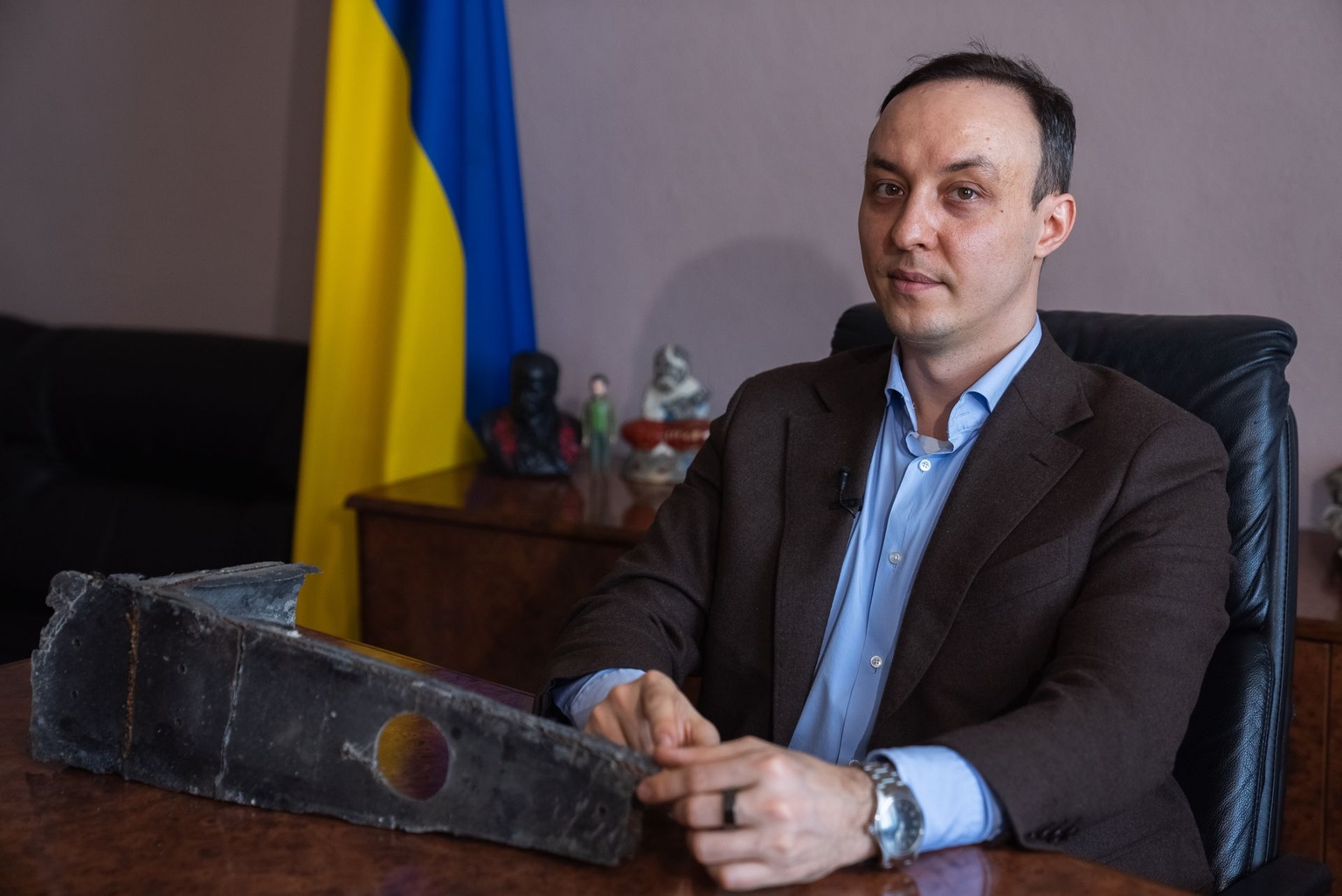
“Plus, it turned out that it is the Shahed that allows for such mass production — literally thousands of units per month,” says Ivan Kirichevsky, a service member of Ukraine’s Armed Forces and a weapons expert at Defense Express, a Kyiv-based military think tank.
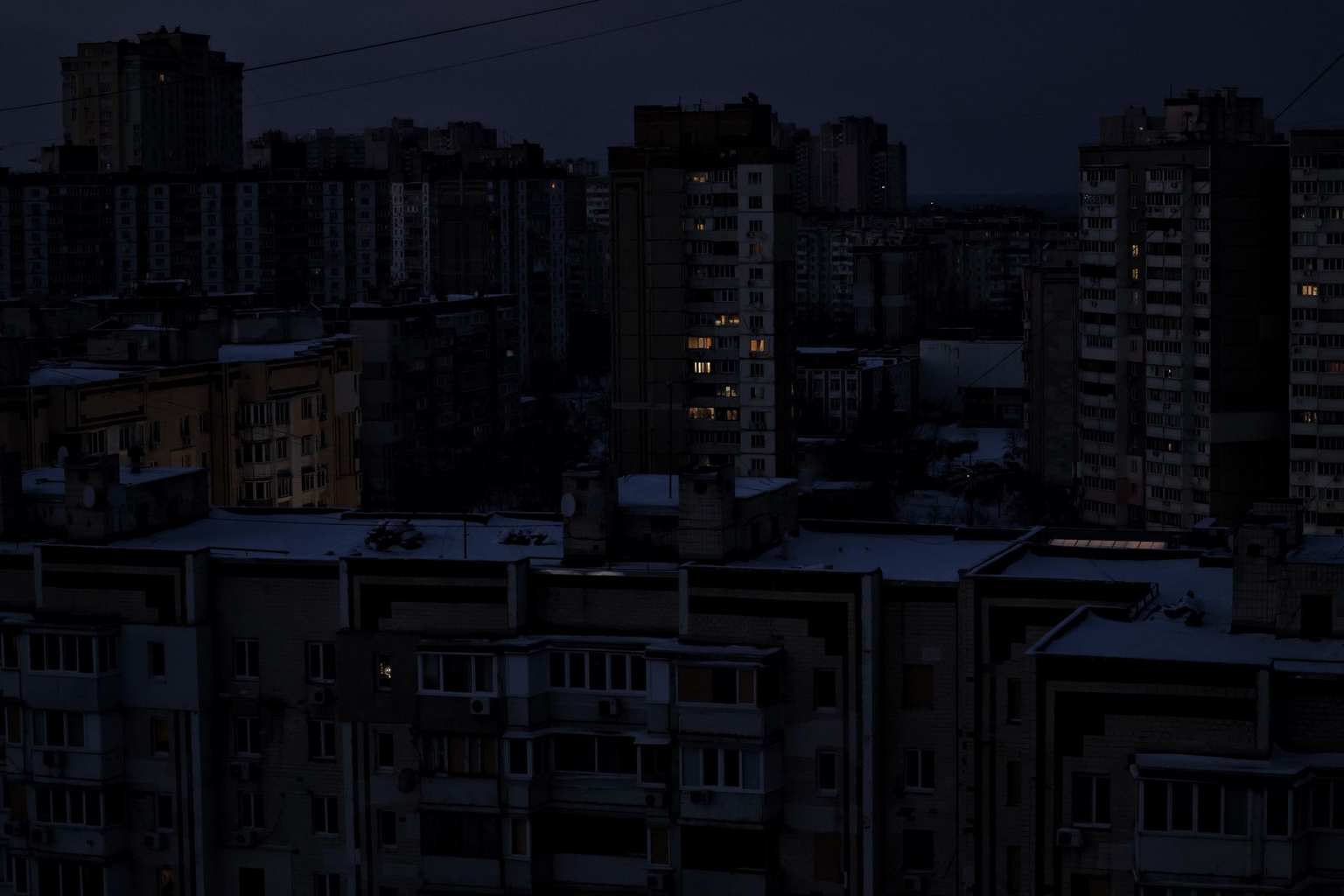
In Ukraine, Russia’s army has created an ongoing humanitarian crisis by systematically launching swarms of Shahed drones, 300 to 500 at a time, alongside dozens of missiles, damaging electricity and heating generation plants.
About 1 million Ukrainians were left without heat, power and hot water during winter cold snaps when the temperatures fell below -20 degrees Celsius (-4 degrees).
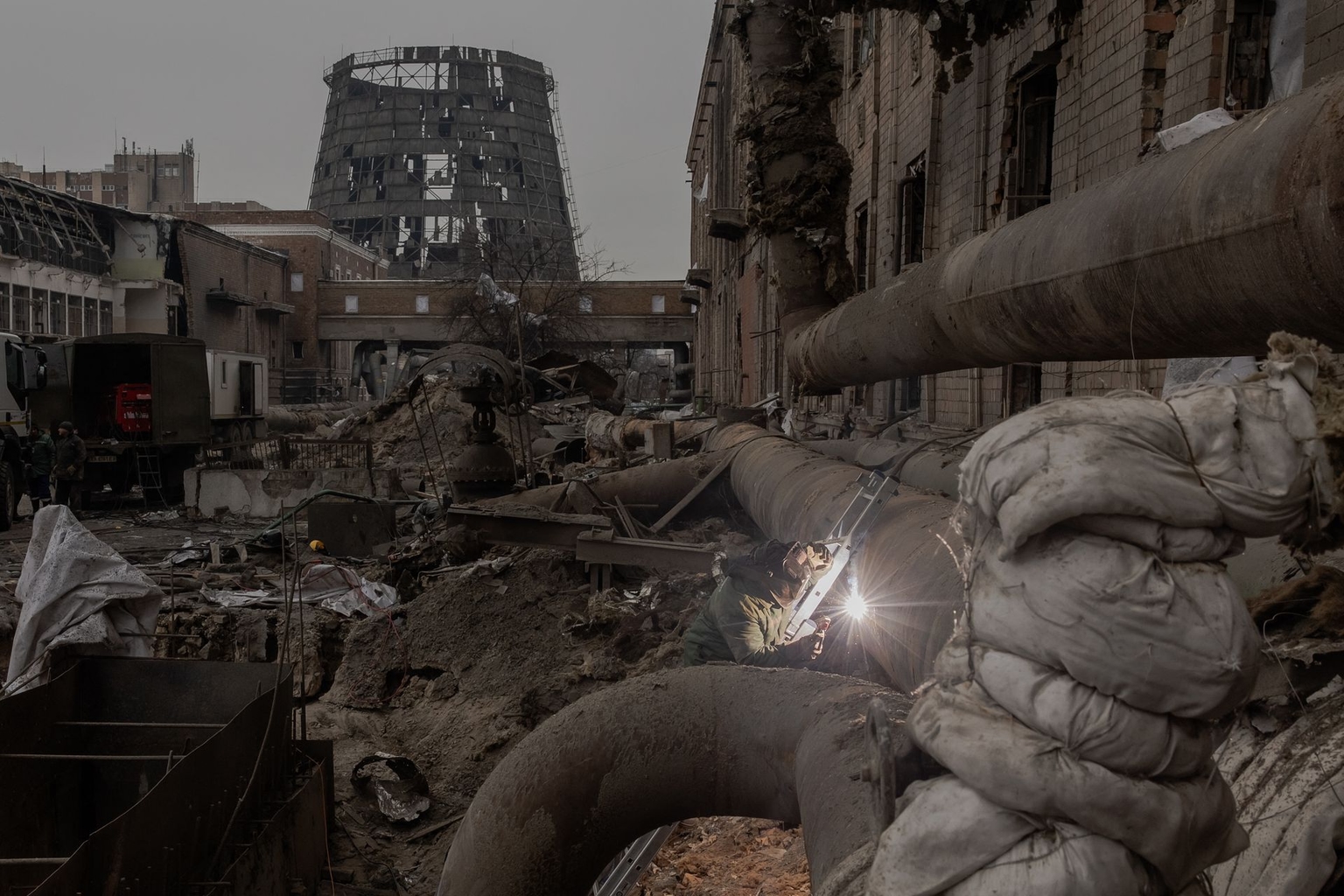
“Yesterday, I was lying in bed, thinking about putting on gloves,” says Tetiana Kavinova, a Kyiv resident, whose electricity and heating has not worked reliably since Russian Shahed drones started repeatedly hitting the city’s power plants in early January.
With domestic Shahed drones, the Russian military has dramatically increased the number of civilian casualties in Ukraine, hitting residential buildings, kindergartens, medical facilities, trains, post offices, and other civilian sites in addition to the power grid.
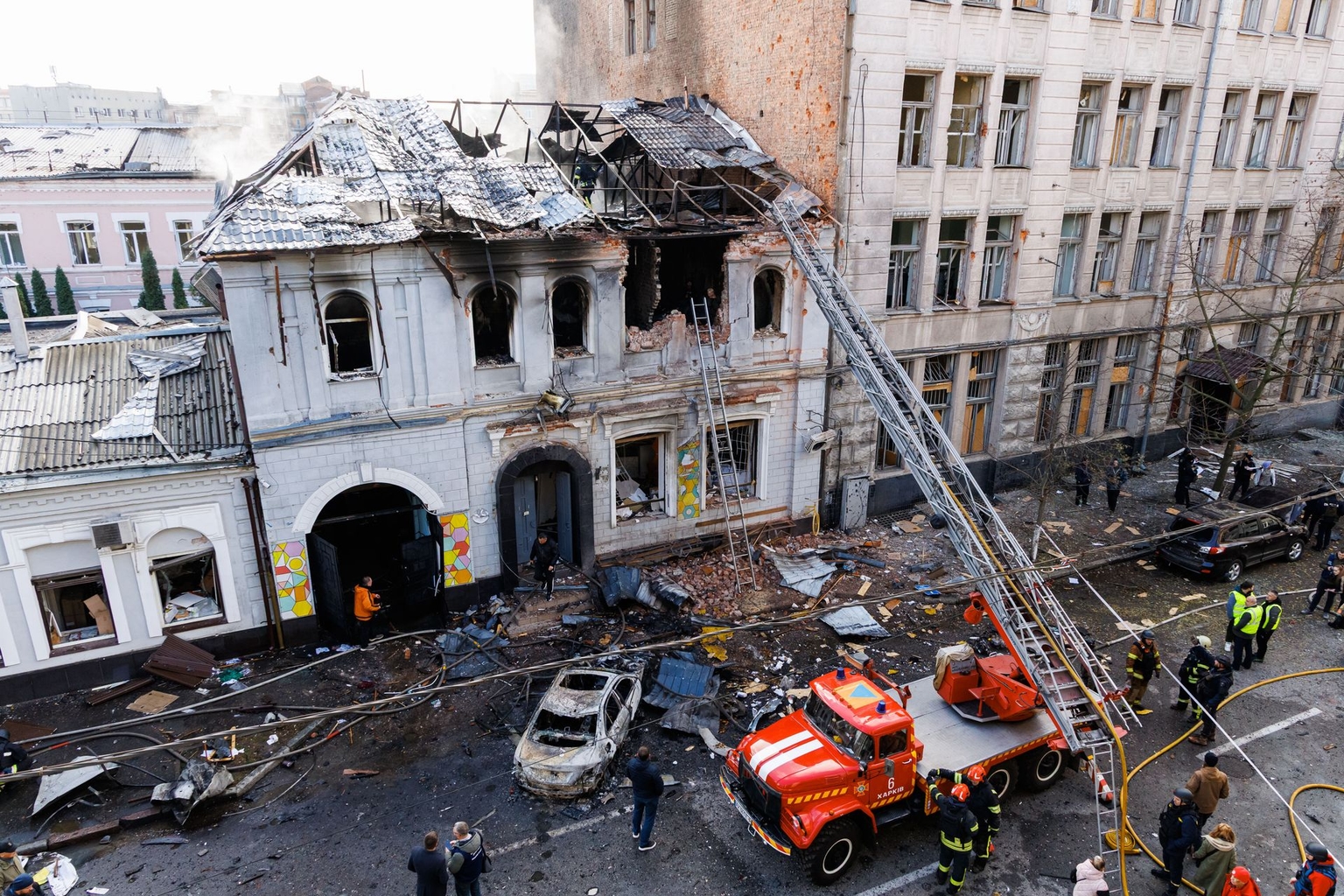
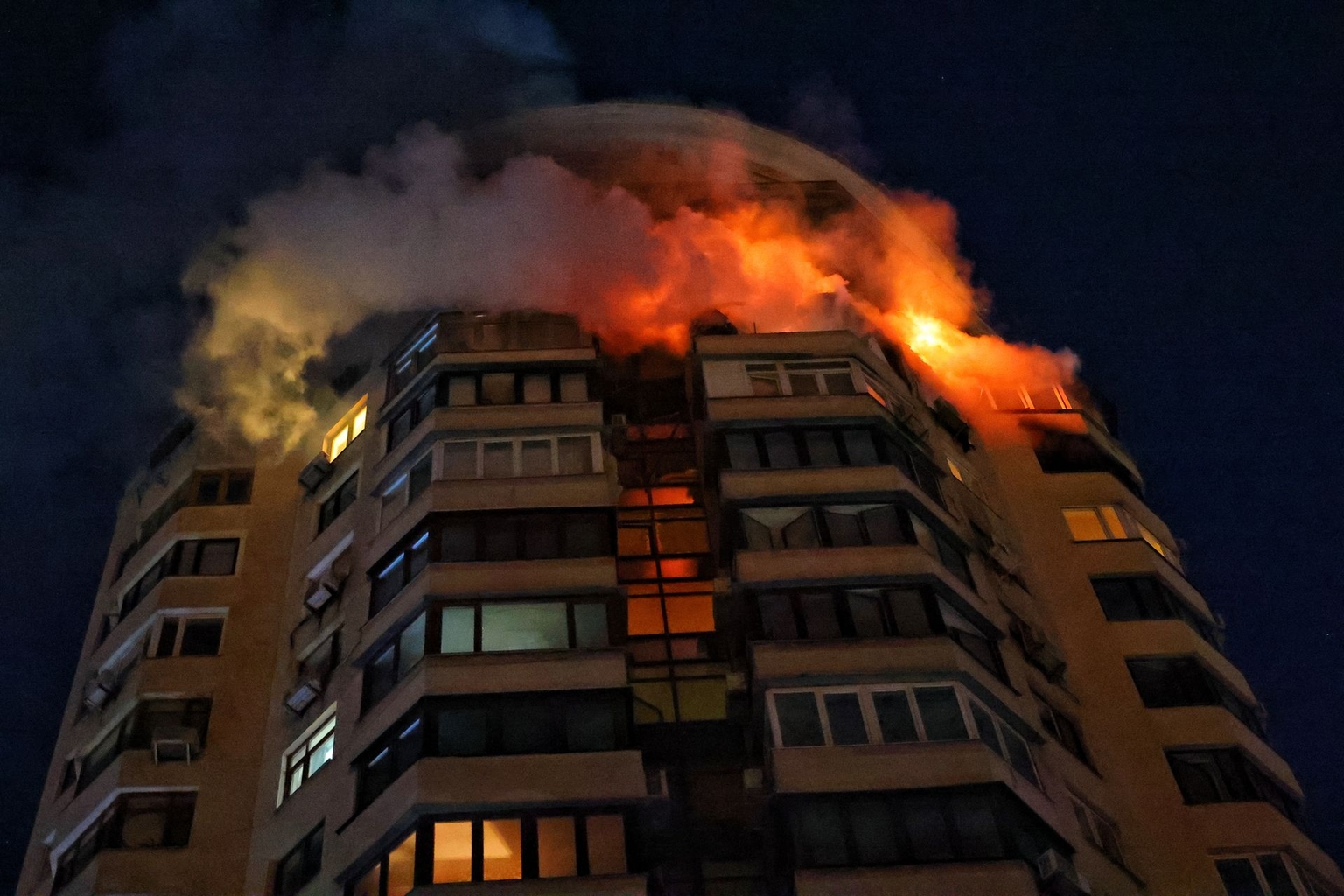
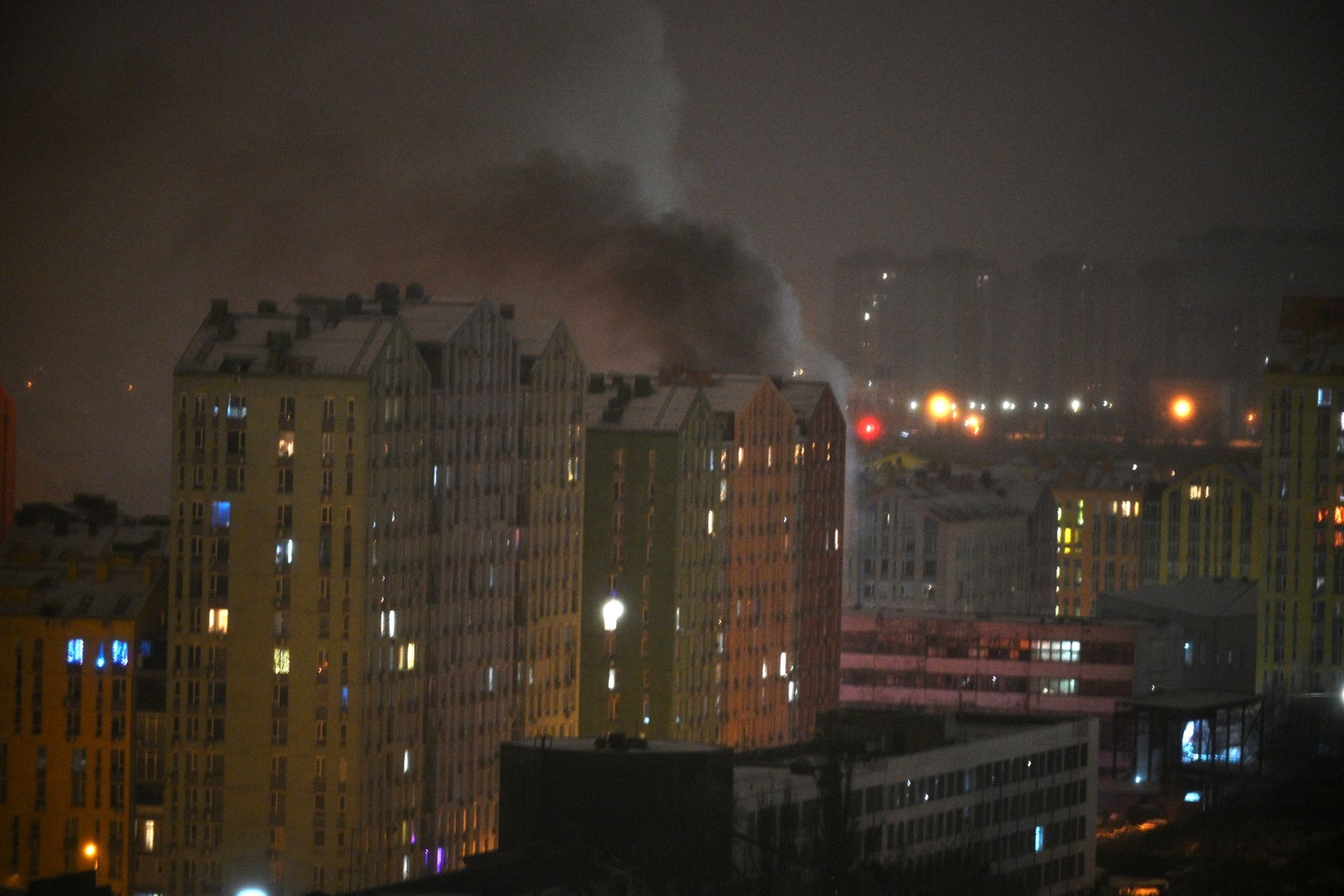
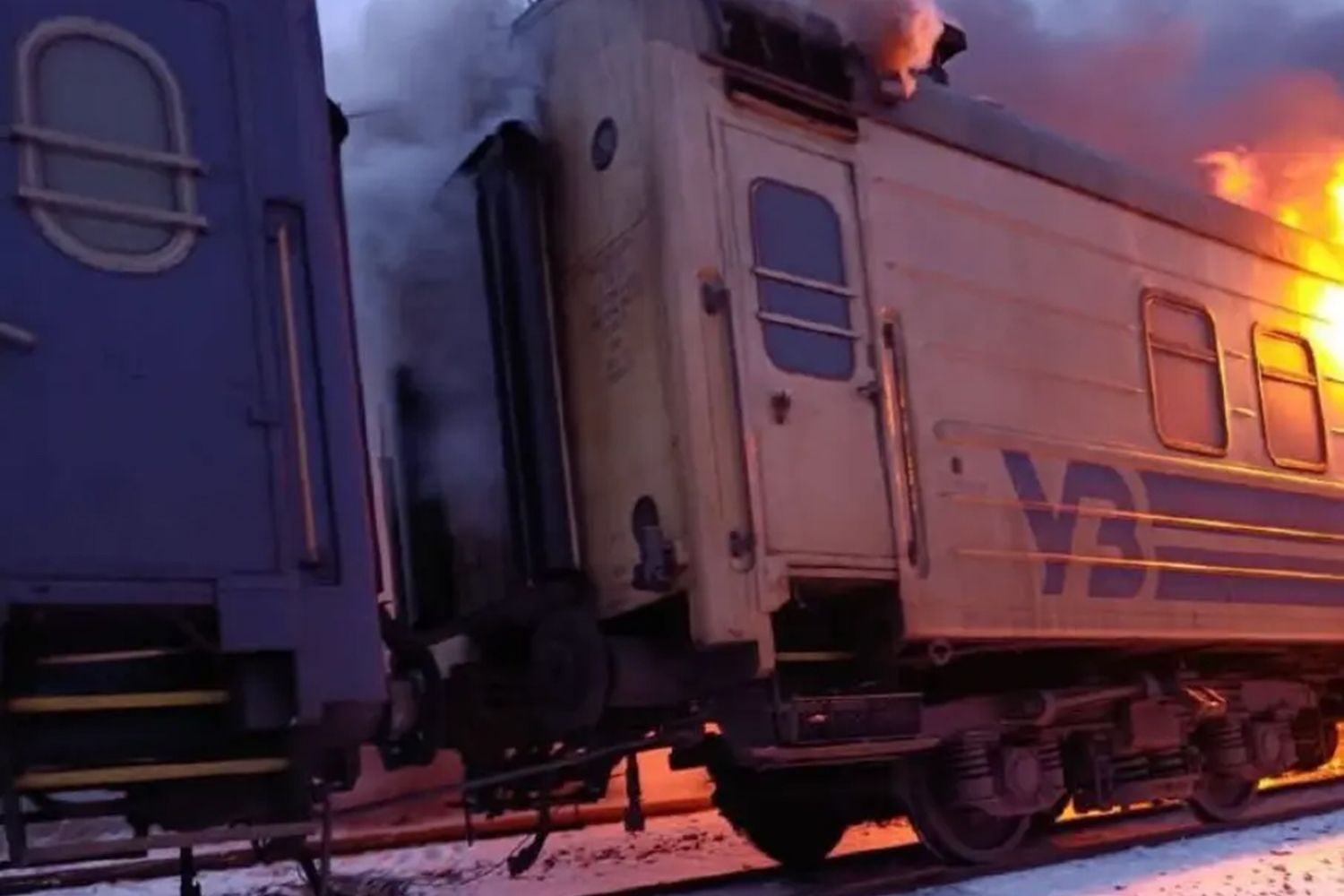
Since the beginning of 2026, Russia has launched Shahed strike drones at Ukraine every night, deploying over 4,600 UAVs of this type in the first month and a half of the year, according to the Ukrainian Air Force daily reports.
In 2025, Moscow attacked Ukrainian cities on 357 nights out of 365, meaning Ukraine had only eight nights without attacks the entire year. Over 32,000 Russia-produced Shaheds, each carrying 50 to 90 kg of explosives, struck the country in 2025.
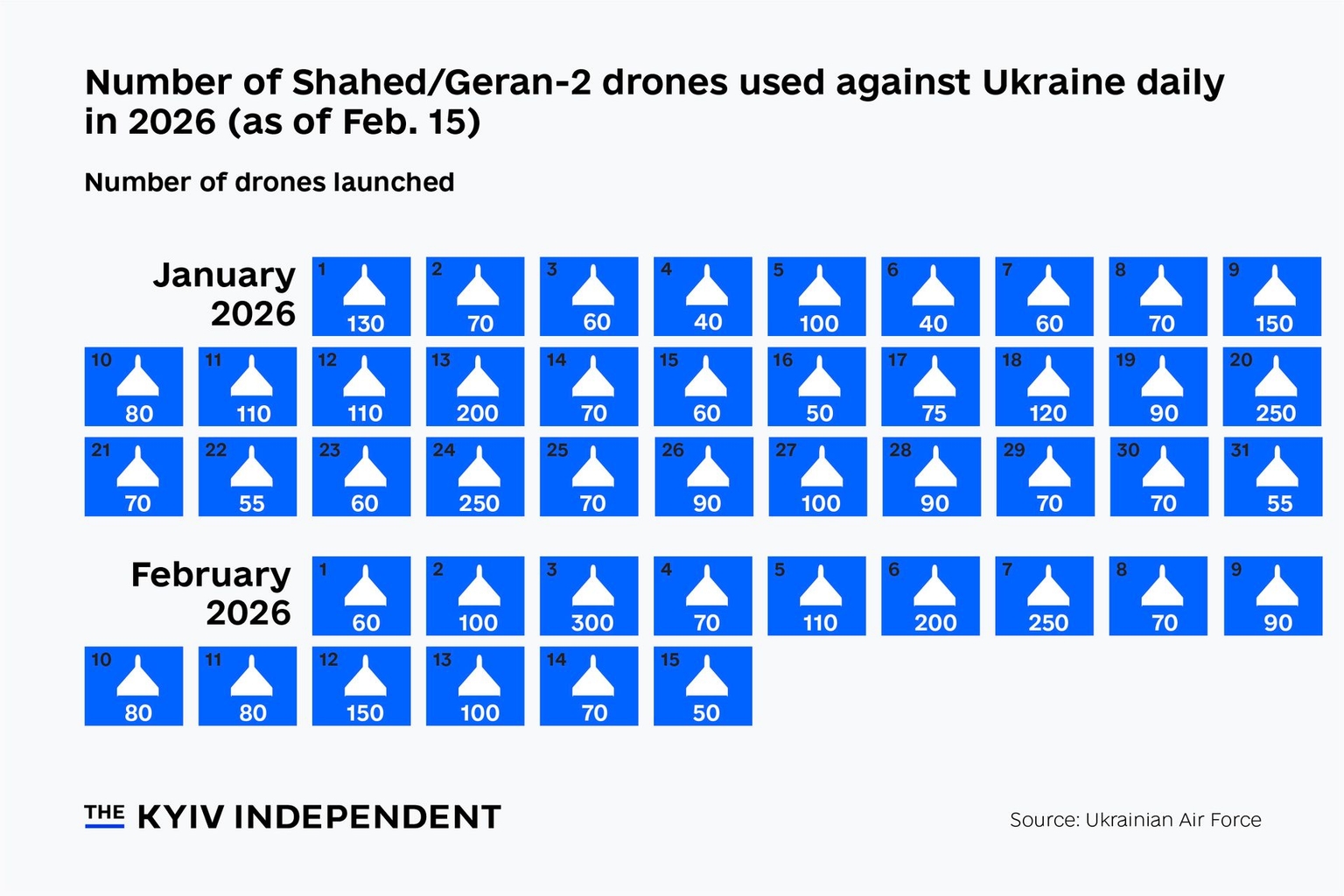
Such production volumes require constant supplies of imported components, as Russia does not produce all the elements for the Geran-2 drones.
Vladyslav Vlasiuk, Ukraine’s presidential envoy for sanctions policy, said that Chinese manufacturers produce the majority of the parts imported for Russian Shaheds. Yet, components made by American, European and Japanese companies still account for a significant share.
By analyzing shipments to Russia and contacting manufacturers, the Kyiv Independent, in partnership with OCCRP and its members, was able to trace several European components and map common routes for them to get into Shaheds produced at two Russian plants.
Tracing the illicit supply chains
Unlike most other similar drones, one of the Russia-made Shaheds attacking Ukraine in 2025 did not explode. It was picked up and disassembled by Ukrainian military intelligence, which identified the Geran-2 as produced by the Russian Kupol plant based in Izhevsk.
Among other items, a tiny rotary encoder manufactured by Austrian company ams-OSRAM was discovered in the wreckage, according to the document seen by the Kyiv Independent.
Ukraine’s military intelligence determined the sensor’s manufacturing year as 2024, two years into the Kremlin’s full-scale war against Ukraine and after the EU imposed export restrictions, and European tech companies stopped supplying Russia.
So how did a newly manufactured European sensor end up in a destructive Russian long-range UAV?
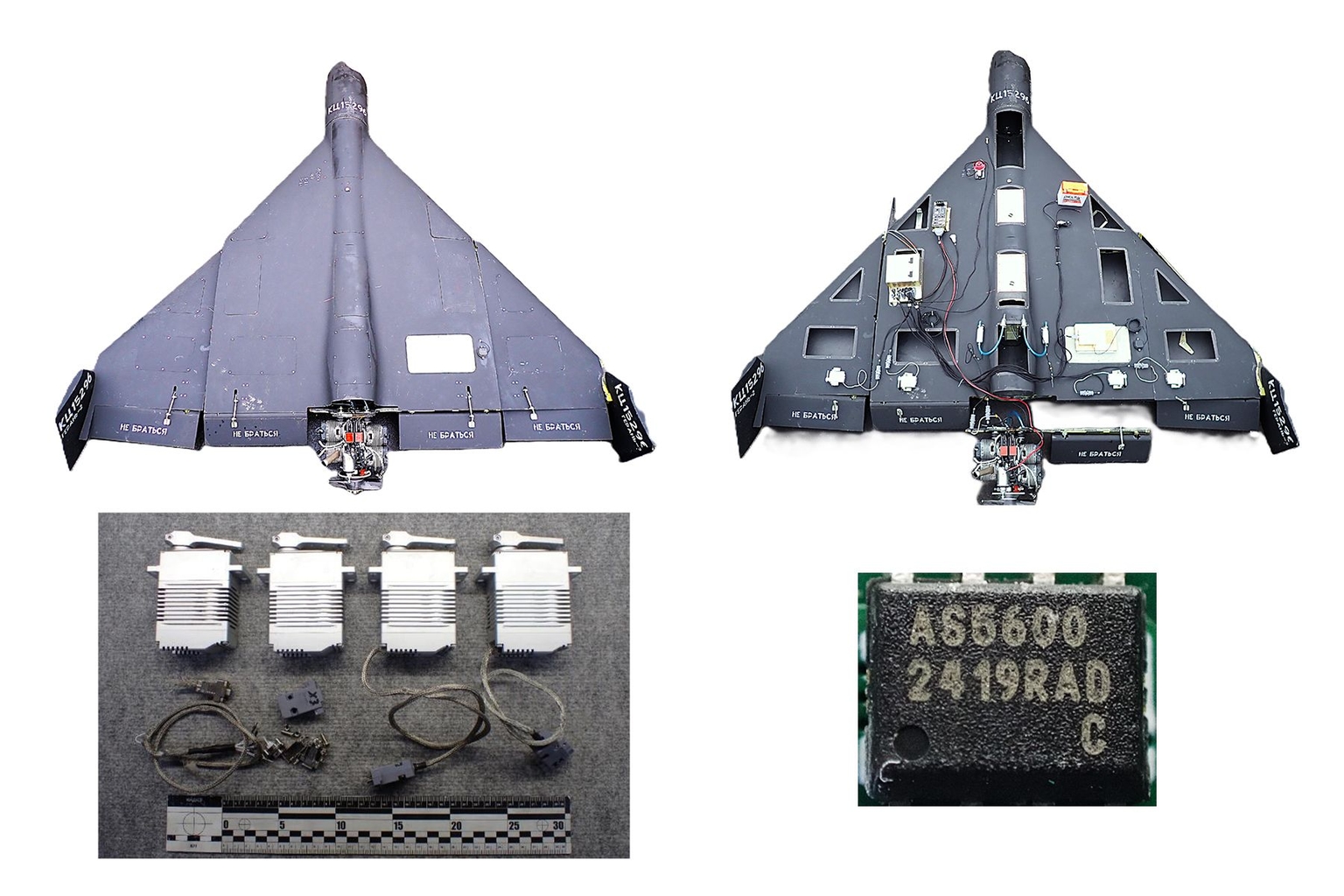
According to ams-OSRAM response provided to a partner of this investigation, Germany-based Paper Trail Media, the sensor was delivered to a company in Hong Kong in July 2024. It was then sent to a company in China, which the sensor manufacturer considered the “end user.”
“The existing contract agreements prohibit the use of the product for military purposes,” ams-OSRAM said.
This important contract condition did not protect the sensor from ending up in the Russian military drone.
This could have happened in one of two ways — either the Chinese company sold the sensor to Russia, or the company produced some larger part with the Austrian sensor and sold the product to Russia.
Since the leaked Russian customs records reviewed by the Kyiv Independent do not contain information on the supply of ams-OSRAM products to the Russia after early 2024, it is more likely that the sensor arrived there as part of a China-produced device, such as the servo drives in which the sensor was found.
“We have no further information. We will contact the relevant customers to request clarification and, if necessary, take further action,” ams-OSRAM added.
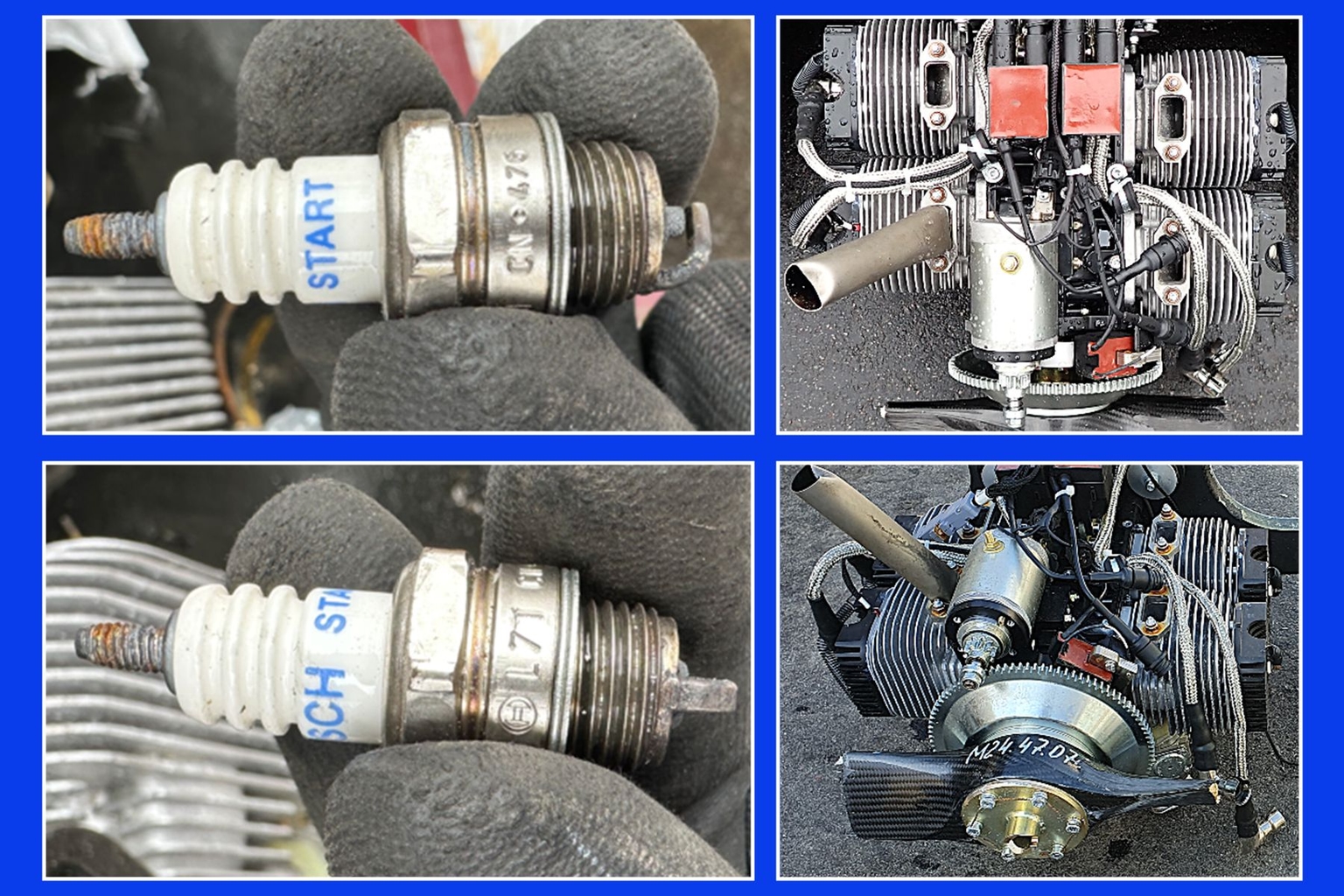
A similar fate befell a Bosch spark plug found in the same Russian drone, the Geran-2, which landed in Ukraine in 2025.
According to a response provided by the German company, the part was produced by its facilities in China in the summer of 2024 and sold there.
“We are aware of an earlier discovery (2025) of the L7T spark plug type in a drone found in Ukraine. After we became aware of this, we immediately investigated the matter and took appropriate measures,” stated Robert Bosch GmbH.
According to the Ukrainian intel documents, the German-trademarked spark plug crossed the Russian border as part of a Chinese-made engine, which was then installed in a Russian military drone.
Another Geran-2 analyzed in this investigation was made by the Alabuga Special Economic Zone (Alabuga SEZ), Russia’s major Shahed manufacturer.
According to Ukrainian intelligence findings, the drone contains more parts produced in Russia, whereas a Geran-2 from the Kupol factory relies more on China-produced parts.
However, even for Russian made parts, local manufactures still rely on Western components.
For instance, a power distribution unit discovered in a Geran-2 made in Alabuga includes a wide range of components — digital signal processors, voltage converters, receivers, transistors, resistors, clock generators, inductors, plug connectors — produced by U.S., European, Japanese and Taiwanese companies.
According to an analytical report, prepared by Ukrainian intelligence and seen by the Kyiv Independent, an Alabuga-produced Shahed contained the largest number of foreign parts — 294 elements compared to 112 foreign components in a Shahed produced by the Kupol plant.
This indicates that Alabuga SEZ has “the maximum integration into global supply chains,” the intelligence document concludes.
Whereas American components account for the largest share of Alabuga-made Shaheds, European countries (Germany, Switzerland, the UK, Netherlands) also play an essential role, “providing less numerous but critical parts (in particular, microcircuits, navigation, and power supply systems),” according to the intelligence report.
Among those components, tiny semiconductor devices by the German manufacturer Infineon Technologies were discovered.
Ukrainian intelligence identified two Infineon Technologies transistors in the Geran-2 drone that attacked Ukraine in 2025. They were manufactured in 2024 and 2023, according to the intel report.
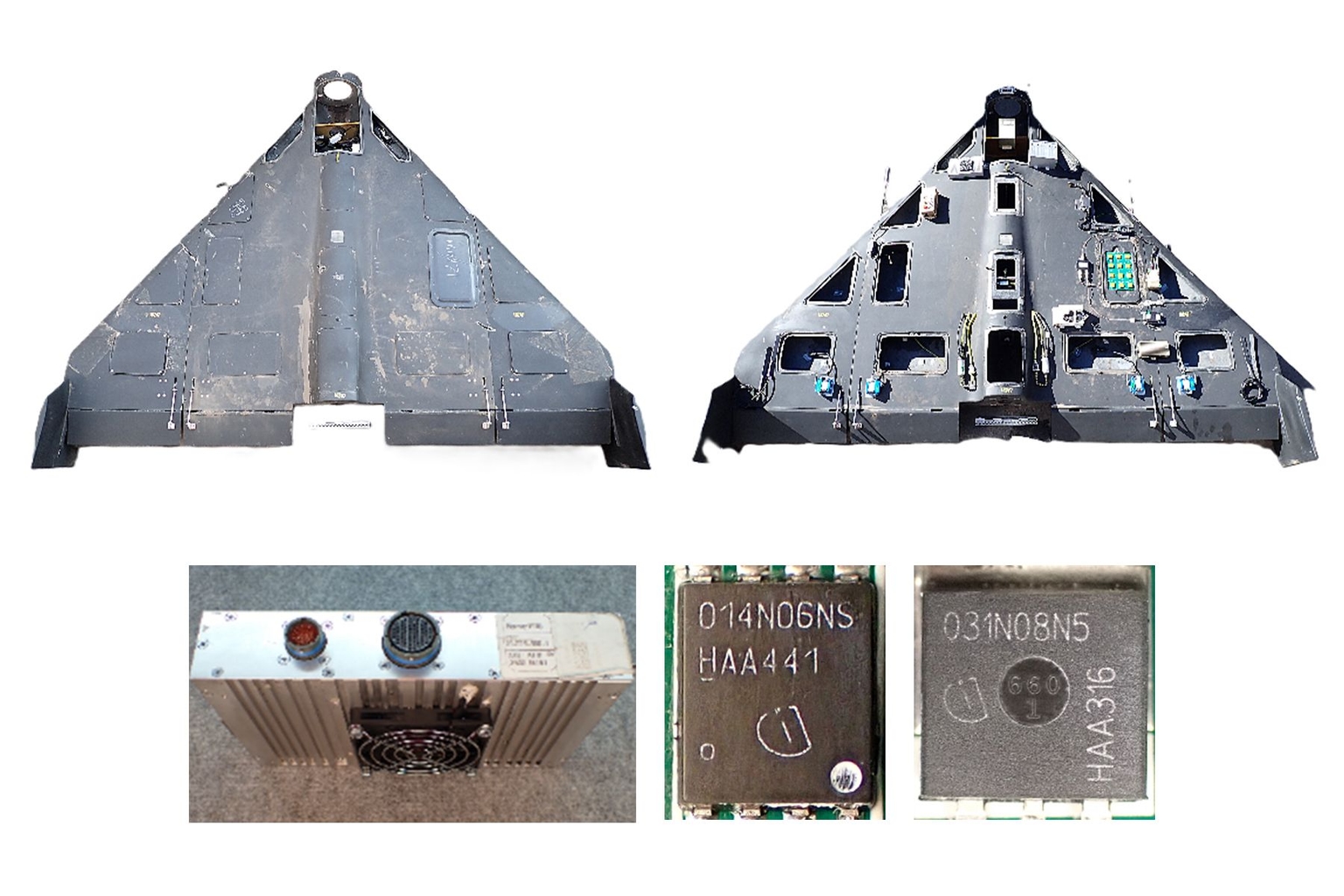
Infineon Technologies was unable to confirm the manufacturing year of the transistors in response to a journalist’s inquiry, citing insufficient information.
At the same time, customs data shows that more than 20 Russia-based trading companies imported Infineon products into Russia in 2024 without the manufacturer’s consent.
The shippers are listed as wholesalers from China, Hong Kong, and Turkey — countries that have not joined the trade restrictions imposed due to Russia’s war against Ukraine.
The Kyiv Independent previously reported that with the help of such actors in third countries, the wholesale trade industry for European and American electronic components is operating freely in a country under sanctions.
On the websites of Russian trading companies, one can find an endless list of Western microchips — from all key manufacturers —- available for purchase. Last year, the Kyiv Independent even ordered American and European microchips in Russia on behalf of a Russian arms manufacturer — and received numerous offers.
Tech manufacturers who have ceased trade relations with Russia since 2022 and, like Infineon, have liquidated their subsidiaries there, are still facing illicit deliveries of their products to Russia.
“In addition to introducing a ‘No Russia’ clause in distribution agreements, the prohibition on shipping goods to Russia and Belarus is stated on every delivery note,” stated Infineon Technologies in response to a journalist’s inquiry as part of this investigation.
Still, the problem remains: numerous unauthorized trading firms in countries that have not joined the sanctions do not care what is written in the manufacturer’s agreements with authorised distributors.
“Only about 60 countries worldwide support the sanctions, which complicates internationally coordinated and effective action,” Infineon Technologies said.
Under those conditions, European technology is likely to keep ending up in Russian weapons, including drones capable of reaching EU territory.
Yet, sanctions experts, together with Western leaders, continue to seek additional ways to close the enormous loophole created by countries that do not support sanctions on Russia.
Looking for way out of the impasse
Potentially, the EU could impose further export restrictions “If the third countries fail to take adequate measures to address the circumvention schemes,” says Alex Prezanti, an international lawyer, specializing in international criminal law, human rights, anti-corruption, and sanctions, in an interview with OCCRP.
Yet, this measure is unlikely to be applied to China, which is the primary source of sanctioned Western components for Russian weapons, according to the customs records reviewed by the Kyiv Independent and its partners. Only a small portion of the sanctioned components reached Russia from Turkey, the United Arab Emirates, Kyrgyzstan, Thailand, or India.
Whilst the EU may try to sanction certain goods exported to countries like Kyrgyzstan, “it probably won’t unleash this tool against China because the EU has a really important trade relationship with China and this would be tantamount to a trade war,” Prezanti says.
In a statement received during this investigation, the EU Chief Sanctions Envoy, David O’Sullivan, says that he has been “actively engaged in outreach with third countries to prevent that their jurisdiction would be used for the sale, supply, transfer or export to Russia” of high-risk goods of EU origin.
“We will not ignore cases of our sanctions being systematically circumvented through the jurisdictions of third countries, by re-exporting sanctioned EU goods to Russia,” O’Sullivan added.
In Kyiv, Ukraine’s presidential envoy for sanctions policy, Vladyslav Vlasiuk, also recalls the high-level diplomatic efforts of Ukraine and its international partners to persuade Beijing to reduce trade in sanctioned products with Moscow. He noted the issue remains unresolved.
“It is good that Chinese partners are not sending any lethal weapons to Russia,” he says. “What is not ideal, of course, is that sending many of the key parts for the Shahed UAVs is not that different from sending lethal weapons.”
While China remains a lifeline for Russia’s military machine, Vlasiuk calls on European law enforcement agencies to launch investigations into the supply chains of European components to Russia.
“For instance, the State Security Service of Ukraine has a close cooperation with the FBI, and that proved to be extremely helpful in the way that the FBI was capable of closing down quite a number of the supplies,” Vlasiuk said in an interview with the Kyiv Independent.
He also urges component manufacturers to send their representatives to Kyiv to review identifying information on components found in Russian weapons to identify and cut off the mid-level distributors from which supply chains to Russia begin.
Ironically, Shahed drones are considered copies of the German Die Drohne Antiradar, designed with the U.S. participation in the 1980s, during the Cold War, to destroy enemy radars and suppress air defense.
“The triangular kamikaze drone with wing tips and a pusher engine is a German design, not an Iranian one,” says Kirichevsky, a weapons expert.
“It turned out that even the set of electronics is the same. In other words, what was designed in this German project of the 1980s migrated into the modern Shahed and then into the Russian localization under the name Geran-2,” he adds.
So a design that West Germany never fielded before the Soviet Union collapsed has since reemerged in the modern Iranian Shahed, and later in Russia’s Geran-2, now mass-produced and used to terrorize Ukraine.
And the European and American components are still in it.
This story is part of a crossborder investigative project. See other stories published within the project:
De Tijd (Belgium),
Der Standard (Austria),
The Times (UK),
The Irish Times (Ireland),
InfoLibre (Spain).
Note from the author:
Hey! This is Alisa, the author of this story, written in Kyiv during power outages and under the explosions.
Despite the unique circumstances, the Kyiv Independent continues its work — just as Ukraine continues its fight.
If you want to support our field reporting and investigative work, consider becoming a member of the Kyiv Independent. Together, we can do more.
First Appeared on
Source link


Leave feedback about this