

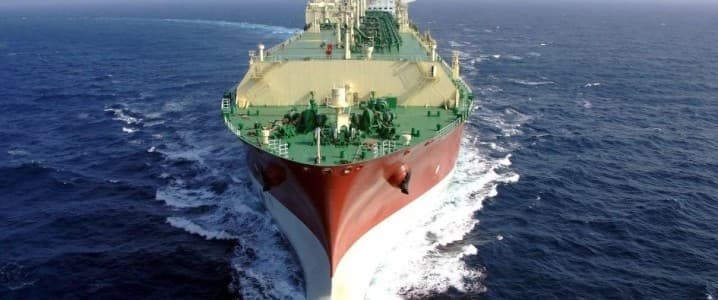
QatarEnergy declared force majeure on liquefied natural gas (LNG) exports on Wednesday, following disruptions at its Ras Laffan industrial city facilities caused by the Middle East conflict. This legal declaration effectively releases the state-owned company from contractual delivery obligations due to extraordinary circumstances beyond its control. The shutdown was triggered by a near-complete halt of shipping in the Strait of Hormuz due to the U.S.-Israeli conflict with Iran. Qatar accounts for 20% of global LNG exports, primarily serving Asian markets including China, Japan, India and South Korea as well as Europe.
Unfortunately for gas customers, it could take months before the giant LNG plant returns to normal production. U.S. President Donald Trump initially projected that Operation Epic Fury would last only four to five weeks, but later announced that the U.S. has the capability to go “far longer”. His ally in the war, Israeli Prime Minister Benjamin Netanyahu, has described the campaign as “quick and decisive action” that may “take some time” but will not last for years. Related: No Missiles, No Drones: What Happens When Rare Earths Stop Flowing?
The Trump administration has outlined four core goals: destroying Iran’s missile and naval capacities, ensuring it never obtains a nuclear weapon, and stopping it from funding regional militant groups. Last year’s Operation Midnight Hammer only lasted for 12 days, and only elicited a symbolic response from Iran. However, Iran has been much more aggressive this time around, following the death of Supreme Leader Ayatollah Ali Khamenei, launching widespread and intense retaliatory attacks across the Middle East.
Tehran has fired hundreds of Shahed drones and high-speed ballistic missiles targeting Israel and multiple U.S.-allied Gulf nations, including the UAE, Saudi Arabia, Kuwait, Bahrain, Qatar and Oman. The Islamic Revolutionary Guard Corps (IRGC) declared the Strait of Hormuz closed and warned of attacks on vessels, forcing a halt to major oil/gas flows and causing global shipping to seek alternative routes.
The situation is exacerbated by the slow process of re-opening giant LNG plants once shut down.
Qatar’s Ras Laffan Industrial City serves as the primary hub for the country’s massive LNG operations, and is home to the world’s LNG export complex. The city’s LNG plant features 14 LNG trains with a production capacity of approximately 77 million metric tonnes per year (mtpa). The city’s port has six LNG berths, designed to accommodate the world’s largest LNG carriers, including QMax and QFlex vessels. The plant’s storage tanks have a capacity of ~1,880,000 cubic meters, with additional storage tanks and berths currently being built to handle up to 126 million tonnes per year by 2027. The plant’s current storage takes only 4 days to fill up at full production rates, forcing production to rapidly come to a halt whenever export vessels cannot leave. Once the restart process begins, it will take another two weeks for the facility to reach full operational capacity.
Related: Inside North America’s First Fully Integrated Rare Earth Facility
Restarting is intentionally slow to avoid “thermal shock” to critical, sub-zero cryogenic equipment. LNG production involves extremely low temperatures (-160 °C or -260 F). Rapidly introducing feed gas into cold, idle equipment can cause severe stress, damaging or rupturing vital, expensive components. Additionally, trains cannot restart simultaneously; they must be brought back online sequentially to ensure stability.
And, all this means that global gas markets will be in a significant deficit for several weeks, at the very least. The halt in Qatari LNG production due to security concerns in the Strait of Hormuz has intensified competition between Atlantic and Pacific basins, sending European (TTF) and Asian gas prices up by nearly 50%.
“Nothing can replace Qatari LNG. If the shutdown is prolonged, it portends a larger gas market shock than in 2022 when Russian turned off pipeline gas to Europe. Gas prices could retest their record highs set in 2022,” Saul Kavonic, head of energy research at MST Marquee, told Reuters.
Unfortunately, the United States, the world’s largest LNG producer, has little immediate spare export capacity to offset major supply disruptions, with only ~ 5% of additional volume available. U.S. LNG export plants are currently running near full capacity, with most production locked in long-term contracts. However, several major LNG export plants are under construction in the U.S. Gulf Coast region, targeting significant capacity increases by 2030. Key active projects include the massive Plaquemines LNG (Louisiana), Cheniere’s Corpus Christi Stage 3 (Texas), Golden Pass LNG (Texas), Rio Grande LNG (Texas), Port Arthur LNG (Texas), and the newly initiated Louisiana LNG project. Together, these LNG plants will add over 65 million tonnes per annum (mtpa) of nominal LNG capacity, or roughly 60% of the country’s current capacity.
By Alex Kimani for Oilprice.com
First Appeared on
Source link






Leave feedback about this