

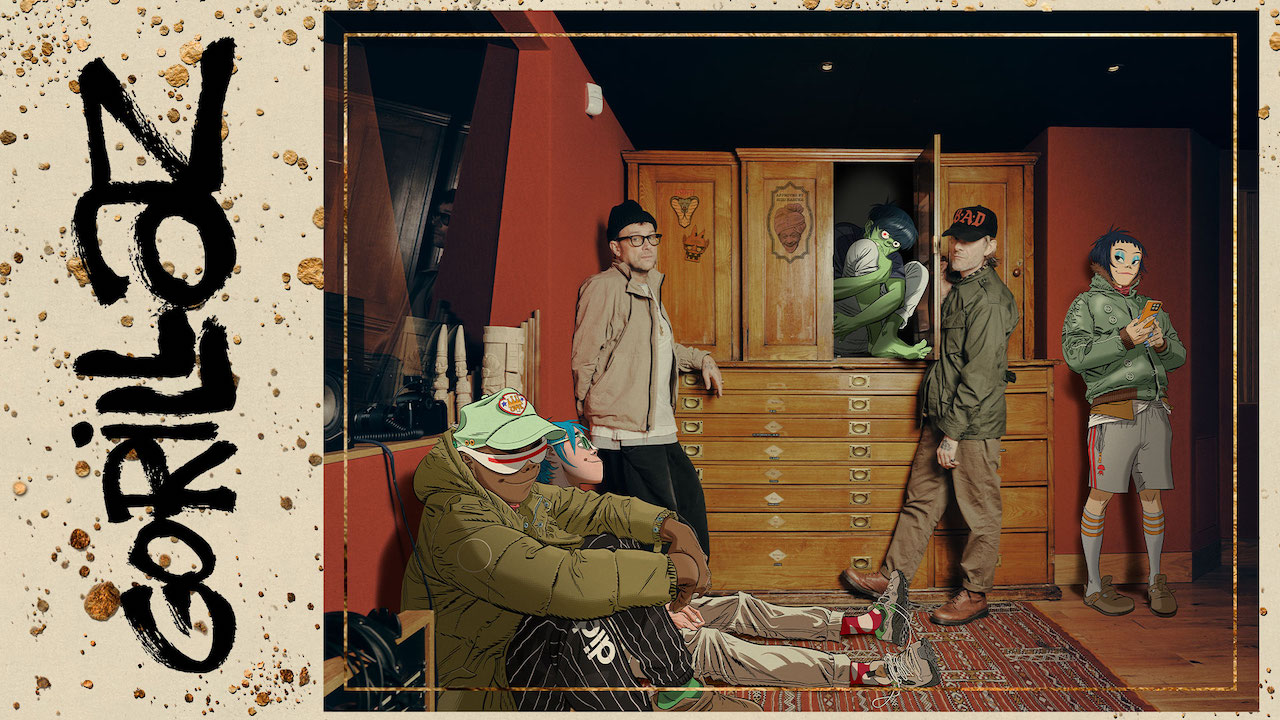
As Hewlett tells it, his “mother-in-law got sick and was in a coma in Jaipur. I spent eight weeks with my wife trying to get her home. She didn’t make it, unfortunately. But even though it was dealing with a very difficult subject, I also fell in love with Jaipur. I said to Damon, we need to go to India together.”
The first songwriting trip to India was, according to Albarn, “a joy, a wonder, a remarkably diarrhea-free experience.” Gorillaz collaborated with local musicians in a grand, improvised exchange. “It’s such a bloody important thing in the world,” Albarn continues, “to be able to embrace the idea of we all live on the same planet together and therefore we are all equal. You have everything to benefit from going to other places. You don’t know everything yet. However omnipotent you see yourself as being, find a little bit more to learn.”
But after that initial Indian journey, tragedies piled up. “Damon’s father passed away, and then my father passed away 10 days later,” Hewlett says.
The pair traveled back to India a second time, now to the Ganges, knowing this time that the songs they had been writing were bending towards death. Hewlett saw “funeral pyres where they burn the bodies and put the ashes in the Ganges.” The ritual goes back 3,000 to 3,500 years ago, perhaps even longer.
Experiences like that changed the way they wanted to approach The Mountain. Gorillaz began to think of late collaborators in contemporary ways.
“Damon had the idea to go over all of the recordings we’ve done in the last 25 years and find outtakes from all the people we’ve worked with who have passed away,” Hewlett recalls. “Dennis [Hopper] is one of those. We have Dave [Jolicoeur] from De La Soul, we have Bobby Womack, there’s Mark E. Smith, Tony Allen,” and many more, taken from old recordings that hadn’t been used. These were repurposed for the album as “voices from the next place.”
Adds Albarn, “It’s not nostalgia if it’s never been heard before.”
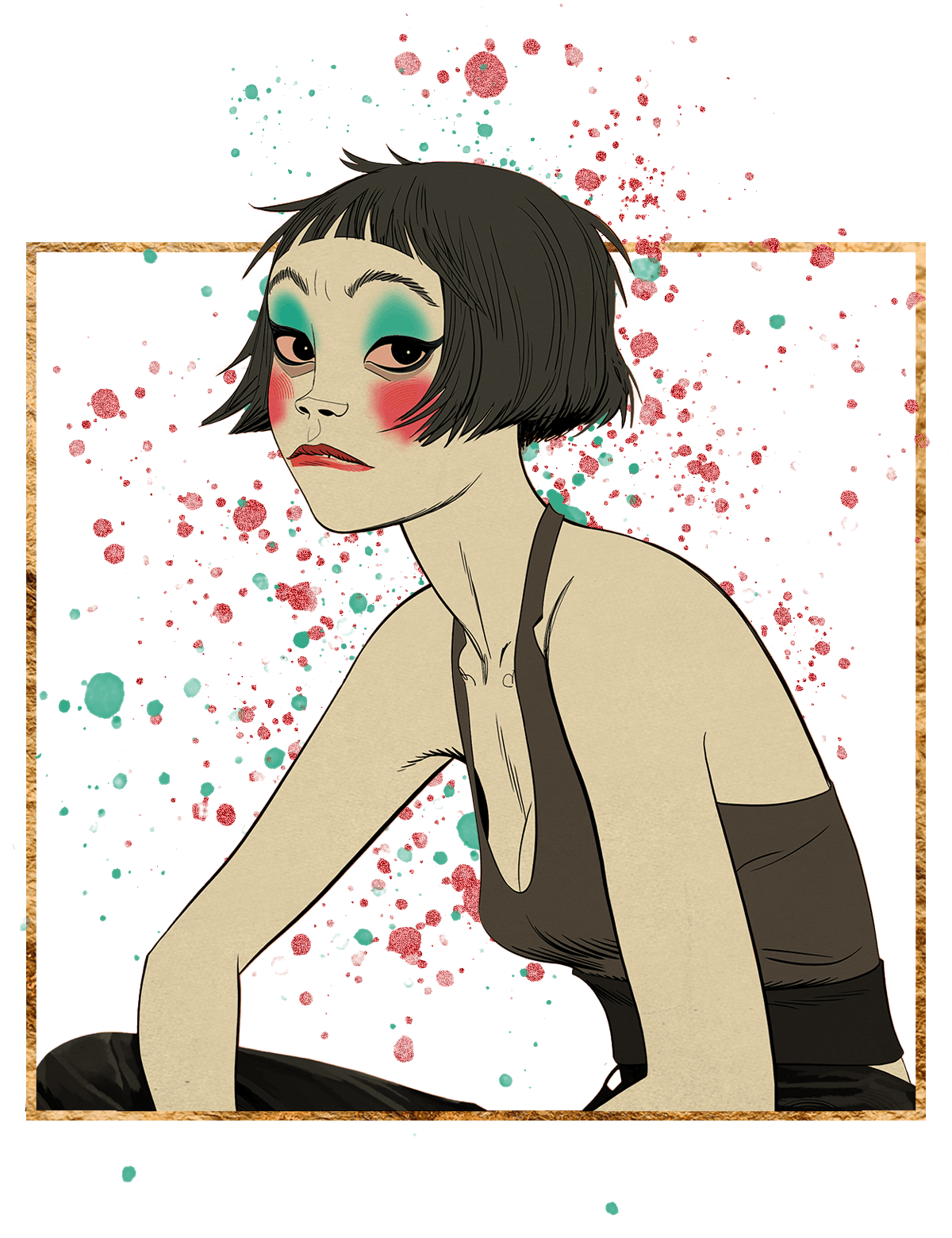
The lore of the virtual Gorillaz often tracks with the real-life creators, and The Mountain is no exception. Those losses would eventually become the album’s emotional architecture, filtered through the mythology of 2-D, Murdoc, Noodle, and Russel, who embarked on their own virtual trip to India.
After an instrumental introduction, The Mountain introduces its unique mythology with “Moon Cave.” “The Moon Cave is that place where everything, all human ideas, come out,” Albarn says. “Whether it’s drawing a perfect circle with two sharp bits of obsidian rotating on a bow, or AI, it all comes from the back of the cave, in the shadows.”
And as with previous projects, the virtual band is an essential part of the process. Some of this is artistic freedom; as Hewlett explains, “They can have experiences that we are not capable of having yet, and come back from those experiences and tell us about them. It takes us out of the equation somewhat and allows us to get on with being creative and experimenting.”
First Appeared on
Source link

Leave feedback about this