

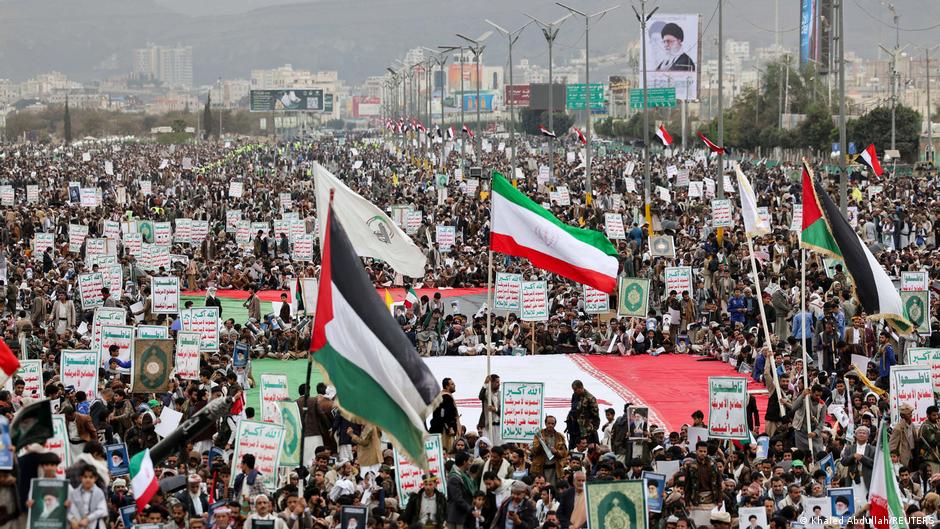
The warning from the Houthi militia was clear: “Yemen… has its finger on the trigger,” Abdullah Sabri, spokesman for the Houthi-run Ministry of Foreign Affairs, cautioned earlier this week. The Houthis will take “appropriate measures” should the war against Iran continue. This includes any attempt to expand the war or deploy additional foreign forces, he warned.
Also the leader of the Islamist Shiite militia, Abdul-Malik Al-Houthi, said last Thursday in a video message: “We affirm our support for Iran, Lebanon, Palestine … and our readiness at the military level according to developments.”
However, despite these words, and unlike the Iran-backed Lebanese Hezbollah group, the Houthi militia — which is also allied with the regime in Tehran — has not yet intervened in the current war in Iran. This is in contrast to the Gaza War, in which it participated by attacking Israel and international shipping in the Red Sea.
“The Houthis are currently not just restrained, but virtually completely inactive,” Luca Nevola, an analyst for the Gulf states at the US-based monitoring group Armed Conflict Location & Event Data, or ACLED, told DW. “So far, there have been no military operations related to the conflict, only symbolic support for Iran,” he said. In his view, the reason lies primarily in a sober cost-benefit analysis. “What they have to lose is greater than what they can gain,” he said.
A matter of timing?
For Philipp Dienstbier, head of the Gulf States Regional Program at the German Konrad Adenauer Foundation in Jordan’s Amman, the situation is multi-layered. “There is much to suggest that several factors are at play. For instance, the Houthis might be deliberately holding back in order to significantly increase military pressure at a later date,” he told DW. This could happen, for example through renewed attacks on shipping in the Red Sea or the energy infrastructure.
He further pointed out that the regional situation has changed in the past two years. Saudi Arabia — one of the current targets of Iranian attacks — is currently the most important external actor in Yemen. Houthi intervention in the current war could therefore jeopardize efforts within Yemen itself to reach a lasting political solution.
“Apparently, the militia wants to avoid this risk,” Dienstbier said. Added to this is a tense internal situation in the north of the country, which calls for additional caution, Dienstbier notes.
“Significant degree of autonomy”
Dienstbier also emphasizes what he sees as the militia’s relatively high degree of independence from Iran. “The Houthis have a significant degree of autonomy,” he said. Houthi decisions are not simply made by their major ally and supporter in Tehran. “Rather, the Houthis pursue their own interests, including military ones, such as expanding their drone capabilities,” he said, adding that this relative independence explains why they do not automatically allow themselves to be drawn into every conflict.
ACLED’s Nevola also points to the group’s current weakness. The Houthis are “weaker than they were in 2023,” due in part to US airstrikes, economic pressure, and targeted Israeli attacks against their leadership, he said. Added to this is a ceasefire with the US, which has so far held.
Furthermore, negotiations with Saudi Arabia have resumed. “This process would be jeopardized by an entry into the war,” he said. By contrast, refraining from escalation could build trust and enable political concessions.
The Qatari news outlet Al Jazeera also quoted expert Nevola on a further aspect. “At the current stage, the Houthis’ main priority remains avoiding direct US and Israeli retaliation,” he told Al Jazeera. “The group seems to fear Israeli intelligence and the possibility of leadership decapitation,” Nevola said.
Potential for escalation
Nevertheless, the military threat remains, Nevola warns. The Houthis are considered highly unpredictable at times, so a later intervention in the Iran war cannot be ruled out, despite several conflicting interests.
Also Philipp Dienstbier views the Houthis as “militarily resilient.” Despite massive attacks, they remain capable of deploying missiles and even shooting down drones. Crucial to this is their asymmetric strength as a militia, he notes. “This is difficult to contain,” he warns. In his view, an expansion of the current hostilities to the Red Sea — one of the world’s most important trade routes — would be particularly critical.
Also Nevola sees the greatest potential for escalation in the narrow passage. “Should the Houthis intervene, attacks on commercial shipping are most likely,” he told DW. Such attacks would be comparatively inexpensive, but would nevertheless have significant symbolic and economic consequences, Nevola explained. A blockade could primarily affect Saudi Arabia, which handles a large portion of its oil exports via the Red Sea.
The consequences could extend far beyond the region, according to expert Dienstbier. “They would place additional strain on the already tense energy markets and lend the conflict significantly heightened dynamics,” he told DW.
This article was originally published in German.
First Appeared on
Source link




Leave feedback about this