

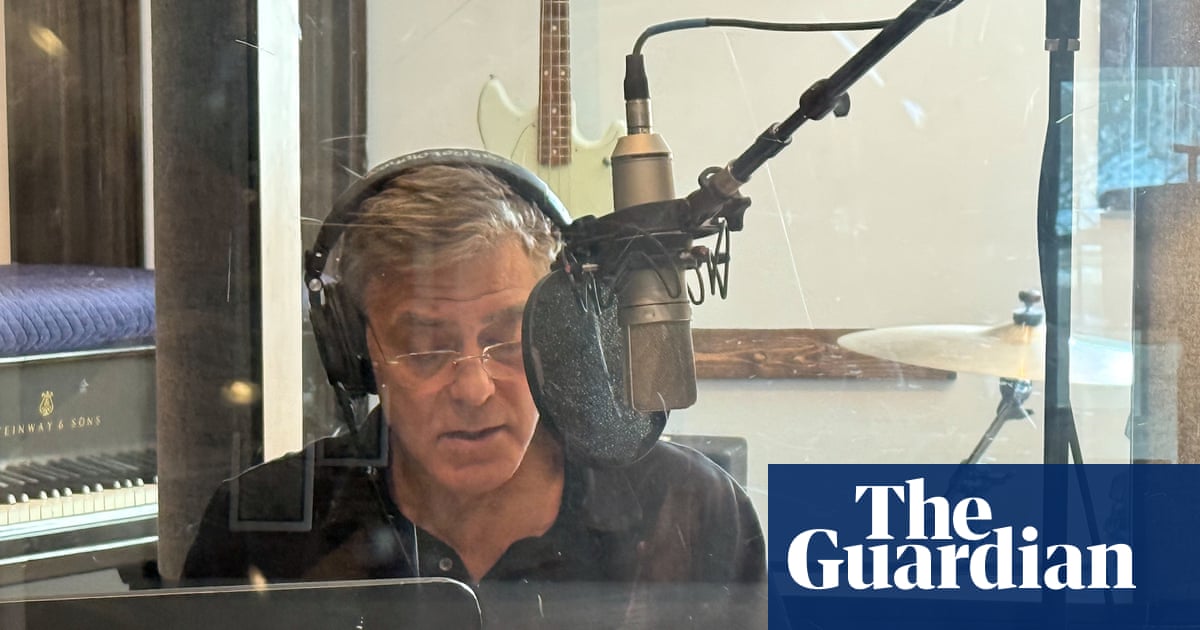
Henry David Thoreau is a new PBS documentary in three parts, each an hour long. The project comes with a voiceover cast of heavyweights, with narration from George Clooney, Jeff Goldblum playing the great essayist and additional voices from Ted Danson, Tate Donovan and Meryl Streep.
The project first began life as a short film by Don Henley, the Eagles frontman having long worked to preserve Walden Pond. Henley wanted to capture Thoreau’s time spent in the woodlands outside Concord, Massachusetts, between 1845 and 1847 and the great book that resulted: Walden; or, Life in the Woods. After enlisting Ken Burns, the legendary documentarian, as executive producer, the pair entrusted the project to two collaborators, brothers Erik and Christopher Loren Ewers. Like the ferns and fiddleheads that carpet the forest floor at Walden, the film began to grow.
Christopher Ewers, younger brother, co-director and director of photography, said: “Over the production of that first 20-minute film, we were reintroduced to the Thoreau we were taught in high school. You know, that he was one thing, a prophet who wrote two books, Walden and Civil Disobedience” – 1849, against slavery, the product of a night in jail for refusing to pay a poll tax – “and that’s basically it.”
Erik Ewers, co-director and editor, said: “In getting to know Don and talking with Ken, we said, ‘You know, this really needs to be a bigger project. There’s so much more to Henry’s story.”
It wasn’t just that Thoreau spent only two years at his cabin, in which time he returned frequently to Concord for business, for company, even laundry. The Ewers chart Thoreau’s work as a teacher and in trade (his family made pencils), his complicated proximity to the push for women’s suffrage, his work writing and speaking against slavery before his death from tuberculosis, aged just 44, in 1862. The voice of transcendentalism, of living simply, in harmony with nature, was a passionate supporter of John Brown, the anti-slavery fighter (and murderer) who sought rebellion at Harpers Ferry.
“There’s so many layers to this man and what he wrote about, what he experienced, how he looked at the world,” Christopher said. “His perspective is just so relevant for our present moment, actually every moment in the last 200 years. We realized it was an absolutely crucial story, and nobody had ever really made a decent film about him.”
A very decent voiceover cast was assembled to read David Blistein’s script. “Chris and I wanted Jeff Goldblum from the very beginning,” Erik said of the actor who voices Thoreau. “We were set on a path, made even better by the fact that Chris had worked with Goldblum on a commercial spot and Goldblum was going on about Ken’s Country Music series between takes. So Chris was able, through Jeff’s agent, to get a yes.”
Henley helped. “Quite simply, Don wants this to be the definitive film on Thoreau,” Erik said. “His passion for Henry David Thoreau, for the land he occupied, his passion for this history, is unrivaled. He’s a genius in what he’s done, all for the right reasons, and I think he wanted to make sure that we were making the best film we can make. What an advocate to have.
“We had a great trust, back and forth. He said, ‘I have an idea. Let me see if it works, and then I’ll tell you.’ And he comes back and says, ‘George Clooney said he’s happy to read the narration.’ He did the same thing with Meryl Streep, and Ted Danson was perfect for [Ralph Waldo] Emerson,” Thoreau’s great mentor. “He brought it home. Tate Donovan we’ve worked with in the past, and he was honored to do it.
“We didn’t have a lot of voices. It wasn’t some huge cast. But damn, we got a dream team.”
Dreamlike footage threads the film. In conversation, both brothers call their subject Henry. Immersion will do that. Christopher returned again and again to scenes of Thoreau’s life: at Walden the rocks and plants, the waters of the pond, the rubble of Thoreau’s cabin, the replica that now stands.
He said: “We filmed in and around Walden Pond, Concord, the surrounding areas for more than seven years between the short film, some of which we use in the long film, and in production for the series. All seasons, all times of day and night, all weather.
“I could point out rocks on the trail, around the pond, in the woods, that I’ve named: ‘There’s Steve,’ you know? I became so familiar with them. It’s actually not a very naturally beautiful or striking area. Thoreau himself describes it as an ordinary pond in a regular Massachusetts wood. It was how he saw it that made it into what it is now.”
A young Harvard graduate in an industrializing society, Thoreau went to Walden to live in nature, to record his thoughts, to seek communicable meaning.
Christopher said: “There’s one area just on the other side of Emerson’s Cliff from the pond. It’s an area called Heywood Meadow. It’s not a meadow at all. It’s a swamp. But it was one of the most visually interesting areas at Walden. Every spring it would be this massive field of first fiddleheads, then ferns. That was one of my favorite times to go out and shoot there. This time of year, March, April. Those plants, yes, they’re ancient, but they also just have such personality, waving almost, like saying hi as the wind blows through them.
“Henry was very attuned to tracking the seasons. He thought the seasons were friends. That’s how close he was, how much he thought about it. Later, as Henry dies, as he fades away, he famously writes in his journal about the leaves in fall, as they decay and fall off the tree and land on the ground and become nutrients back again in the cycle of life. He says fall leaves teach us how to die. It’s why we have footage in the film of fall, and wilting away, beautiful, yellow and orange and black colors. All of this was just layer upon layer upon layer of very subtle visual storytelling. All motivated by his words.”
In the style made famous by Burns, Thoreau’s words are superimposed on Walden Pond, over footage from Maine, Cape Cod, and other places Thoreau traveled to and wrote about, or on images of events in his lifetime.
Talking heads are symmetrically shot in period settings, houses or meeting places that stood in Thoreau’s time. Thoreau scholars are joined by voices from other fields. Writers, historians, ecologists, activists. Some note Thoreau’s influence, through civil disobedience, on Martin Luther King Jr and Malcolm X, Black leaders in the fight for civil rights a hundred years after Thoreau’s death. Others note what some modern readers consider weaknesses in Thoreau, prominently including his attitude to the people who lived at Walden Pond centuries before him, Indigenous Americans whose arrowheads he found. Others discuss Thoreau’s place in the world today.
Erik said: “Chris and I had this kind of vision. The deeper we read, the more we were calling each other up, saying: ‘This sounds like today. This sounds like today. Oh, my God,’ you know? That resonance was so profound. That was what enabled us to pull the trigger and say: ‘Listen, let’s have part of the film, a small part, bring it to the present. Bring it visually to the present. Let our interviewees break the fourth wall and talk about today.
“What we’re doing, if we’ve done a good job of bringing our viewer through the journey of Henry’s life as he experienced it, is not stopping and saying: ‘OK, this is a very big moment.’ We let our viewers experience things as Henry does. So that creates relatability. And then when you flash forward to the present in these very strategic places, it’s kind of a subtle way, editing-wise, to get the viewer to think about themselves in context of Thoreau and his day and what he’s doing and what they are or are not doing themselves. So that was a very conscious effort. It’s kind of like an elbow. ‘Hey, think about this.’”
Environmental activists and researchers speak over scenes of 21st-century rush, noise and pollution, of fire and flood, climate disaster and its terrible aftermath, all spliced with Thoreau’s words.
“We built the world that Thoreau feared,” says Bill McKibben, the environmentalist, campaigner, scholar and author, at the end of the film. “A world that’s so noisy and crowded that we don’t have any time to think for ourselves any more.
“A very human-centered view of the world has now raised the temperature to the point where our great forests catch on fire, where already, hundreds of millions of people can no longer live in the places where they were born. Thoreau intuits that if we’re going to make it, we’re going to have to turn to the natural world for help. In wildness is the preservation of the world.”
Over footage of Walden Pond at half-light, the Ewers’ subject has the last word. “‘There is a season for everything,’” Goldblum reads. “‘You must live in the present. Launch yourself on every wave. Find your eternity in each moment. Fools stand on their island of opportunities and look toward another land. There is no other land. There is no other life but this.’ Henry David Thoreau.”
-
Henry David Thoreau premieres on PBS on 30 March, 9pm ET with UK and Australia dates to be announced.
First Appeared on
Source link




Leave feedback about this