

By Ben Christopher and Alejandro Lazo, CalMatters
This story was originally published by CalMatters. Sign up for their newsletters.
If you’re a California homeowner and you’ve been feeling chilly this winter, there are plenty of reasons to go get a heat pump.
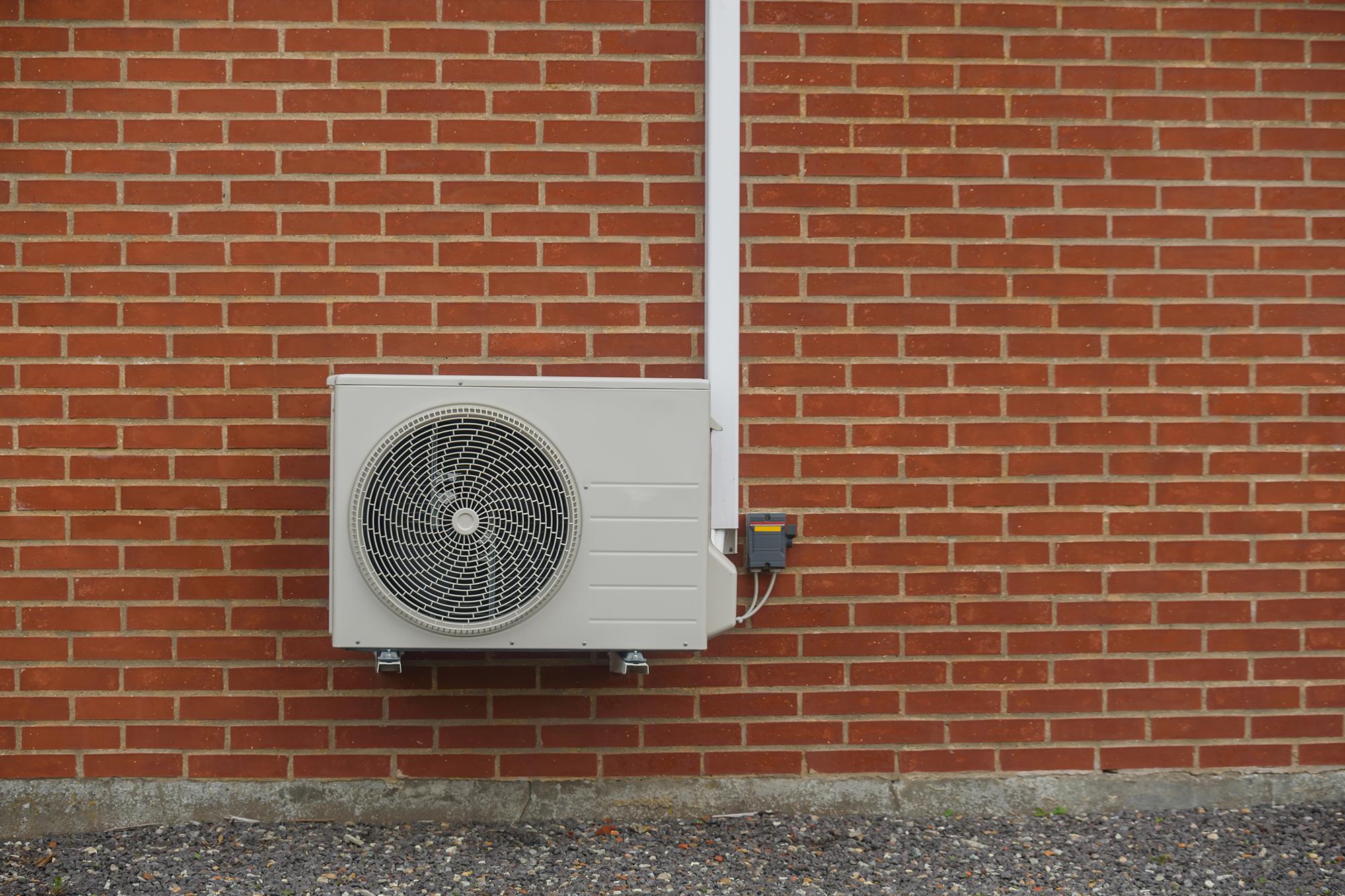
An all-electric, energy-efficient alternative to gas-burning furnaces, heat pumps are widely seen as the climate-friendly home heater of choice.
They can do double-duty as both home heaters and AC-units and are pretty good at maintaining a constant temperature inside a home without the blast-then-cool-off cycle typical of a furnace.
What about a guaranteed lower monthly utility bill? Not in California.
Call it California’s heat pump conundrum.
On the one hand, California has hyperambitious goals to reduce greenhouse gas emissions in an effort to curb the worst effects of a changing climate. Most experts see the electrification of buildings — swapping furnaces, water heaters, stoves and ovens that run on burning fossil fuel with appliances plugged into California’s increasingly green electrical grid — as a necessary step toward meeting those goals.
California has built one of the most aggressive heat pump strategies in the country. The state aims to install six million heat pumps in homes by 2030. Lawmakers are also moving this year to boost heat pump adoption – proposing to streamline permitting, and make it easier to electrify homes.
On the other hand, California’s residential electricity prices are among the highest in the country — expensive even compared to its also pricey natural gas. That makes heat pumps a tough sell to many Californians.
A new Harvard University study maps exactly where that reality bites – and tries to explain why some places are more heat-pump friendly than others.
The public is “overwhelmed with these sorts of plans now for decarbonization: ‘This by 2030,’ ‘this by 2050,’” said Roxana Shafiee, an environmental science policy researcher at Harvard University. “But then you scratch the surface a bit more and you look at things like electricity prices.”
Reaching those goals amid such high prices is a tough circle to square, said Shafiee.
By looking at residential energy costs, usage and winter temperatures in every county in the United States, Shafiee and Harvard environmental science professor Daniel Schrag found in a recent paper that typical households living across the American South and the Pacific Northwest would likely see lower utility bills by making the switch to a heat pump.
Average homes in northern midwestern states, in contrast, would see their bills increase. That’s partly because heat pumps work by extracting heat from outdoor air, compressing it, and piping it indoors, a thermal magic trick that’s harder to perform in places with subzero winters. It’s also thanks to the region’s relatively cheap gas.
Then there’s California: A surprisingly mixed bag.
Though the state’s temperate coast is ideal for heat pump adoption, high residential electricity prices can make swapping a gas furnace for a heat pump a pricey proposition. That’s especially true in counties where homes tend to be larger, winters are colder or electricity is costly. .
Quentin Gee, a manager at the California Energy Commission, said the advantage of heat pumps comes down to thermodynamics. Unlike a gas furnace, which burns fuel to create heat, a heat pump compresses and expands a refrigerant, like a refrigerator in reverse. That moves heat from outside into a home — allowing it to deliver several units of heat for every unit of electricity it uses.
Even in PG&E territory, where electricity rates may be some of the highest in the U.S., Gee said that efficiency can allow heat pumps to compete with — and in some cases beat — gas on operating costs, depending on local rates and home characteristics.
In lower-cost municipal utility regions such as Sacramento’s SMUD, he said heat pumps can be a clear financial win.
“Gas prices have also gone up over time as well — so both are tricky when it comes to heat pumps versus, say, a gas furnace,” Gee said.
Between 2001 and 2024, average retail gas prices have gone up by 80% in California, according to federal data. Retail electricity rates, padded out with wildfire prevention costs and state-mandated social programs, have increased by twice as much.
Even in parts of California where the average home isn’t likely to save with a heat pump, there are plenty of exceptions. Smaller, well-insulated homes can often stay warm with minimal output from a heat pump.
For some homeowners, solar panels have helped bridge the gap. Doug King, a green building consultant in San Jose, installed his first heat pump in 2021 alongside a new rooftop solar system; those panels more or less covered the monthly cost of running the heat pump. A second unit installed last year has pushed his bills higher. "But that's fine, I don't mind," he said. "I was willing to pay a bit of a premium for using electricity over gas anyway."
Homes that already use old-fashioned electrical baseboard or space heaters are guaranteed to save on monthly costs by switching since that entails swapping an inefficient electrical heating system that uses a ton of energy (“basically like heating your home with a toaster,” said Shafiee) for heat pumps that use up to 60% less.
But for all of California’s reputation as a climate champion, most of its homes don’t rely on electric heat. Nearly two-thirds use natural gas, well above the national average of 51%.
That isn’t surprising, said Lucas Davis, a UC Berkeley energy economist.
Looking at 70 years of home heating data across the country, Davis’ research has found that the best predictor of whether a household uses electricity to stay cozy in the winter is the price of energy.
“To this day, where do we see that electric heating is the most common? Throughout the southeast,” said Davis. “What do we know about the southeast? Cheap electricity.”

The consequences of costly electricity extend well beyond any individual household’s ambitions for a heat pump or its utility bill. Using fossil fuels to heat up water, warm indoor air and cook food inside homes and businesses was responsible for 13% of the country’s greenhouse gas emissions in 2022, according to the U.S. Environmental Protection Agency. Gas-powered cars and trucks used for private use make up another 16%.
Focusing on upfront costs
Heat pumps are a 19th century invention and started popping up regularly in American homes in the 1960s, but you would be forgiven for thinking they’re a new technology.
Spurred on by concerns over climate change and policies meant to address it, heat pumps have outsold gas furnaces each year since 2021, according to the Rocky Mountain Institute, a clean-energy research nonprofit. Demand saw a particularly sharp spike after 2022 thanks to the Inflation Reduction Act, the Biden-era law that threw rebates and tax credits at homeowners.
Installation costs can reach into the tens of thousands of dollars, which is why most federal and state policies promoting heat pump adoption have focused on defraying them. In California, the push runs through multiple agencies:
- The California Energy Commission tightens building codes that steer new construction toward all-electric homes.
- The Public Utilities Commission sets rate rules and oversees utility rebate programs.
- Utilities offer rebates and special rate plans.
- State and federal dollars have reduced upfront costs, especially for lower-income households.
This year state lawmakers are considering bills to speed up the local permitting process for heat pumps and to require gas utilities to offer homeowners cash to electrify their homes in lieu of replacing an old gas line.
Even as the federal supports subsided with President Trump’s return to the White House, installation costs are “pretty competitively priced with traditional units, especially since in most cases, you are installing two appliances for the price of one,” said Madison Vander Klay, a California policy advocate for the Building Decarbonization Coalition, a national nonprofit which represents appliance manufacturers and utilities.

That may not be the case for all homeowners.
Many homes need new wiring, larger breakers or a full panel replacement, and some require upgrades to the service connection to the grid, said Matthew Freedman of The Utility Reform Network. Costs rise quickly when homeowners electrify more than just heating, he said.
Customers often underestimate how complex and costly that electrical work can be, he said, another uncertainty on top of the potential for long-term rate savings.
Installation costs aside, month-to-month electricity costs remain an obstacle.
Last year, the Legislative Analyst’s Office released a report warning that California’s residential electricity rates are among the highest in the country — nearly double the national average — and rising much faster than inflation.
The report, authored by LAO analyst Helen Kerstein, cautioned that those high rates could undermine the state’s climate strategy by discouraging households from switching to electric cars and appliances like heat pumps from gas-powered ones.
“If I'm a consumer, I'm going to be thinking about — not just, ‘is this good for the environment?’ That's certainly one consideration, but also, ‘is this something I can afford?” Kerstein said. “Unless folks are saving money on the operating cost, it often doesn't pencil out.”
This article was originally published on CalMatters and was republished under the Creative Commons Attribution-NonCommercial-NoDerivatives license.
First Appeared on
Source link






Leave feedback about this