

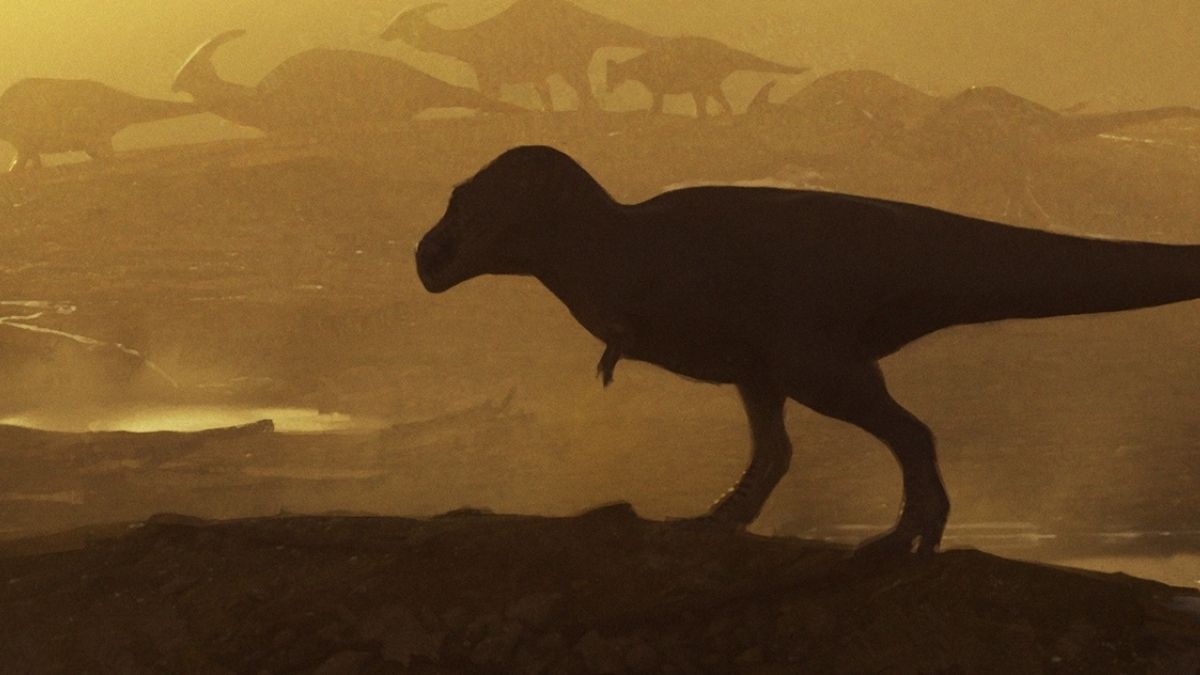
A new analysis of a shinbone from the oldest known giant tyrannosaur in North America suggests that the ‘king of dinosaurs,’ Tyrannosaurus rex, may have had an unusually large ancestor.
The fossil, found at the Kirtland Foundation in New Mexico, US, in the 1980s, is about 74 million years old, placing this gigantic tyrannosaur in the Late Campanian.
That’s a fair bit earlier than most T. rex fossils, which typically date to the very end of the dinosaurs’ rule, in the late Maastrichtian, though there is some overlap with the Campanian in the fossil record.
Could this gigantic shinbone, then, belong to a formidable ‘older brother’ of the tyrannosaur family?
Paleontologist Nicholas Longrich of the University of Bath in the UK and his colleagues suspect the fossil represents a close relative of Tyrannosaurus, based on close analysis of its physical features.
Along with similarities in shape, this shinbone measures 84 percent of the length and 78 percent of the width of the shinbone of the largest known T. rex specimen on record – a near-complete skeleton named Sue.
Based on these dimensions, Longrich and team estimate the tyrannosaur weighed around 4,700 kilograms (about 5.2 tons, or more than 10,000 pounds).
That’s about the same as a particularly sturdy male African bush elephant.
While that would make it barely half the mass of the largest Tyrannosaurids, it’s the largest tyrannosaur we’ve discovered from this era.
Aside from its impressive scale, the fossil is also an exciting hint at the origins of Tyrannosaurus. Some paleontologists have argued T. rex originated in Asia.
Others say North America – or to be more precise, the southern end of a land mass called Laramidia, that went on to form part of what we now call North America.
“The southern origins hypothesis makes a testable prediction about the fossil record: If Tyrannosaurus evolved in southern North America, further study of the fossil record should reveal other evidence of early Tyrannosaurini in southern Laramidia,” Longrich and team write.
“Here, we report a giant tyrannosaur dating to approximately 74 million years ago, from the late Campanian of New Mexico. This represents the oldest known giant tyrannosaur from North America and may represent the oldest known member of the Tyrannosaurini.”

They know the bone’s age based on isotopes of argon left behind in the volcanic ash in which the bone was buried: a layer named the Hunter Wash.
Even better, the layers above and below this ash also have clear radiometric dates, which means we can be pretty confident that large tyrannosaurids did indeed appear in Laramidia during the late Campanian.
Related: New Tyrannosaur Species Could Be a Missing Link to The Giants
What remains a little unclear is this new dinosaur’s position on the family tree: so far, all we have to go off is one bone. While it’s not as helpful as a full skeleton or DNA, for instance, there’s still a lot the team could deduce from the bone’s shape.
Like the tibia of a Tyrannosaurus, the shinbone is robust, has a straight shaft, and features a broad, triangular shape at the foot end.
That last trait is not seen in Bistahieversor, another potential dinosaur relative the bones were compared to, since it’s the only confirmed tyrannosaurid found in this particular layer of prehistoric rock at the Kirtland Foundation so far. Bistahieversor was also much smaller.
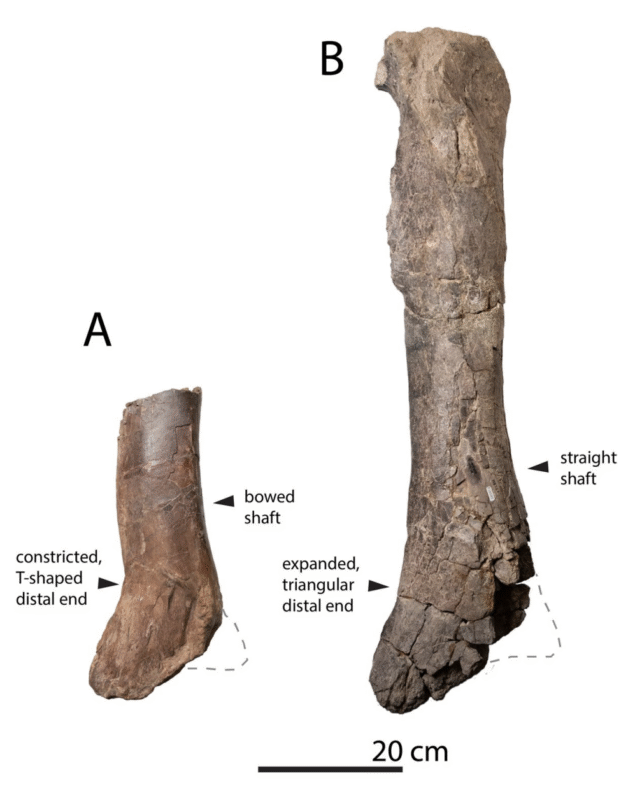
All these traits point to this gigantic dinosaur being more closely related to Tyrannosaurus than to Bistahieversor.
“Regardless of which hypothesis is adopted, the unusual size of the Hunter Wash tyrannosaur is significant, as it represents a previously unrecognized appearance of large tyrannosaurids in the late Campanian, and shows that they evolved earlier than previously believed,” the team writes.
“Nevertheless, additional remains from the Kirtland, isolated teeth or bones, or ideally associated remains, are needed to better constrain both the size and the relationships of the Hunter Wash tyrannosaur.”
The research is published in Scientific Reports.
First Appeared on
Source link






Leave feedback about this