

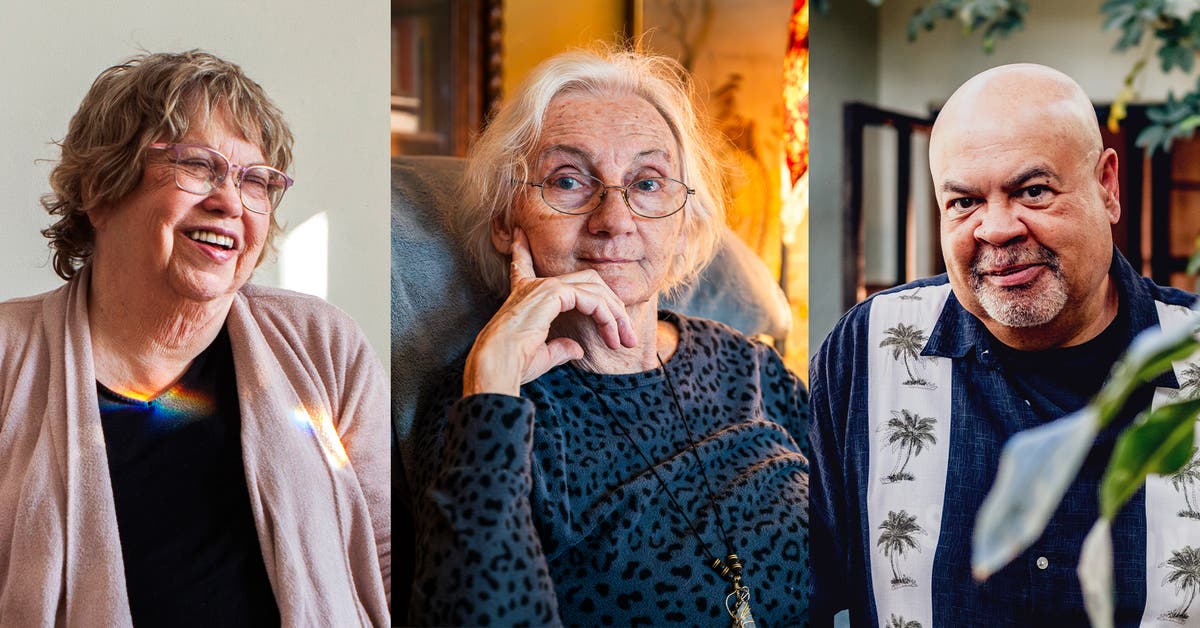
Name: Beverly Suek
Retired from: multiple jobs in activism
Age: 80
Hometown: Ottawa, Ontario
Currently lives in: Winnipeg, Manitoba
Living arrangement: a self-managed group home with five other women
In the winter of 2000, Beverly Suek faced a common yet heart-wrenching challenge. Her husband had passed away. She was in her mid-50s and not even retired. But suddenly, her Winnipeg, Manitoba, home seemed empty and cold. “I’d come in, and the house would be dark. There’d be nobody there to greet you,” she recalled.
For a while, she tried living with a sister, and she had the support of her seven children. But still, it was lonely. “You eat a lot of peanut butter sandwiches, because you have nobody to cook for,” she said.
What she missed was more than just company. She wanted to find a shared sense of home. With her husband and family, she’d worked toward shared goals and built a rich life. And she’d spent much of her spare time as an activist. During the AIDS epidemic, Suek had organized a volunteer organization that helped people with the disease die at home.
Suek said she’d heard about places that were mostly being called “intentional communities,” where people with aligning viewpoints and needs could live together cooperatively. But finding such an arrangement within her own community seemed impossible. “There was nothing really out there,” she explained. So she decided to create one herself. “How hard could it be,” she said with a laugh.
Her first step was to buy a house, and she knew just the one: Built in 1910, the striking building had Greek-style columns. Suek had formerly owned it with her husband, and her son now owned it. She bought the building back from him in 2014. It needed some work, but it already had the infrastructure to accommodate multiple people living independently. She wrote up a questionnaire for prospective residents. And she started an informal word-of-mouth campaign, along with posting her plans on social media and notifying local women’s groups. Then Suek waited.
Eventually, it worked. “If you build it they will come, and they did,” she said.
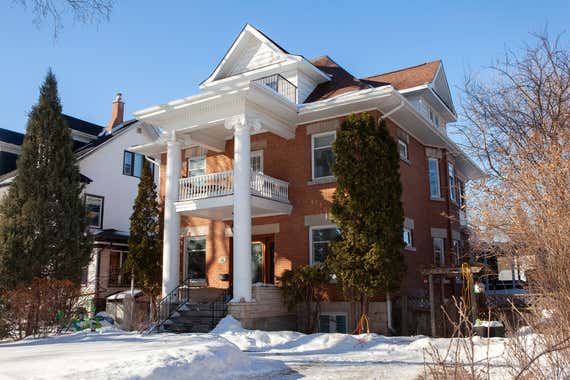
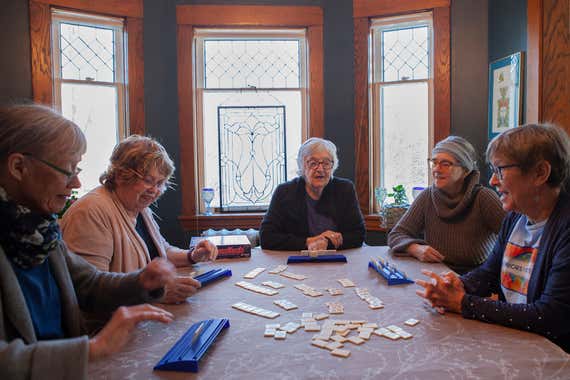
Today, the Women’s Housing Initiative Manitoba (WHIM) is home to six women, ranging from their early 60s to 80 (Suek is the oldest). The women live cooperatively, sharing responsibilities for maintenance, cooking, and other household basics. They also program various activities, including group discussions, events, and activism. And they watch their favorite shows together. (Currently it’s Apple TV’s Shrinking, plus “just about any British crime drama,” Suek said.)
Roommates helped Suek recover after she broke her arm, and the household supported two other residents who were hospitalized in 2024 with life-threatening illnesses. The community support has also eased the burden on younger family members, who are traditionally called on to support older family members.
“You’re not alone, going through all that, but at the same time, the burden on your family is really eased,” Suek said.
It can also be much less expensive to live this way. At first, Suek owned the house, and the others shared expenses. In 2018, the members decided to create a nonprofit cooperative, which now owns the house. When someone joins, that person puts in $30,000 CAD ($22,000 USD) to cover a down payment (this is returned if they leave). The total monthly mortgage payment is $2,433 CAD, which the residents split, along with utilities. There are provisions to help applicants who need financial help, Suek said. And each resident pitches in $70 CAD a week for food. It’s considerably less than $4,750 CAD, the median monthly rate for a private room at a retirement home, according to a 2022 report commissioned by Sun Life (a Toronto-based long-term-care insurance provider).
“For women of my generation, the alternative just isn’t affordable. Many of us worked, but not in high-paying jobs, and even with federal benefits, there just isn’t enough,” Suek said.
Making WHIM operate smoothly requires work, including having outlines for conflict resolution, but most of the details simply require common sense. The bigger issue was fitting the living situation into local regulations that weren’t really designed for this kind of housing. But most of it eventually got resolved, in large part because of Suek’s pluck, said Ben Carr, who is a Winnipeg member of Parliament. “You need individuals with the type of fight that Bev has to make it a reality, and to show what good can happen when you do this,” Carr said.
Communal housing programs like WHIM are rare, but there are examples of parallel efforts in other places. For instance, in the US, there’s the Bird’s Nest, in Texas, which houses a group of retired women.
The primary advantage to this type of housing is providing company to those who live there, Suek said. “We don’t have to call somebody and see if they can go out to a movie. There’s also always somebody who wants to do something. And if you want to be alone, that’s fine too. If you want to go to your room and read a book, nobody’s going to bother you.”
First Appeared on
Source link






Leave feedback about this