

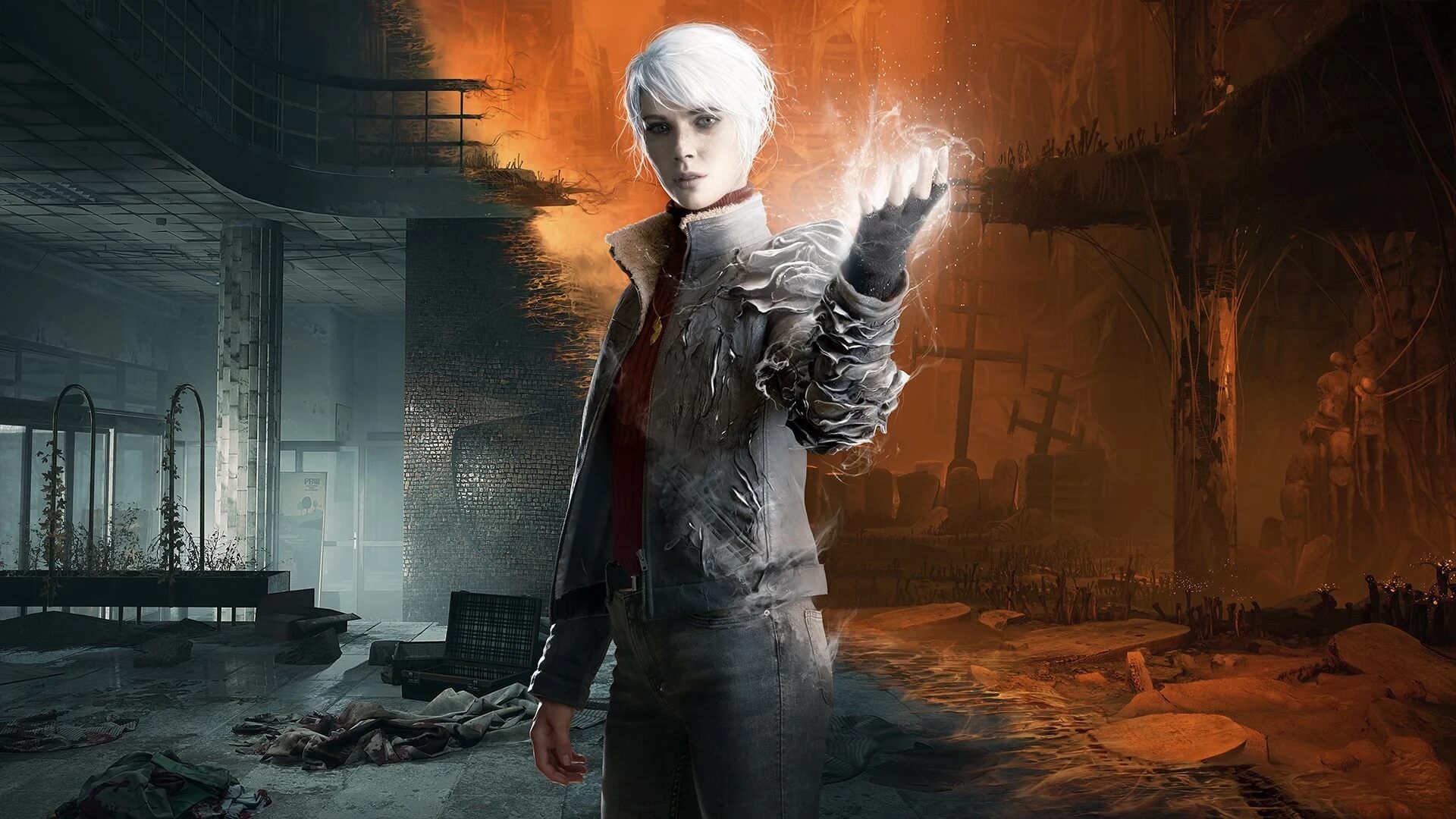
Silent Hill f was a dark horse. The first original entry in the series since 2012’s Downpour, it earned justified praise last year for its unflinching portrayal of abuse towards women and regional twists on series motifs. Centering its first female protagonist since Silent Hill 3, the game’s script—penned by acclaimed visual novel writer Ryukishi07—was preoccupied with pertinent feminist issues, specifically arranged marriage, domestic violence, and rigid gender roles within post-World War II culture. It was a refreshing rarity to see a game with such hard-left issues given the budget and marketing to succeed in a marketplace increasingly hostile to risk.
But Silent Hill f was not, in fact, the first “new” Silent Hill game in 13 years. In 2024, Konami released Silent Hill 2, a re-imagining of Team Silent’s seminal 2001 PS2 sequel. The remake was developed by Polish studio Bloober Team, who have since announced a subsequent reboot of the 1999 original on the heels of their success with Cronos: The New Dawn. This collaboration may have been inevitable—Bloober blew up in 2016 with the ambitious Layers of Fear, whose P.T. inspiration was played up by headlines of the day (“[It’s] like P.T. on drugs,” raved Polygon.)
The developer’s links to Silent Hill aren’t limited to remakes or homages, though. The Medium— released as an Xbox exclusive five years ago on January 28, 2021—was marketed with its connections to the influential series. Chief among these was the involvement of composer Akira Yamaoka, singer and voice director Mary Elizabeth McGlynn, and voice actor Troy Baker. Clenching the tie was an art direction which takes liberal stylistic cues from the fixed-angle cameras of horror titles Team Silent both influenced and were influenced by.
Yet there’s a major, important distinction between both games. Silent Hill 2 arms James Sunderland with the requisite steel pipes and firearms; The Medium, however, continues what was—at the time—a house tradition for Bloober. Protagonist Marianne cannot simply bash or blast her way through complex psychoses, instead relying on her second sight to peer into a parallel world of trapped spirits and maladaptive emotions. Like Layers of Fear, Observer, and Blair Witch before it, the game tasks the player with moment-to-moment progression that resembles an adventure game more than, say, the item management and staccato action of classic Resident Evil.
Silent Hill f’s dodge-heavy combat was subject to criticism, and that’s fair—it’s an inelegant, unambitious, and often cumbersome way to engage with the game’s world and plot. But for any mechanical issues with that game, Bloober’s sluggish combat in Silent Hill 2 is much worse. Bound to an unappealing over-the-shoulder camera angle which does a disservice to the original title’s aesthetic, the game grinds to a halt for players to engage in barebones shooting and weightless melee. It is somewhat disappointing that this and Cronos have been Bloober’s biggest successes, as it ensures similar uncurious, palatable design decisions may follow.
By contrast, The Medium’s cinematography is allowed to take up more space explicitly without the burden of combat. Because of that, the game is easily able to show the player what it wants to, when it wants to. This makes it more of a deliberate work of art that isn’t dictated by the player’s framing of the world. Fixed camera angles are controversial due to the popular misconception that the more control a player is given, the “better” a game’s controls are. But a set perspective allows for purposeful vision akin to artful cinematography in a great film; meanwhile, no combat ensures said vision never becomes a corpse-spattered tableau of the player’s making. The game would be an uglier and less deliberate piece of art if Bloober simply gave Marianne a shotgun.
First Appeared on
Source link

Leave feedback about this