

“Hearst Magazines and Yahoo may earn commission or revenue on some items through these links.”
Here’s what you’ll learn when you read this story:
-
In geological layers around the world (particularly in the southwestern U.S.) roughly one billion years of rock are missing—a mystery known as the “Great Unconformity.”
-
Scientists have theorized that the Great Unconformity was caused by the planet’s “Snowball Earth” phase or the formation of the supercontinent Rodinia, but a new study points to a major erosion event that predates both of these eras.
-
By analyzing ancient rocks in China, the new research found that the formation of Earth’s first supercontinent, Columbia, may be the main culprit behind this rocky conundrum.
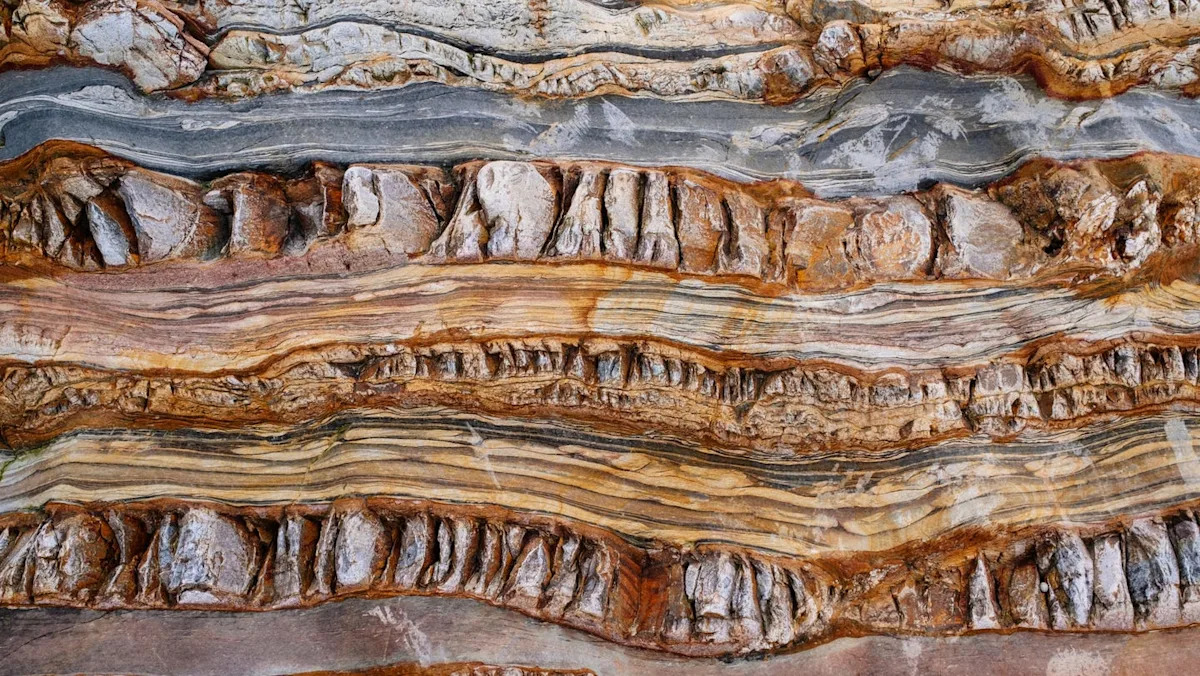
The 4.6-billion-year-long history of our planet is interpretable in large measure through the sprawling story of the geologic layers folded beneath Earth’s surface. But sometimes that story can read more like a mystery than a history. One of the greatest examples of such a geological enigma is known as the “Great Unconformity.” Although its name might seem be better suited to awkward teenage years than to a geology lesson, this rocky conundrum—found throughout the world but particularly prevalently throughout the southwestern U.S., including the Grand Canyon—concerns a missing geological layer between Cambrian and Precambrian rocks representing roughly a billion years of missing Earth history.
Since the unconformity’s discovery in the mid-1800s, geologists have come up with a few intriguing suspects for what caused it. One of them is called “Snowball Earth,” a period of Earth’s history some 700 million years ago that essentially carved away these layers via geological forces unleashed by prolonged, intense global cold. Another possible suspect is the formation around one billion years ago of the supercontinent Rodinia, which lifted up older rocks, exposing them to weathering. Now an international team of scientists says it’s made a startling discovery by analyzing five sites in North China where the Great Unconformity is exposed. Their results show that the rock layer’s destruction actually predates both of those events. The results of the study were published in the journal Proceedings of the National Academy of Sciences (PNAS).
“The Great Unconformity…represents a globally important interval of continental exposure and erosion that is notable also for the first appearance of all major animal phyla on Earth,” the authors write. “The most pronounced erosion evident in both the thermochronologic record and geochemical indicators of continental weathering is shown to correspond with development of Earth’s first true supercontinent.”
While the supercontinent Pangea is fairly well-known, that’s far from the Earth’s first continental smash-up. In fact, there have been at least four true supercontinents, the oldest being Columbia, which formed around two billion years ago and began its big breakup some 400 million years later. By looking at rocks on the older side of the Great Unconformity divide, scientists analyzed radioactive elements that could pinpoint how much time elapsed after the rocks cooled down to a certain point, according to Science.
This timeline showed that the lion’s share of erosion occurred long before either “Snowball Earth” or the formation of Rodinia. Northwest University’s Liang Duan, lead author of the study, tells Science that the geological forces at work in these other events may have played some role in the Great Unconformity, but they’re not the main reason that a billion years of rock went missing.
This conclusion, if it holds up to scrutiny, is perplexing in more ways than one. Previous theories identified the Great Uniformity as a significant erosion event that flooded the ocean with the nutrients and minerals that potentially kickstarted the Cambrian Explosion, a rapid evolutionary event around 540 million years ago. The new timeline certainly complicates that narrative. The data suggest that a major erosion event must have occurred during a period that’s also known as the Boring Billion—a chunk of Earth history around 1.8 to 0.8 million years ago that’s considered, well, geologically boring.
Of course, what good is any mystery without a few plot twists?
You Might Also Like
First Appeared on
Source link





Leave feedback about this