

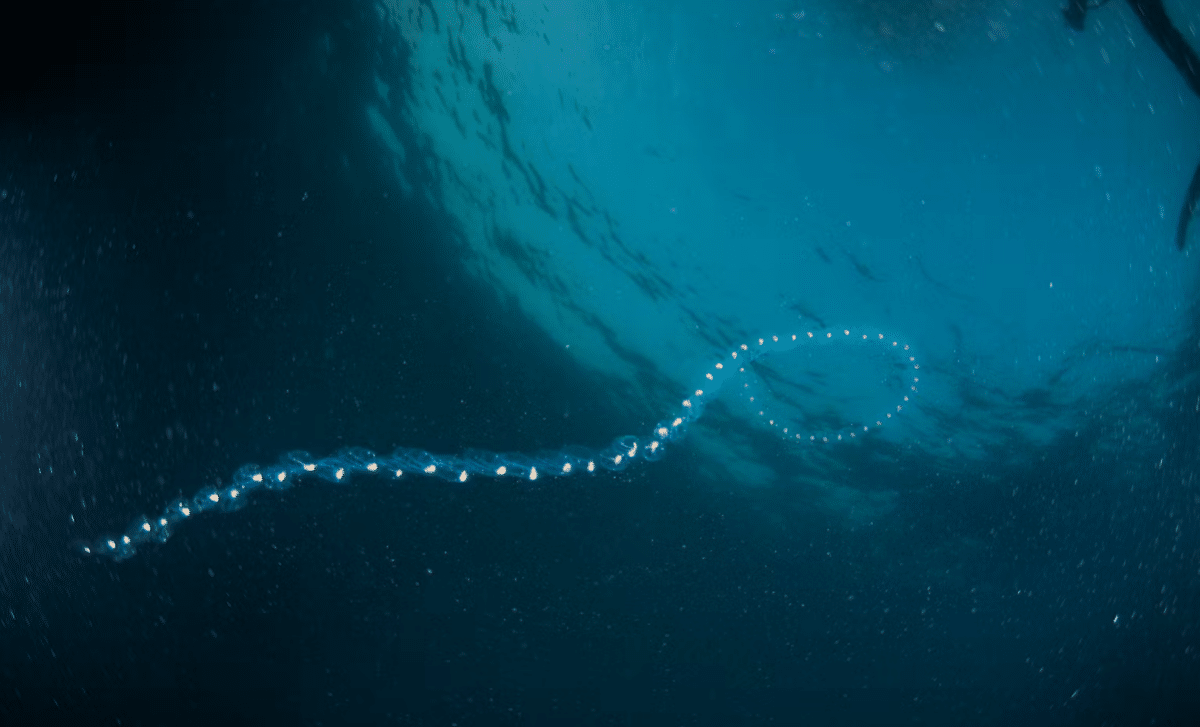
Antarctica, once a symbol of climate stability, is now rapidly losing its ice, causing a cascade of changes in the Southern Ocean. As sea ice disappears, marine ecosystems are being dramatically altered. A recent study in The Conversation shows how this shift is disrupting the food chain, with species like krill declining and salps thriving in the newly exposed waters. This transformation signals an urgent ecological crisis with global implications.
The Sudden Loss of Sea Ice in Antarctica
For decades, Antarctica’s sea ice remained stable, acting as a crucial habitat for various species, including krill and other marine life. However, in the last ten years, significant portions of the Southern Ocean have become ice-free, marking a drastic shift in the region’s climate. The rapid melting was so sudden that scientists initially believed it might be a temporary anomaly. Yet, as time has passed, the ice loss has proven to be a long-term, if not permanent, shift. This change is largely attributed to climate change, with rising temperatures contributing to the destabilization of the ice sheets.
Satellite imagery, which was a key tool for researchers in the study discussed by The Conversation, revealed how the once ice-covered ocean has now transformed into open water, altering the types of life that thrive there. These images have provided a clearer picture of how the ecosystems are changing, showing a rise in phytoplankton growth in areas once devoid of life-sustaining nutrients. The loss of ice has opened up new environments for these microscopic organisms, but has also led to unexpected consequences for larger species that depend on the ice for survival.
The Impact on Phytoplankton and the Rise of Salps
One of the most striking discoveries from the study was the change in phytoplankton composition in the Southern Ocean. Phytoplankton, which serve as the base of the marine food chain, are critical for sustaining marine life, from small fish to large whales. As the sea ice melted, researchers observed a surprising increase in phytoplankton growth. Satellite data revealed that nearly 70% of the Southern Ocean now has more phytoplankton than it did a decade ago. While this might sound like a positive development, the ecosystem surrounding these microscopic plants has also shifted.
The rise of salps, a type of gelatinous filter feeder, is a major part of this new ecological landscape. Unlike krill, which have been a cornerstone of the Antarctic food web for years, salps thrive in ice-free waters and feed on smaller phytoplankton. As salp populations have grown, they have started to dominate in areas once occupied by krill. Salps are less carbon-rich than krill, and they do not play as significant a role in the storage of carbon at deeper ocean levels. This shift from krill to salps could have serious ramifications for the Southern Ocean’s ability to store carbon and support the food web.
a, The proportion of diatoms, haptophytes and cryptophytes (from left to right) as a percentage of the total community chl-a. The blue outline is the Antarctic continental shelf break. b, The geographical trends (Sen slopes) for each group per year expressed in chl-a concentrations. c, The linear trend (of anomalies) of the averaged modelled estimates in the Antarctic Shelf region (pre-2017, n = 58; post-2017, n = 20; d.f. = n − 2). Trends were assessed using two-sided t-tests with Holm correction for multiple comparisons. Reported values are: diatoms P = 0.005 (pre), P = 0.024 (post); haptophytes P = 0.019 (pre), P = 0.62 (post); and cryptophytes P =0.96 (pre), P = 0.011 (post). Anomalies of each phytoplankton group (dots) linear trends (straight line) as well as the moving average (curved line) and the standard deviations (vertical lines) between December, January and February on the Antarctic Shelf are shown. d, Anomalies of SICs (grey dots) linear trends (green line) as well as the moving average (pink line) on the Antarctic Shelf and the correlation (R2) and significance (***) between SIC and each phytoplankton group with corresponding two-sided P values: diatoms P = 0.18 (pre), P = 0.032 (post); haptophytes P = 0.31 (pre), P = 0.53 (post); and cryptophytes P = 0.48 (pre), 0.039 (post). Shapefiles for the Antarctic Shelf Break in a and b from ref. 63 under a CC-BY 3.0 license.
The Role of Sea Ice in Antarctic Marine Ecosystems
Sea ice is more than just frozen water, it plays a pivotal role in supporting the Southern Ocean’s unique ecosystems. The ice provides shelter for a variety of marine species and acts as a nursery for juvenile krill. Additionally, ice-covered waters are home to large algae called diatoms, which are essential for feeding krill and other small creatures in the food chain. The ice also nurtures hotspots of food sources, creating a rich, diverse ecosystem. The recent changes to these habitats are proving to be more disruptive than initially anticipated, as species like krill are no longer able to depend on the ice for their survival and reproduction.
Krill and the Consequences of a Shifting Food Chain
Krill are among the most important species in the Southern Ocean. These small crustaceans are at the foundation of the food web, feeding everything from fish to larger mammals like whales and seals. However, the loss of sea ice has disrupted the krill population. As mentioned in the study, krill rely on ice-covered waters not only for food but also as a habitat for reproduction. Without this ice, krill populations are not thriving as expected, leading to concerns about the future of larger marine animals that depend on them.
The decline in krill populations is of particular concern for the Antarctic fishing industry, which depends on krill for commercial harvesting. Moreover, the loss of krill would also mean a loss of an important food source for other species, leading to potential imbalances within the ecosystem. This disruption of the food chain could have far-reaching implications for marine biodiversity and the health of the Southern Ocean.
Salps: The Unlikely Winners in a Melting Ocean
While krill may be struggling, salps are thriving in the changing environment. These gelatinous creatures, which filter out tiny phytoplankton from the water, are well-suited for life in ice-free conditions. Salps have been found in greater numbers in areas that were once dominated by ice and krill. Although salps do not play as important a role in the carbon cycle as krill, their dominance could signal a significant shift in the food chain. Salps support a different type of food chain, one that could reshape the ecosystem of the Southern Ocean in the coming decades.
One of the reasons salps are able to thrive in the absence of ice is their ability to consume small phytoplankton like cryptophytes, which have increased in the Southern Ocean since the ice began to melt. The study found that the phytoplankton composition has shifted, with cryptophytes now playing a larger role in the ecosystem. Salps, as efficient filter feeders, are perfectly adapted to exploit this new source of food, leading to their rapid growth in these newly exposed waters.

Credit: Aaron Sanders
The Importance of Carbon Storage in the Southern Ocean
The Southern Ocean plays a crucial role in the global carbon cycle. The carbon that is stored in its waters can help mitigate the effects of climate change by keeping excess carbon dioxide from reaching the atmosphere. Krill, through their feeding habits and deep ocean migration, help to transport carbon to deeper parts of the ocean, where it can remain stored for centuries. The shift from krill to salps, as the study suggests, could have significant consequences for the ocean’s ability to store carbon.
Salps are not as effective as krill in this process. Their short lifespan and less carbon-rich body composition mean that they do not contribute to long-term carbon storage in the same way krill do. As a result, the decline of krill populations could reduce the Southern Ocean’s role in carbon sequestration, potentially exacerbating the effects of climate change.
The Long-Term Implications for Southern Ocean Ecosystems
The ongoing changes to the Southern Ocean’s ecosystems raise serious questions about the future of marine biodiversity in the region. The loss of sea ice has already had profound effects on the food chain, and the rise of salps as a dominant species is only one part of the story. Over time, these shifts could lead to the collapse of traditional ecosystems, with implications for both marine life and global climate patterns.
As more satellite data becomes available, scientists will be able to map these changes in greater detail, offering more insight into how the food chain is being reshaped. The full impact of these changes may not be felt for decades, but the evidence is clear that the Southern Ocean’s ecosystem is undergoing a transformation, with uncertain consequences for marine life and the environment.
First Appeared on
Source link




Leave feedback about this