

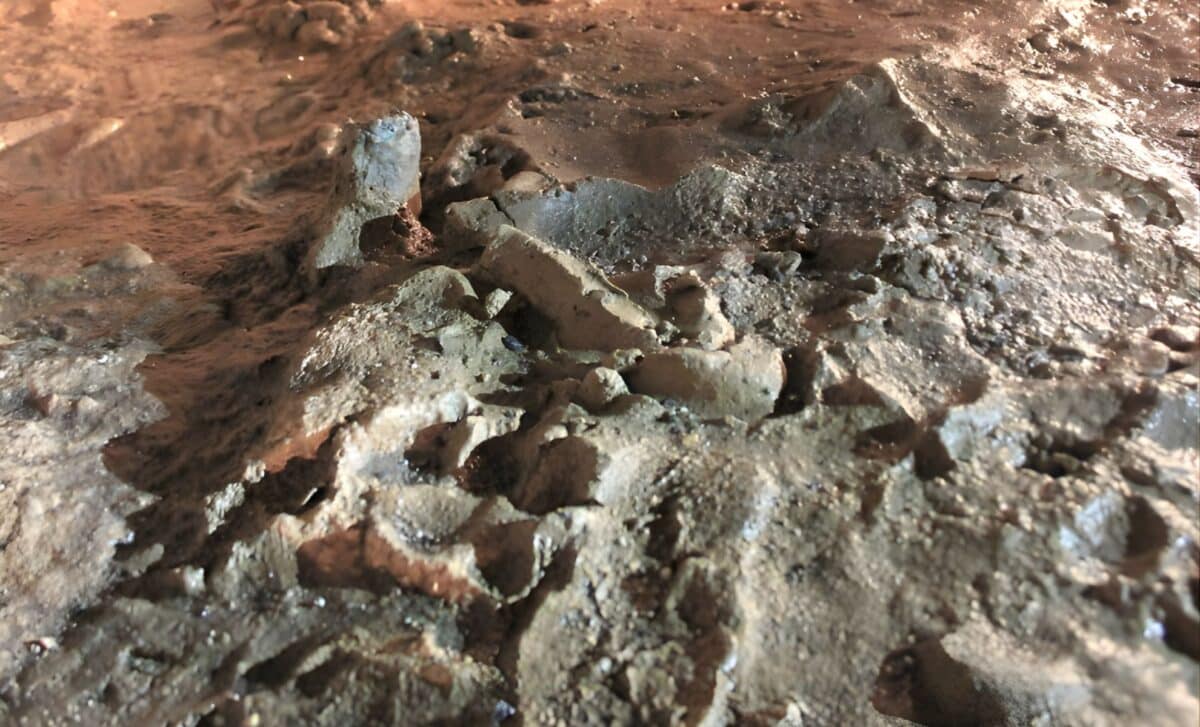
Deep in a cave near the town of Toirano in northern Italy, archaeologists have uncovered ancient human hand and footprints that are 14,000 years old.
Publishing their findings in the journal eLife, the team, led by Dr. Marco Romano from the University of the Witwatersrand, South Africa, embarked on this study to understand how ancient humans interacted with the cave environment.
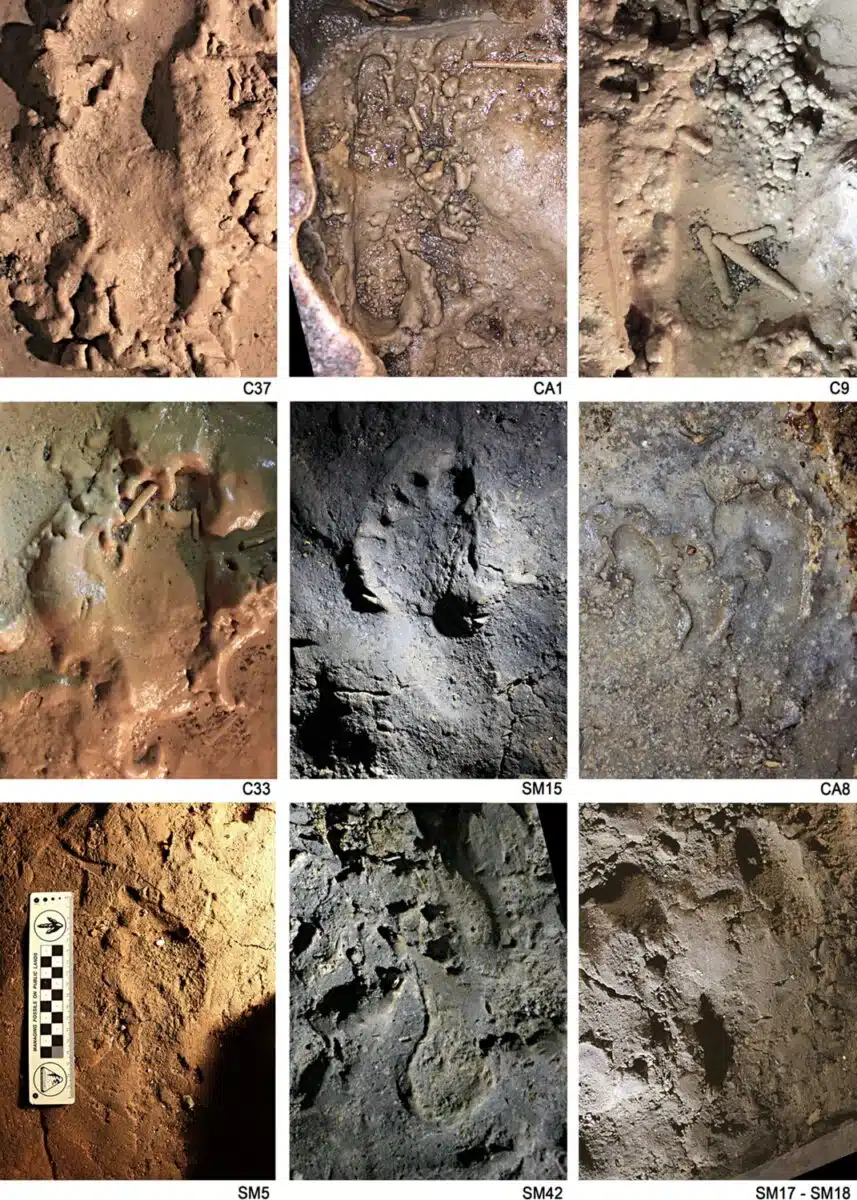
Their efforts to map and analyze over 180 tracks, including handprints and footprints, have revealed a fascinating story of a small group of Paleolithic explorers.
A Rare Discovery in Grotta della Basura
Grotta della Basura, located in northern Italy, is a deep cave that has long been a subject of archaeological interest. However, it wasn’t until recently that researchers began to investigate the cave’s interior more thoroughly. In their exploration, they uncovered a surprising number of human footprints; 180 in total. These tracks, carefully studied using 3D modeling and advanced dating methods, provide evidence that a small group of people consisting of two adults, an adolescent, and two young children explored the vault.
As explained by Dr. Marco Romano, a researcher at the University of the Witwatersrand, South Africa, the team’s primary goal was to understand how these early humans navigated the site and what activities they engaged in. He added that:
“We set out to discover how many people entered the cave, whether they explored as individuals or as a group, their age, gender and what kind of route they took once inside the cave.”
Tracking the Path of Ancient Humans
The footprints found inside the cave are remarkable for the information they provide about how these humans interacted with its environment. The group of explorers entered the cave barefoot and likely used wooden sticks to illuminate their way, as indicated by the tracks. The prints were left on the cave’s clay-rich floor, and the team used various scientific techniques to analyze the footprints and reconstruct the group’s movements.
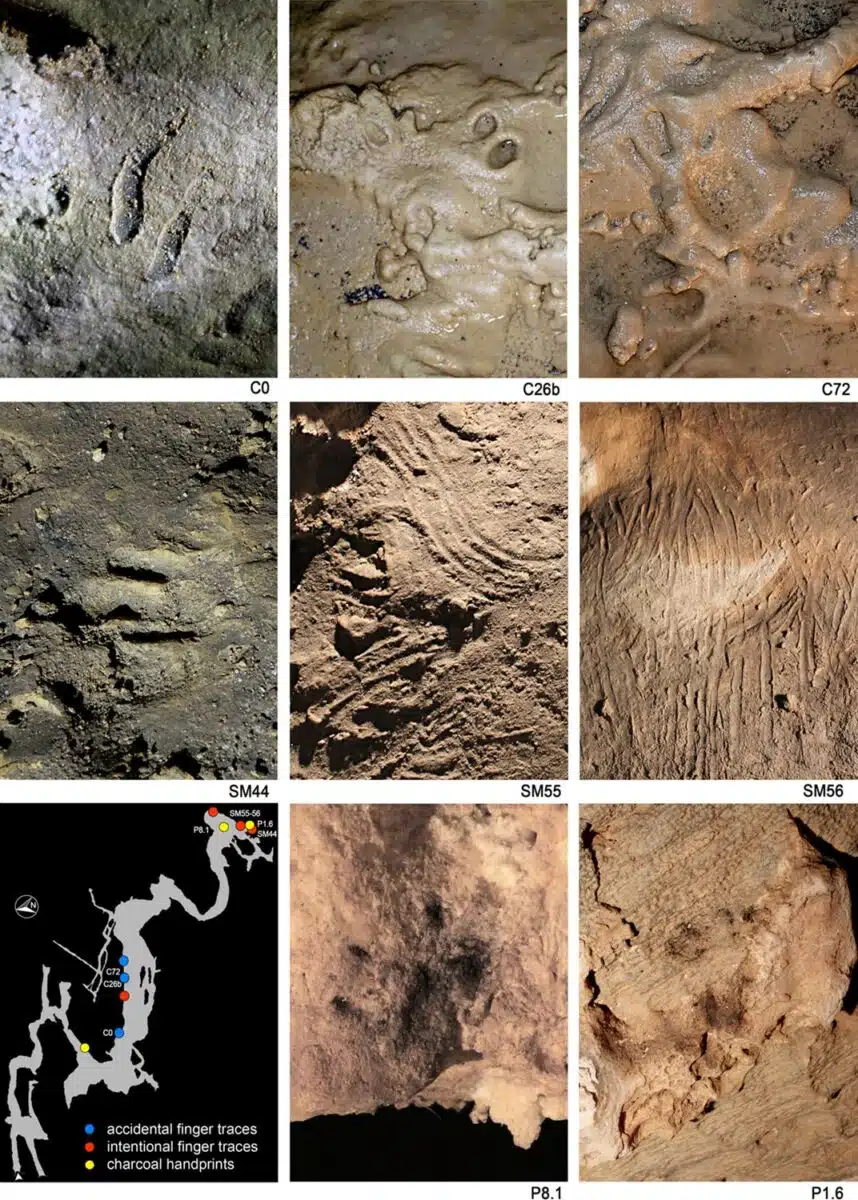
According to the research, some of the handprints appear to have been made unintentionally, likely while the explorers were navigating the location, while others seem to have been deliberately placed, possibly indicating social or symbolic activities within the cave’s inner chambers.
Its layout, which includes narrow tunnels and chambers, was mapped using advanced 3D technology, providing detailed insights into the paths the explorers took and how they interacted with their surroundings.
“Together, these approaches allowed us to construct a narrative of how the humans entered and exited the cave, and their activities once they were inside,” stated Dr. Romano,
The study published in eLife, also indicated that they explored caves not only for shelter or food, but possibly also for activities with social or symbolic meaning.
Children as Active Participants in Paleolithic Activities
One of the most striking aspects of the discovery is the presence of very young children in the group. The footprints of children, aged three and six, were found alongside those of the adults, suggesting that children played an active role in the exploration.
The fact that young children were part of the group that ventured into the cave and crawled through narrow tunnels indicates that children in Upper Paleolithic societies were likely engaged in a wide range of activities.
First Appeared on
Source link






Leave feedback about this