

Humanity’s plans for deep-space exploration hinge on the ability to use basic resources, such as water, to propel rockets to farther destinations in the solar system. Despite decades of experimentation, engineers are yet to power a spacecraft using a water-electrolysis engine. Enter General Galactic, a California-based startup that claims to be able to turn water into fuel, performing a modern-day miracle that could significantly alter space travel.
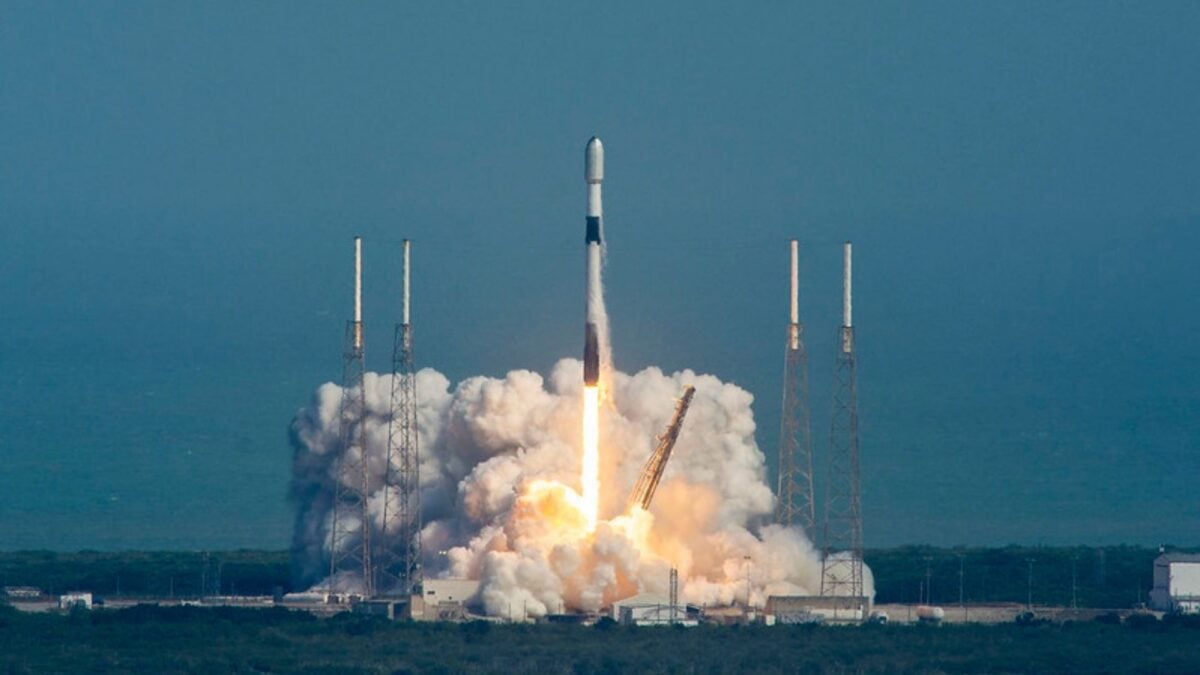
General Galactic is planning to launch a 1,200-pound (500-kilogram) satellite using only water for propellant, Wired first reported. The satellite is set for launch on board a SpaceX Falcon 9 rocket in October, putting a highly ambitious concept to the test. Once in space, the satellite will demonstrate two types of water propulsion methods, with the potential to unlock a new era of spaceflight.
Just add water
Water-powered engines seem like a no-brainer. After all, water is made up of hydrogen and oxygen, the two driving forces behind rocket engines since the 1960s. Hydrogen produces the highest exhaust velocity of any type of fuel, while oxygen helps it burn. For it to work, however, engineers first need to split water molecules into hydrogen and oxygen.
During its upcoming test, General Galactic aims to evaluate both electrical and chemical propulsion systems. The electrical propulsion system is designed to split water molecules into hydrogen and oxygen using a process called electrolysis, then apply enough electrical energy to convert the oxygen into plasma. It will then use a magnetic field to guide the plasma out of the thruster. For the chemical propulsion system, electrolysis will be followed by burning the hydrogen with oxygen as the oxidizer.
The electrical propulsion system is meant to provide a steady stream of thrust, which could prove to be an efficient way to travel to deep-space destinations. Chemical propulsion, on the other hand, can provide much more powerful but short-lived bursts of thrust, giving satellites a boost in space.
“We can provide both the long-efficiency maneuver, but also sometimes folks need to get somewhere fast or respond really quickly to a dramatic event in the orbital environment,” Luke Neise, co-founder of General Galactic and former engineer at Varda Space Industries, told Wired.
Risky business
In theory, water-based propulsion systems are a low-cost, safer alternative to conventional engines. Water is easier to handle and transport and doesn’t carry the same risks as toxic propellants. The biggest advantage for deep space travel is that water can potentially be harvested in space, whether on the Moon or Mars, and converted to fuel.
On the other hand, using high-temperature steam to power engines runs the risk of corroding a spacecraft’s electronics. Water propulsion also has a lower ability to generate high-exhaust speeds, and the water electrolysis system would also add more weight to the spacecraft.
That’s part of the reason why engineers have yet to come up with a practical water-electrolysis engine despite a seemingly simple concept.
If General Galactic’s upcoming test is successful, however, it could hold great potential for human exploration of the Moon, Mars, and beyond. The company is aiming to eventually design a refueling station for rockets to reach Mars and build a propellant station on the Red Planet itself. Before reaching another world, General Galactic first needs to prove its satellite can fly on water.
First Appeared on
Source link






Leave feedback about this