

A new experiment involving anesthetized rats is fueling one of the most audacious ideas in neuroscience: that consciousness could arise from quantum processes inside the brain. Published in August 2024 in the peer-reviewed journal eNeuro, the study adds experimental weight to the long-debated Orch OR theory developed by Nobel Prize-winning physicist Roger Penrose and anesthesiologist Stuart Hameroff. The findings strengthen the case that tiny structures called microtubules may play a direct role in generating conscious experience.
The origin of consciousness has puzzled scientists for decades. While most neuroscience has focused on electrical and chemical signaling between neurons, Orch OR proposes something far stranger: that the brain may rely on quantum mechanics, the same physics that governs subatomic particles.
If that sounds improbable, it’s because quantum phenomena are usually observed under extreme laboratory conditions. Yet a growing body of research suggests that biology may be more quantum-friendly than once thought, and the latest anesthesia experiment brings that possibility into sharper focus.
Anesthesia Study Links Microtubules to Awareness
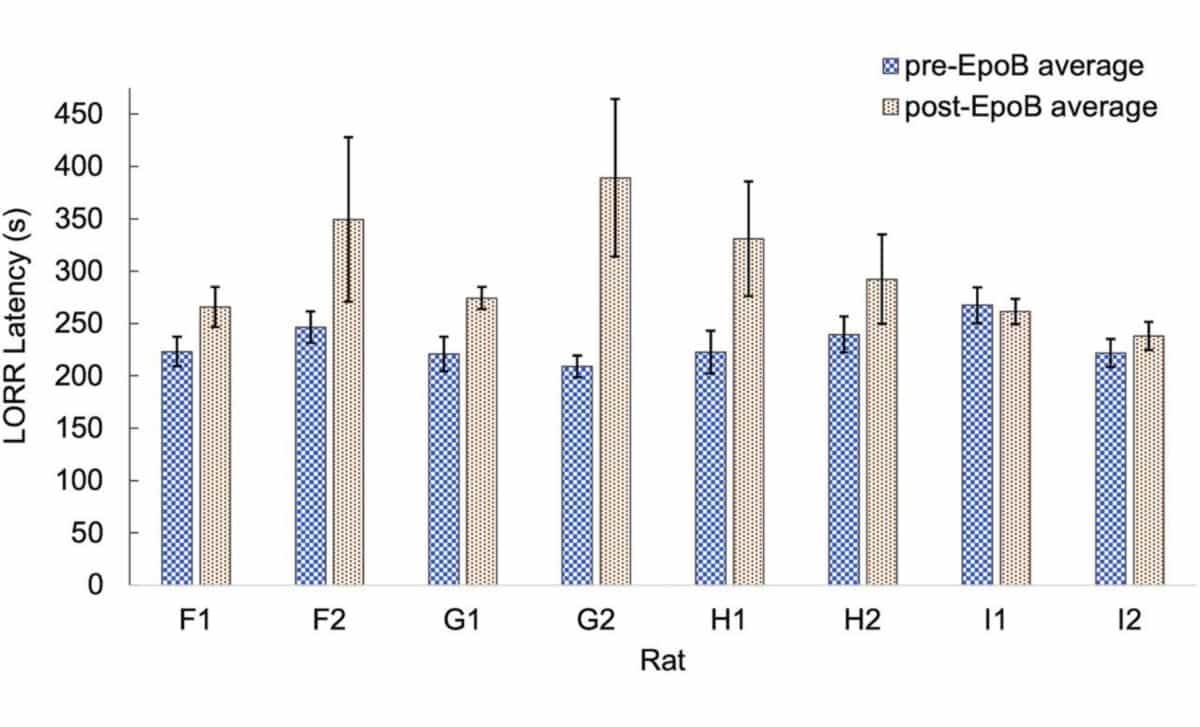
In the new study conducted at Wellesley College in Massachusetts, researchers administered isoflurane, a common inhaled general anesthetic, to rats. One group also received drugs that stabilize microtubules, microscopic hollow tube structures inside neurons, while the other group did not.
The outcome was measurable. According to the study published in eNeuro, rats with stabilized microtubules remained conscious longer than those without the stabilizing treatment. The untreated rodents lost their “righting reflex”, the ability to correct their posture, more quickly.
The righting reflex is widely used as an indicator of consciousness in animal research. By delaying its loss, microtubule stabilization appeared to interfere with the anesthetic’s effect. As reported by Popular Mechanics, this suggests that microtubules may be directly involved in maintaining conscious states. For a theory that has faced skepticism for nearly three decades, that is a notable development.
The Quantum Theory Behind Orch Or
The Orch OR theory, first proposed in the 1990s, argues that consciousness emerges from quantum computations occurring inside microtubules. In a 1996 paper, Penrose and Hameroff suggested that these structures allow quantum processes to unfold within neurons.
Central to the theory is Penrose’s concept of “objective reduction.” In quantum physics, particles exist in superposition, a cloud of probabilities, rather than fixed states. When they interact with their environment, that superposition collapses into a definite state.
Penrose hypothesized that each collapse of a quantum wave function inside the brain generates a moment of conscious experience. This would mean consciousness arises from repeated quantum state reductions occurring within neural microtubules.
If validated, the implications would be sweeping. On a quantum level, particles can exist in multiple states simultaneously. The theory suggests that consciousness, tied to such processes, could in principle be present in multiple places at once, raising the possibility that it might connect with quantum particles beyond the brain.
A Warm Brain in a Quantum World
Many scientists have rejected Orch OR on practical grounds. Quantum effects are notoriously fragile and typically require temperatures near absolute zero, around -273 degrees Celsius. Quantum computers, for instance, operate under such ultra-cold conditions to preserve quantum states.
The human brain is far warmer. According to a 2022 study, temperatures in the deepest brain regions range from about 32 to 40 degrees Celsius (90 to 104 degrees Fahrenheit). That discrepancy has long been viewed as a major obstacle.

Yet biology offers intriguing parallels. Researchers theorize that plants may rely on quantum processes during photosynthesis. Photons are converted into excitons, which must travel efficiently to chloroplasts. Scientists suggest that excitons may use quantum superposition to test multiple paths simultaneously, enabling efficient energy transfer even at ambient temperatures.
An August 2024 study published in Physics Review E proposes that myelin, the fatty sheath surrounding axons, could provide conditions favorable for quantum entanglement in the brain. Entanglement refers to the phenomenon in which two particles remain linked so that changes to one instantly affect the other, even at a distance.
Earlier experiments also add to the discussion. Physicist and oncology professor Jack Tuszyński used ultraviolet photons to trigger quantum reactions in microtubules lasting up to five nanoseconds, thousands of times longer than expected. At the University of Central Florida, researchers shined visible light into microtubules and observed re-emission lasting from hundreds of milliseconds to seconds, timeframes compatible with neural processing.
Taken together, these findings suggest that quantum states in microtubule signaling may persist long enough to influence brain function.
Neuroscientist Mike Wiest of Wellesley College said in a press release that viewing the mind “as a quantum phenomenon” could reshape discussions about whether coma patients or non-human animals are conscious. He added that such research may usher in “a new era in our understanding of what we are.”
First Appeared on
Source link






Leave feedback about this