

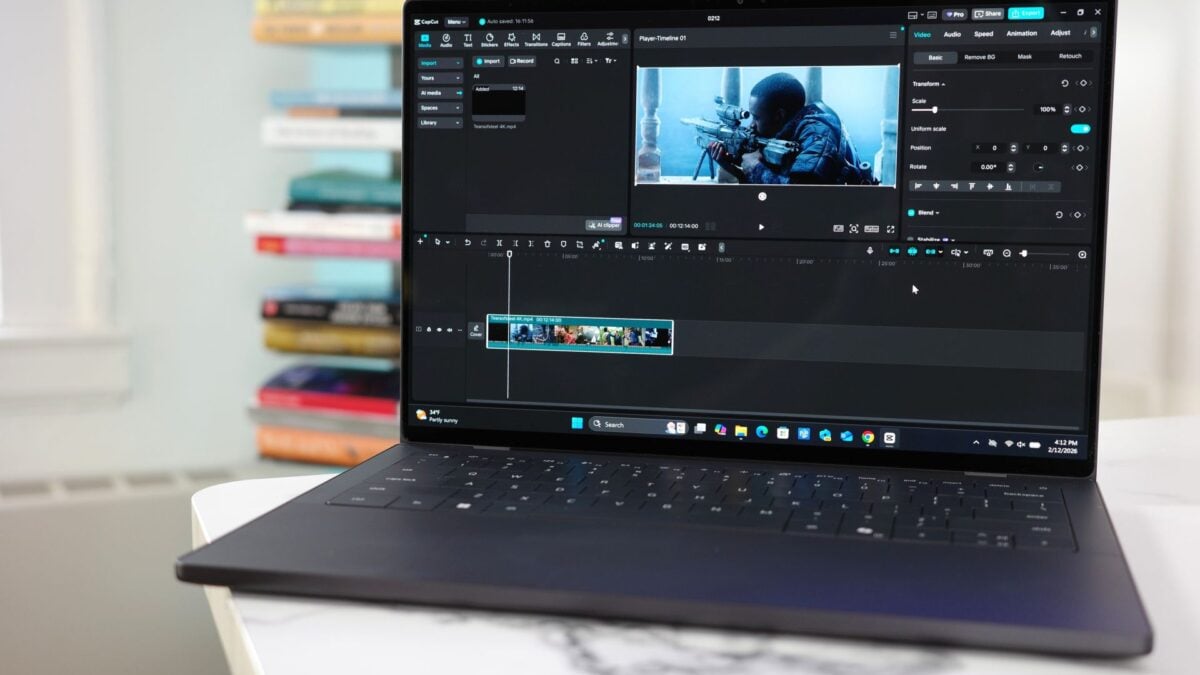
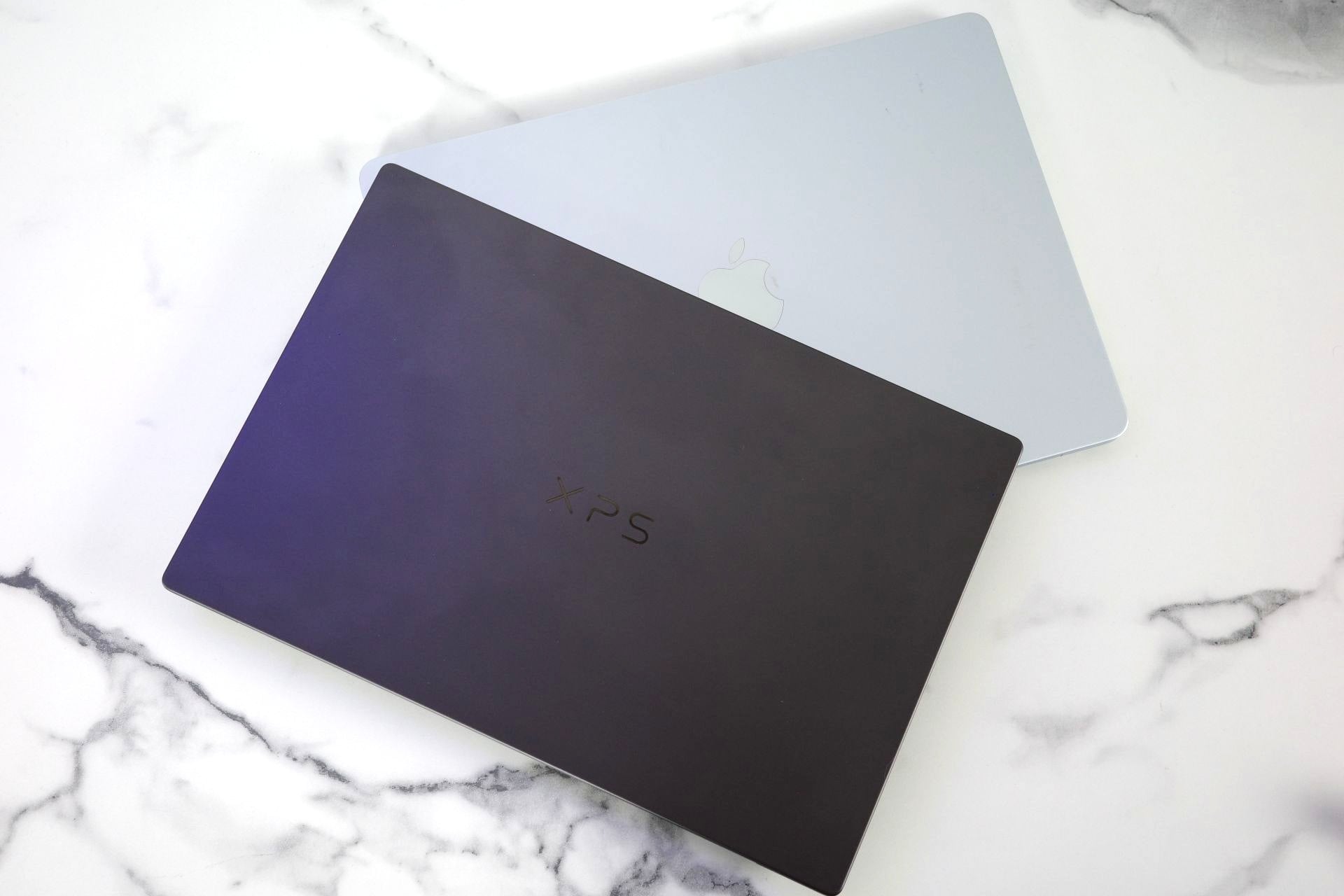
Dell still wants to recreate the MacBook. That became clear with last year’s boneheaded move, in which it changed the name of its entire PC portfolio, calling laptops “Dell Pro” or “Dell Pro Max.” Now, it’s brought back the age-old XPS branding with a sleek new logo, but it still seems to be trying to establish itself as the professional’s first choice for PCs. Have its efforts finally paid off?
Well, almost. This new XPS 14 is more MacBook Air-like than ever before, from increased performance to limited ports. As you can expect, it’s packing Intel’s Panther Lake chips with the extra GPU cores. That means it’s a great laptop for some use cases—especially for moderate graphics tasks. But its off-putting keyboard is also sure to frustrate fingers.
Dell XPS 14 (2026)
The Dell XPS is a great work laptop especially for moderate graphics tasks. You’ll just have to overcome its offputting keyboard.
- Bright OLED screen
- Great sound for this size of device
- Good battery life
- Great for graphics tasks
- The return of XPS branding
- Awkward seamless keyboard
- Soldered RAM
- Limited I/O ports
- Price way too close to beefier laptops
The latest version of the company’s “extreme performance systems” has the kind of battery life we’ve been hoping for since they started making laptops this small. Dell sent Gizmodo two versions of its laptop for review, though the cheaper $1,700 model mostly serves as an example of why you want a higher-end chip. The midrange Intel Core Ultra X7 358H can’t hit the same CPU benchmarks as Apple’s leading MacBook Pro M5, but it wins out in iGPU performance, which makes it excellent for light graphics tasks. Want to game on this thing? It’s possible, so long as you can accept some tradeoffs.
We’re inching towards Apple in terms of not only performance but also locked-down hardware and price. This laptop still has soldered RAM, so don’t expect to upgrade anytime soon (not that you would with RAM prices being so high). The XPS 14 with an X7 358H will cost $2,200. That’s competitive with several 14-inch laptops featuring a discrete GPU, such as last year’s Razer Blade 14 and Apple’s M5 MacBook Pro, which have similar memory specs.
The higher-end XPS 14 with 32GB of RAM, 1TB of storage, and an OLED screen is closer to the laptop you actually want. But whether it’s actually the best laptop for you will depend on the size of your wallet and your tolerance for odd keyboards.
Oh, look, a physical function row
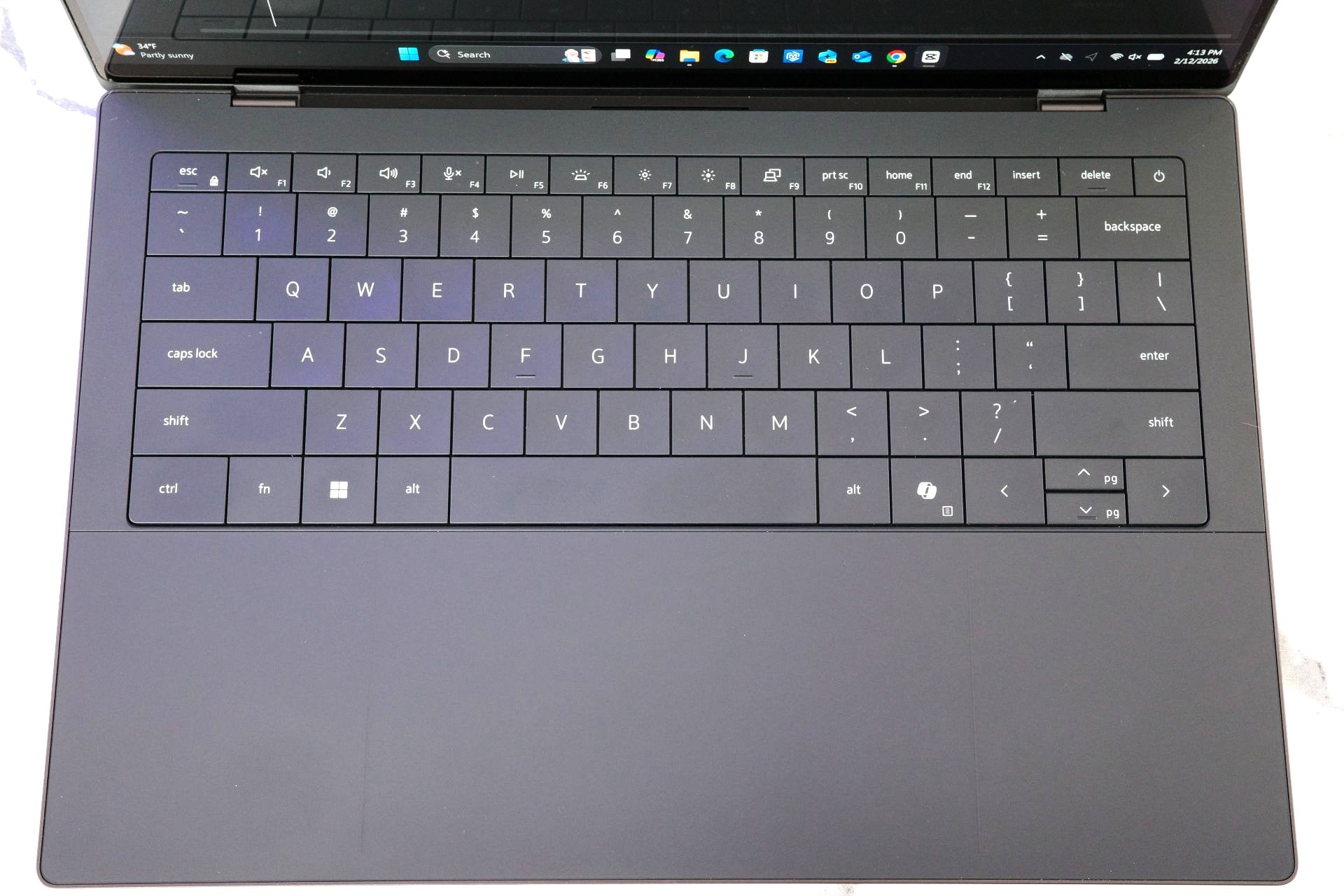
Dell’s penchant for oddball XPS design finally combines looks and functionality. The company excised the moronic light-up function row on the 2024 XPS 14 models, which had made the ESC, brightness, and volume keys impossible to find when the laptop was turned off. That previous design was an accessibility nightmare for people with low vision. Now—thankfully—the function row is a typical set of keys.
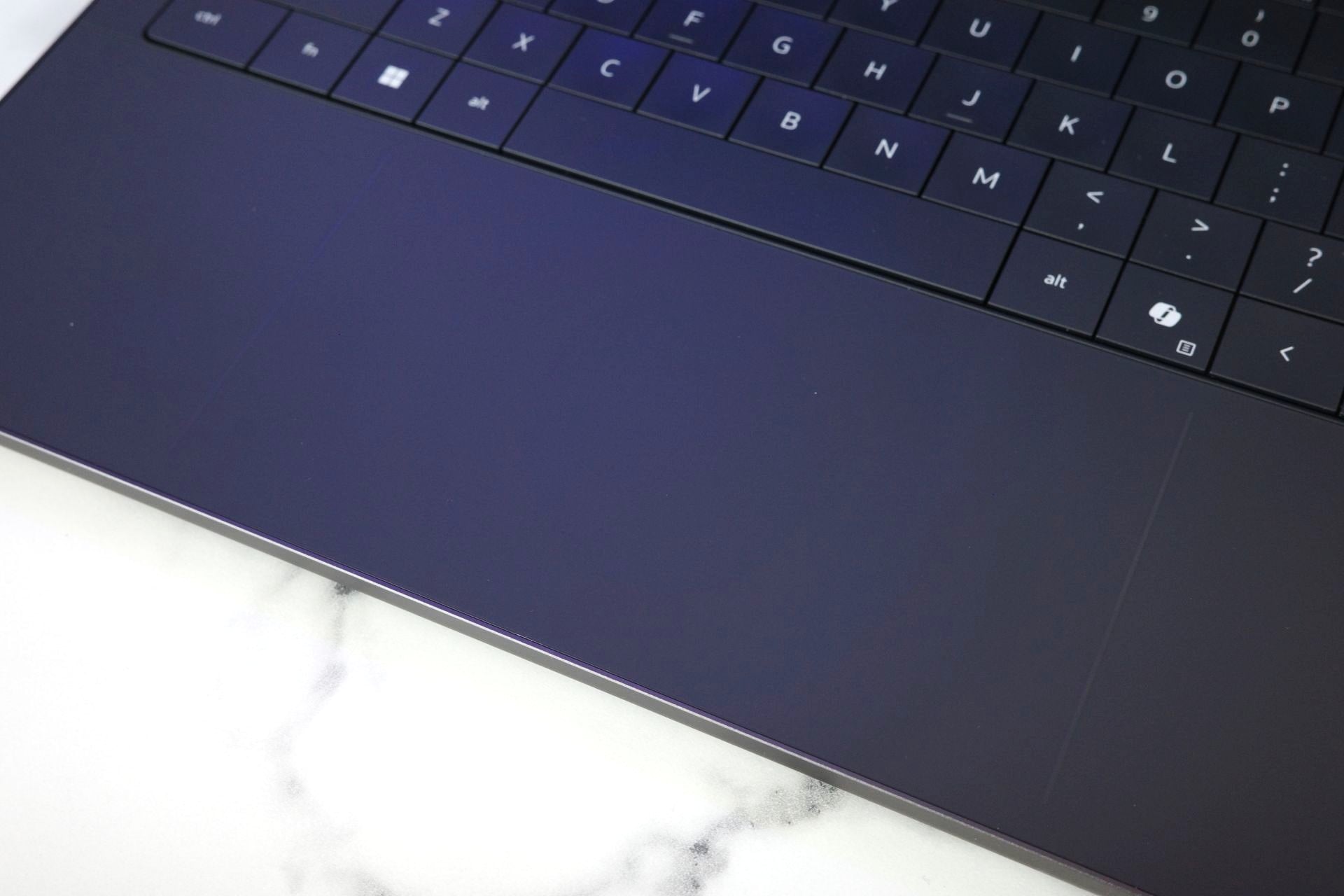
Dell also added two thin lines along the former seamless trackpad to help you identify the area you can touch. I never ran out of runway during day-to-day use. On the other hand, Dell has stuck with the seamless keyboard on these latest XPS models. That means every key sits nearly flush to the one next to it. There’s a subtle divot in the center of each key to offer more of a tactile feel, but it’s not enough to stop me from accidentally hitting multiple keys at once, and it’s certainly been garbling my words even as I “writye thjis trevbiew.”
With enough practice, I may eventually get the feel for this keyboard. Maybe it’s worth the effort for the sake of such a cool-looking device. The same cannot necessarily be said for the trackpad, however, which is so big that it overlaps with the area where I naturally place my wrists. This has led to all kinds of palm-rejection issues, unintended clicks, and excessive slams of CTRL+Z.
Despite all that, the XPS 14 does make me feel like a smooth operator. The low-profile keys feel snappier than those of a typical small laptop. The haptic trackpad (which uses a motor to simulate the feel of a physical click) is glassy with just enough texture that your finger doesn’t feel like a skater on an ice rink. The fact that the keys are so close together means I didn’t see nearly as much dust buildup between them. And that’s good news for messy eaters like me. Less distance between keys means there’s less chance a crumb might slip between the cracks.
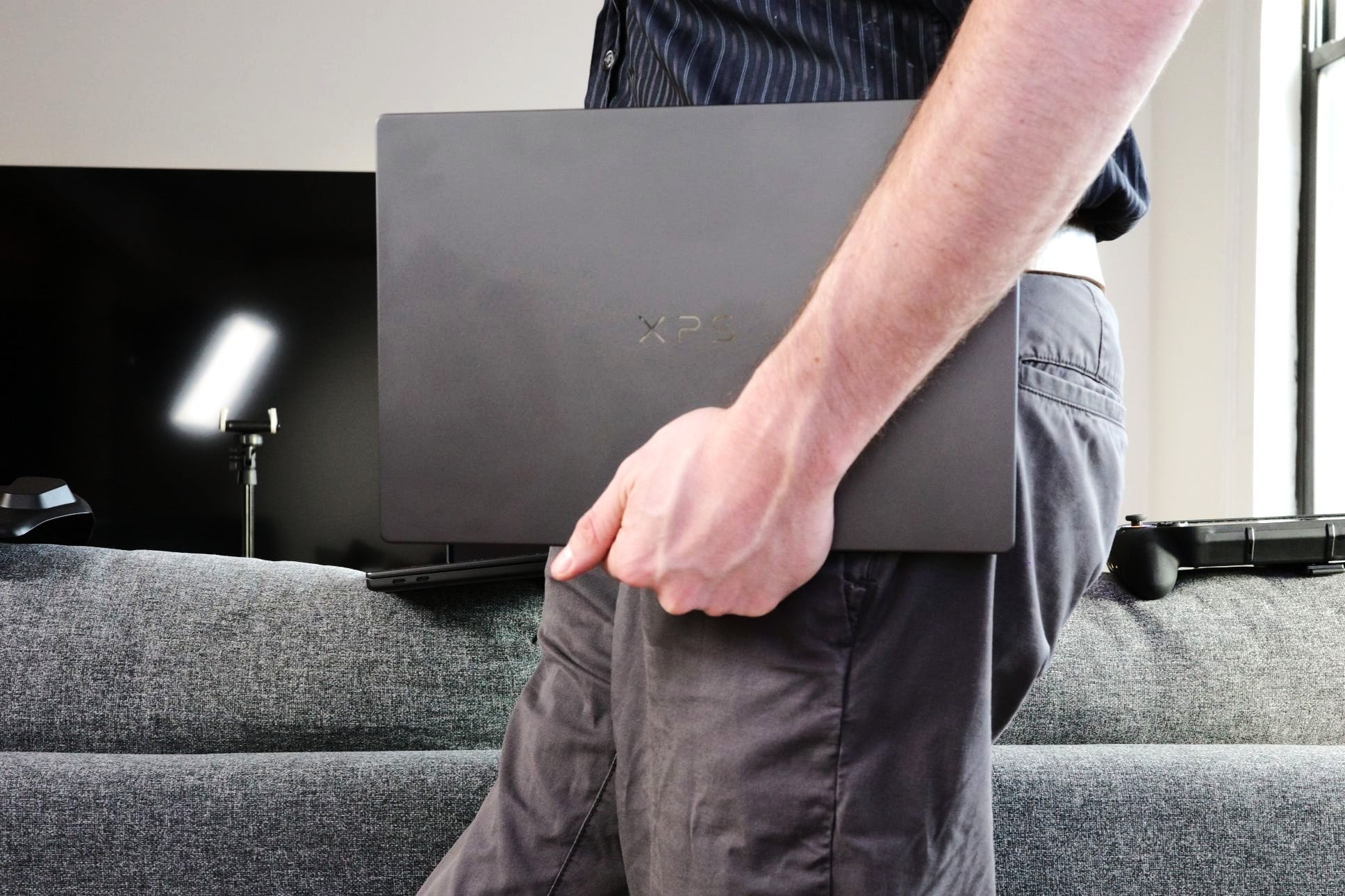
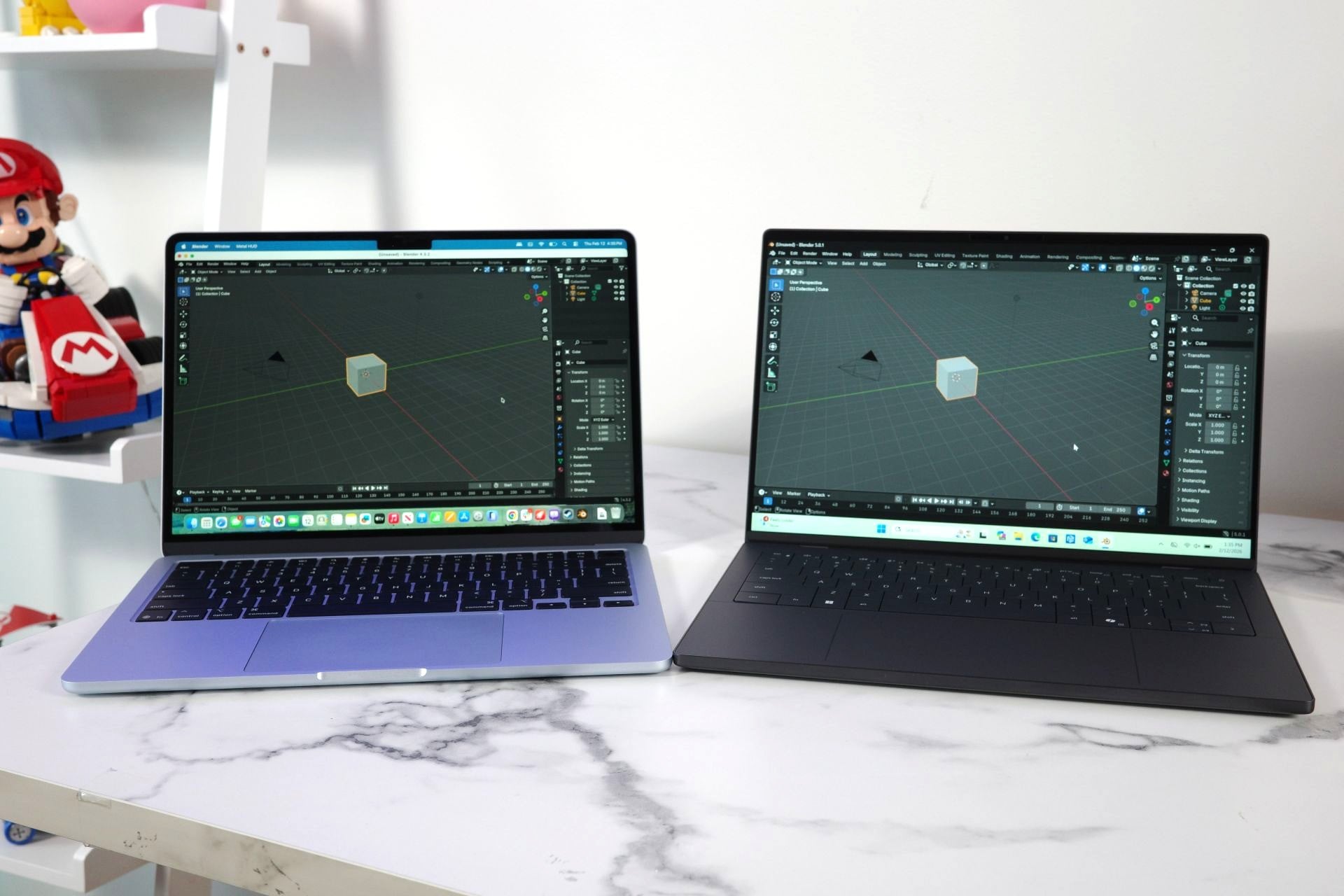
The 2026 XPS 14 is a square laptop with a thin base, only .58 inches thick. It’s also light, with the OLED model weighing in at just 3 pounds and the LCD at 3.05. A MacBook Air weighs 2.7 pounds and is .44 inches thick. That makes sense, since the XPS uses a relatively quiet fan setup compared to the Air’s passive cooling.
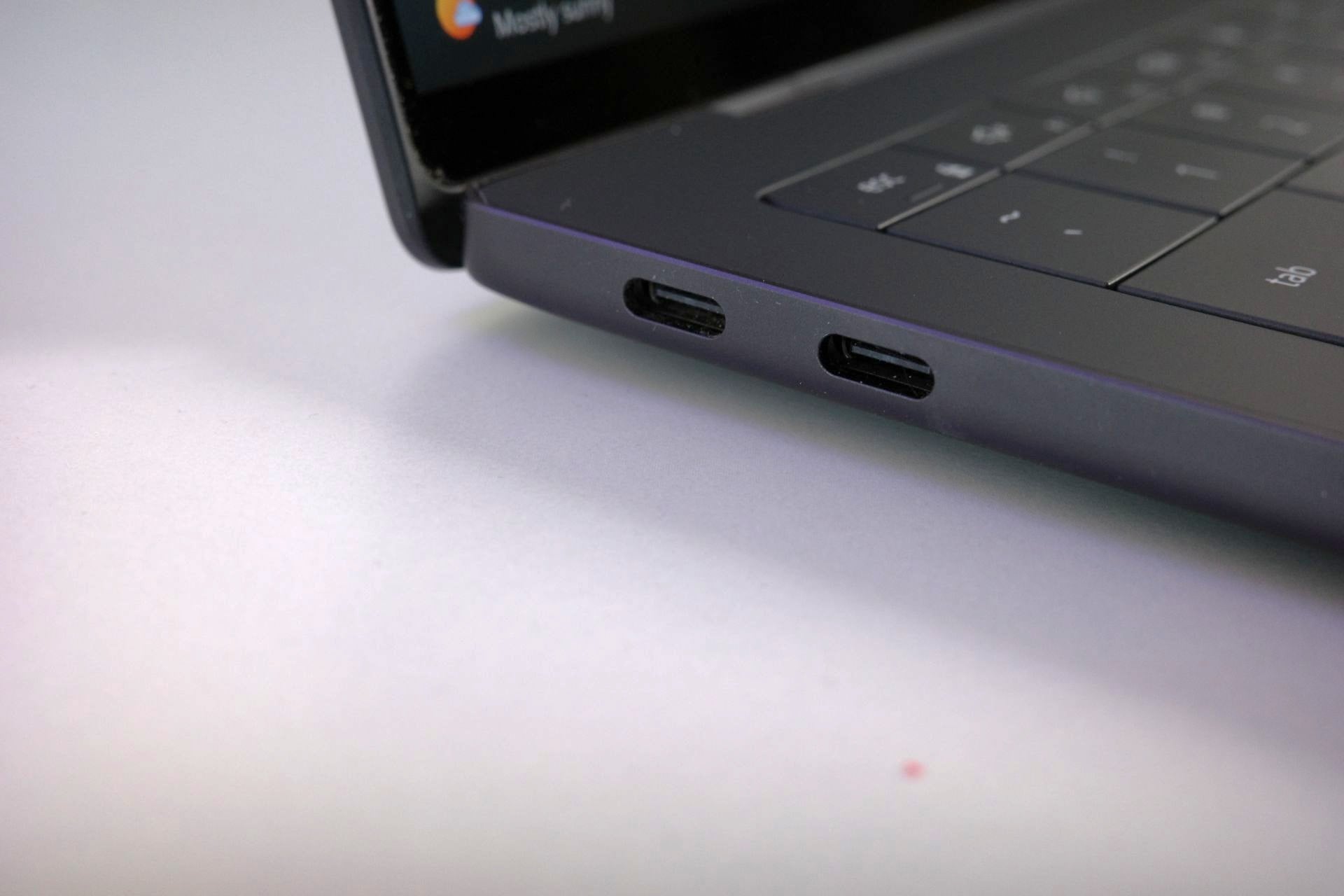
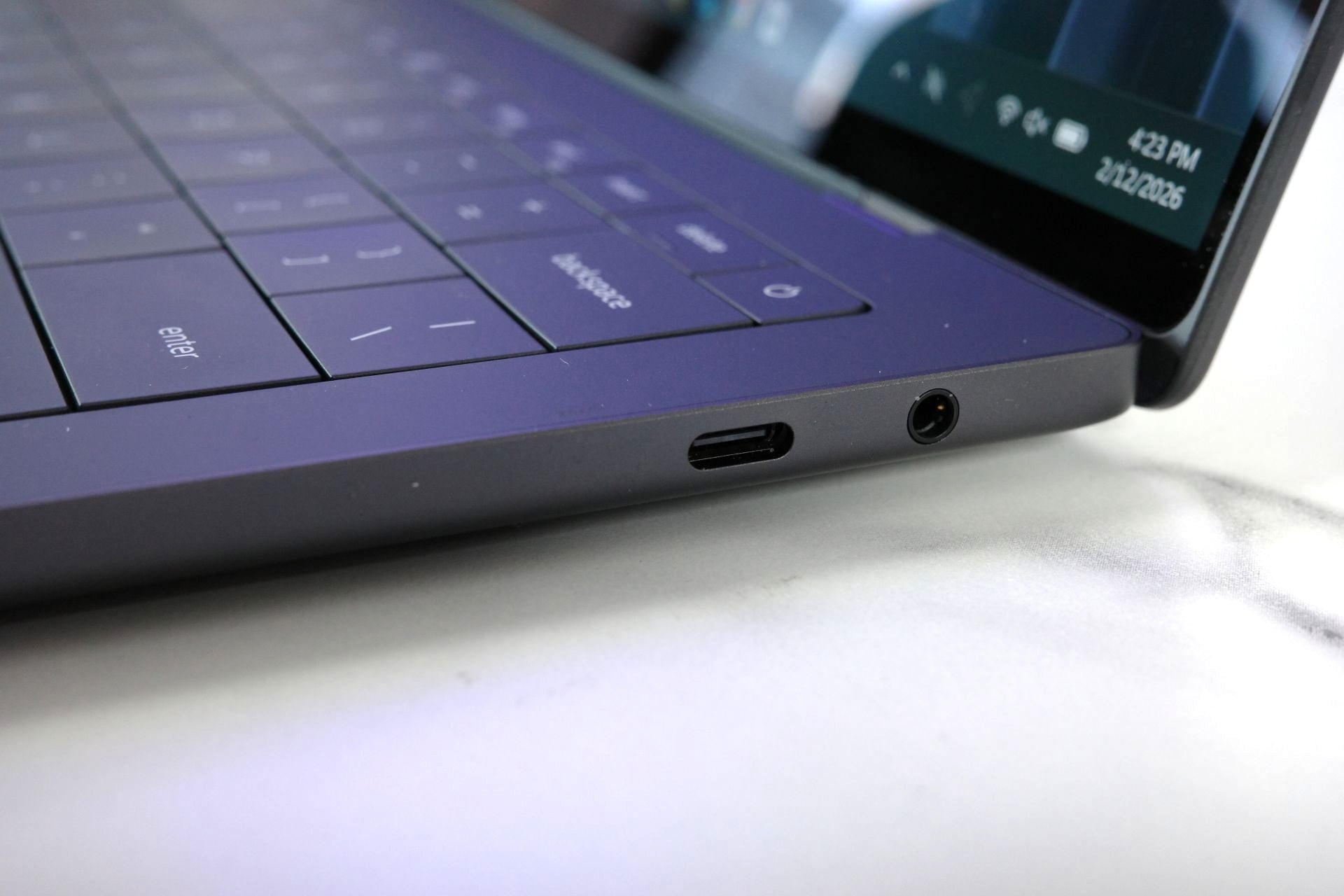
Unfortunately, as is the case with the Air, the XPS’ slim frame comes at the cost of inputs and outputs. This device sports three Thunderbolt 4 USB-C ports, and that’s it. To make my preferred multiscreen setup work, I had to drag a dock around during testing. If you’ve ever used a MacBook Air as a daily driver, you’ll know that limited port selection also gets annoying if you want to charge your laptop and use other docks or dongles at the same time. There’s also the limitation of Thunderbolt 4 instead of Thunderbolt 5 and its higher transfer speeds, which is a casualty of the Intel Core Ultra Series 3’s design.
Speakers: better than expected
The XPS tandem OLED screen may seem squat when you sit in front of it, though it’s still one of the prettier versions of this design we’ve seen on laptops. The bezels to either side of the display are relatively minuscule, as is the 1080p webcam cutout on top.
Tandem OLED devices stack multiple layers of diodes, increasing brightness and efficiency. This one clocks in at 2,880 x 1,800 pixels. It’s a touch panel with a 20-120Hz refresh rate and a stated brightness of 400 nits. In standard use, that’s luminous enough for shade or direct sunlight.
The OLED version offers crisp visuals, and deep blacks enable great contrast. If you opt for the cheaper model with IPS LCD, you’re stuck with a 1200p monitor with a slightly higher brightness setting and not much else to write home about.
This device can work as your main platform for a comfortable streaming session, so long as you don’t mind cuddling close with your partner around a 14-inch screen. Despite its down-firing speakers, this laptop delivers an impressive soundstage. It’s using a 10W quad-speaker design with two 3W speakers and two tweeters. The device practically reverberates with bass levels you normally can’t get from a laptop of this size.
I also have to give props to the webcam. My picture quality in a video call was far clearer than that of any of my colleagues at Gizmodo during our weekly meeting. Is that a reason to be smug? If somebody bragged to me with a smug face that they had a clearer picture in a Zoom meeting, I’d have to resist the urge to slap them. Still, it’s worth noting.
Midrange Panther Lake is a mixed bag
I had just finished reviewing the $2,400 Asus Zenbook Duo with its top-end Intel X9 388H, the chipmaker’s flagship 16-core CPU, delivering strong graphics performance in a relatively compact design. Dell told Gizmodo it would offer a variant of the XPS 14 and XPS 16 with an X9 chip in the future, but couldn’t provide an exact timeline.
Instead, you have two variants of Dell’s latest 14-inch model to start. As I mentioned before, the Intel Core Ultra 7 and X7 variants will have entirely different performance characteristics, meaning one will be better suited to demanding work tasks while the cheaper version can suffice for browsing, word processing, and other general work use cases.
The Intel Core Ultra X9 stacks up well against the M5 in practically all our productivity, graphics, and gaming benchmarks. The X7, on the other hand, is more of a mixed bag. In terms of CPU performance on single-core tasks, the XPS 14 scored just 100 points shy of the X9 on Geekbench 6’s benchmark. It’s about 1,000 points shy of that chip on multicore tasks as well. It still manages to beat the Intel Core Ultra 7 288V, one of the leading last-gen Intel chips powering the Acer Predator Triton 14 AI.
In a contest of CPU performance between Mac and Dell, the M-series has the upper hand. On Geekbench, the midrange Intel CPU is still close to 800 points behind the M4 MacBook Air in single-core and 1,600 points behind in multicore. Though the X7 358H can beat an M4 on Cinebench 2024—measuring the CPUs’ rendering capabilities—in multicore settings, it’s still 300 points shy of Apple’s latest M5, which launched late last year. It took more than six minutes to transcode a 4K video to 1080p in Handbrake; the MacBook Air took just over two minutes.
Great for moderate graphics tasks and light gaming
Thankfully, the contest measures pure CPU performance. The “X7” and “X9” variants of Intel’s chips have a trick up their sleeve, thanks to the 12 extra Xe3 GPU cores. In terms of more intensive productivity tasks, the XPS 14 will render a scene of a BMW in Blender just a few seconds slower than the Zenbook Duo when running on the Arc B390 GPU. The iGPU (integrated graphics processing unit) on this device makes this laptop a surprise hit for rendering tasks.
In 3DMark benchmarks, such as the Steel Nomad test, which measures a system’s potential performance for full 3D graphics rendering, it could achieve scores just shy of the Zenbook Duo’s. In anything involving ray tracing or more advanced lighting, the Dell PC performed worse than the Intel X9, but it still wins out over the M5. This machine has a strong edge against Apple for graphics performance.
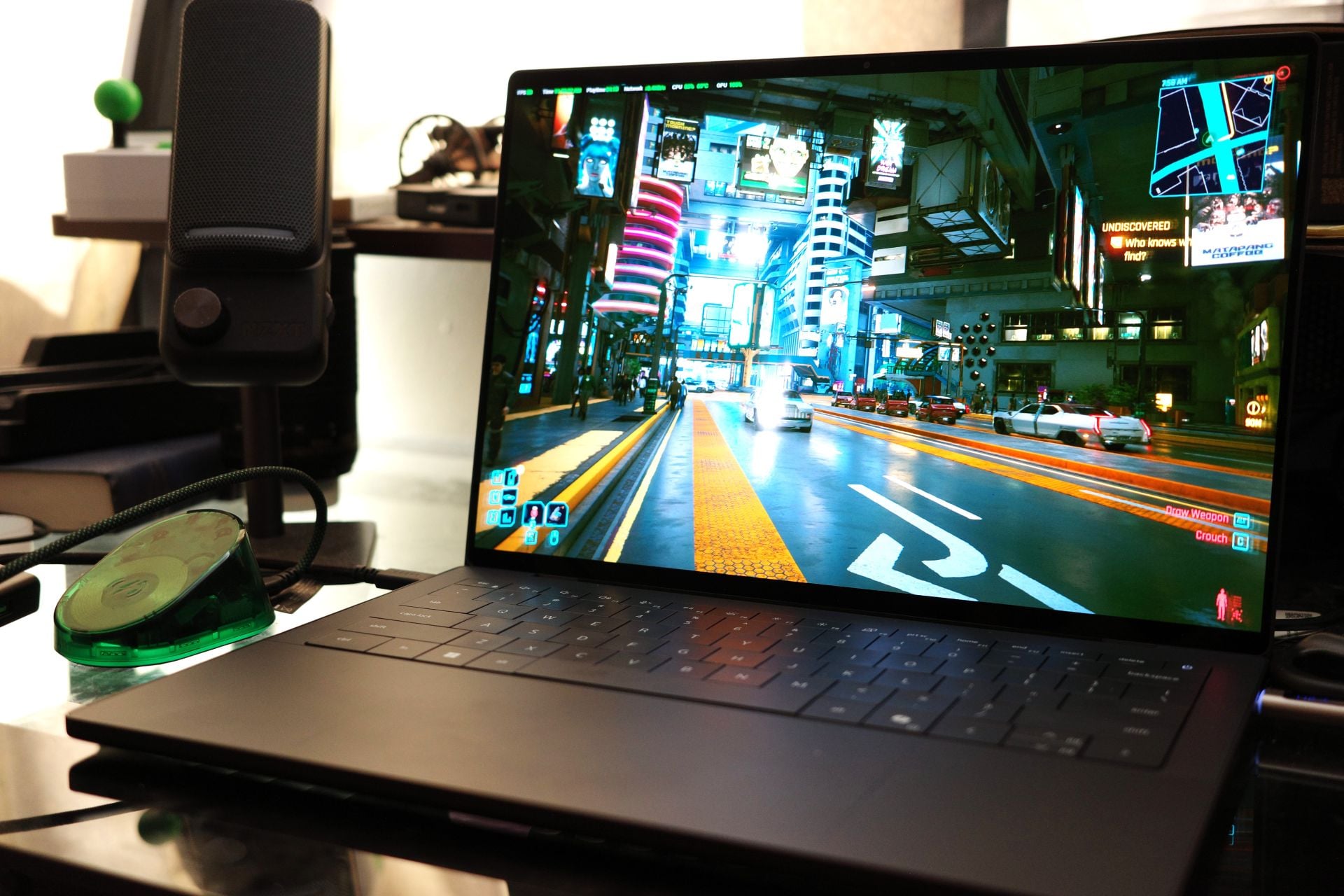
And I know what all you sickos are wondering: is this thing capable of gaming? If you’re willing to drop your resolution to 1080p or 1200p, then it’ll do surprisingly well. In my tests with Cyberpunk 2077, the Intel Core X7 358H hit nearly the same benchmarks as the 14-inch MacBook Pro with M5. At 1200p, the laptop can reach 31 fps, without having to rely on XeSS, with graphics settings set to high. XeSS—Intel’s brand of AI upscaling—enables an acceptable 50 fps.
In tests with other graphically intensive titles, 1080p or 1200p seemed to be this laptop’s limit. I could achieve 27 fps in benchmarks with Horizon Zero Dawn: Remastered on high graphics settings using XeSS upscaling. It’s the same story with Black Myth: Wukong and Total War: Warhammer III. All these benchmarks may spell good tidings for the eventual Intel Core Ultra X7 handheld, but when it comes to this laptop, they’re more of a reality check about the limits.
A full day of awkward typing
Dell’s XPS 14 with the OLED display will have worse battery life than the one with LCD. That makes sense, since this is a higher-resolution display and OLED is typically worse for overall battery performance. Whatever the case may be, you don’t have to worry too much about Dell’s latest notebook making it through the workday.
During an active workday, when I was using the laptop for browsing and writing without closing the lid or taking breaks, the laptop lasted a full six hours before begging me to plug it in. I used the Dell Optimizer app’s “optimized” thermal management profile when on battery power. The device never heated up to the point where I could feel it under my palms, either.
I can’t help myself from yearning for a version of this laptop—or more likely the 16-inch model—with an Intel Core Ultra X9 388H hidden inside. The extra CPU performance pushed Intel’s novel iGPU to new heights at a relatively low TDP (thermal design power, usually measuring how much juice is needed to fuel the mobile machine). The X7 does enough to wet my whistle, but at $2,200, I can’t help but feel like I should expect more.
Because now I have to start comparing prices. I already mentioned that the Zenbook Duo costs $200 more than this device and has twice as many screens. A MacBook Air with M4 costs $1,400 for a version with 1TB of storage, 16GB of RAM, and the 10-core GPU. There are many 14-inch laptops with discrete GPUs from 2025 that approach the XPS 14’s price point. For many PC buyers, the math won’t add up.
First Appeared on
Source link





Leave feedback about this