

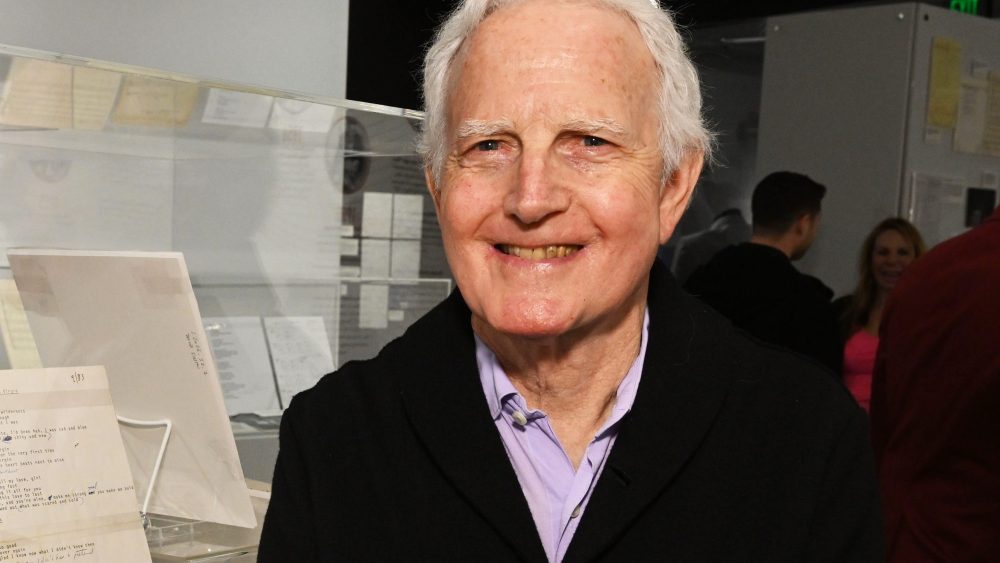
Billy Steinberg, a longtime member of the Songwriters Hall of Fame who is regarded as one of the most successful tunesmiths of the ’80s and ’90s, died Monday in California at age 75. He died after a long battle with cancer, his attorney, Laurie Soriano, confirmed to Variety.
Steinberg’s initial run of hits was in tandem with writing partner Tom Kelly, with Steinberg handling nearly all the lyrics and Kelly responsible for almost all the music. The list of songs they wrote together that would be recognized in nearly any household includes “Like a Virgin” by Madonna, “True Colors” by Cyndi Lauper, “Eternal Flame” by the Bangles, “Alone” by Heart, “So Emotional” by Whitney Houston, “I Touch Myself” by the Divinyls, “I’ll Stand by You” by the Pretenders, “How Do I Make You” by Linda Ronstadt and “I Drove All Night” by Roy Orbison and Cyndi Lauper.
After Kelly retired in the mid-1990s, Steinberg continued to find success with other writing partners, achieving hits like “Falling Into You” by Celine Dion, “Give Your Heart a Break” by Demi Lovato and “Too Little Too Late” by JoJo.
His songs were also recorded by Pat Benatar, Tina Turner, Laura Branigan, Cheap Trick, REO Speedwagon, Melanie C, Susanna Hoffs, Belinda Carlisle, Bette Midler, Taylor Dayne, Nicole Scherzinger, Katharine McFee, the Veronicas, T.A.T.U., the Corrs, Ashley Tisdale and many other artists.
Steinberg was inducted into the Songwriters Hall of Fame alongside Kelly in 2011.
He first achieved prominence in the new wave era as the singer-songwriter fronting the L.A. rock band Billy Thermal, which was signed to Richard Perry’s Planet label. The group’s name was a combination of his name and the town in California’s Coachella Valley where his father had a vineyard.
One of that band’s songs, “How Do I Make You” — which he tried to write loosely in the frenetic style of the Knack’s “My Sharona” — was covered by Ronstadt and became a top 10 hit in 1980, around the time Billy Thermal songs were also getting covered by Benatar as album tracks.
He became friends with Benatar’s producer at the time, Keith Olsen, and it was at a party of Olsen’s that he fatefully met Kelly in 1981. In an interview with Songfacts, he explained how the collaboration developed with very specific roles.
“When we got together, I didn’t really have a conscious idea that I was more adept at writing lyrics than I was at writing chords or melodies,” explained Steinberg, who had been a solo writer starting out. “But when I got together with Tom, it was clear immediately that he was a far superior musician, and that his melodies were magnificent. Whereas at my best I was writing in a simple Buddy Holly sort of song structure. While Tom, he was well versed in the Brian Wilson, Lennon/McCartney songbook, and he was a much better musician than I was… But Tom didn’t write lyrics… It became clear that I would be the lyricist on the songs that we would write together, and that he would be the principal music writer.”
But, unlike many songwriting teams that have that strict breakdown of duties, “I never would just send him lyrics,” Steinberg added. “I would always be with him when we would write the songs, and sometimes I would have some input into the chords and the melodies. But he would do the majority of those things. Over the ’80s it just became clear to me that I was primarily a lyricist.”
Although they were in the room together when the songs were written, that didn’t mean it was a back-and-forth process of joint discovery. “Every hit that Tom and I wrote, all the biggest hits, were always lyrics first,” Steinberg said. “I started out writing music to my own poetry, so that became a process for me where I would write the lyrics, and then write the music to the lyrics.” He said that Kelly “adapted really well to that process. I would come in with a lyric, whether it was ‘True Colors’ or ‘Like a Virgin’ or ‘Eternal Flame’ or whatever, and he would pick up a guitar, sit down at a piano, and start banging out melodies to the lyric that I put in front of him.”
Steinberg took pride in having some of pop’s most memorable or vivid song titles as the starting point for giant hits. “Whether we’re talking about ‘Night In My Veins’ (by the Pretenders) or ‘Like a Virgin’ or ‘I Touch Myself,’ even ‘I Drove All Night’ — these are not ordinary song titles,” he said. “They have a certain bite to them. And I guess that would be something I would be proud of.”
Steinberg was often called upon to recount the origins of some of these unlikely candidates for pop glory, as with “Like a Virgin,” which he wrote about coming out of a bad romantic experience of his own. “In 1983, I wrote a lyric that was based on some trials in my personal life. The title was provocative: ‘Like A Virgin,’” he said in a 2012 interview. “Knowing what I had been through and reading these words, Tom’s instinct was to approach it as a ballad. But because of the title, the sincere ballad approach didn’t work. We tried on several occasions to write a song to my ‘Like A Virgin’ lyric. One day, out of frustration, Tom started playing a Motown-inspired bass line while singing the lyrics in falsetto. Immediately, I got excited and said, ‘That’s it!’”
Before the world knew who Madonna was, Steinberg and Kelly were turned down by multiple A&R execs who thought “the song was catchy, but that the title was bizarre and would not fit any artist.” Then they got it to Warner Bros. A&R man Michael Ostin, who loved the song and passed it along to their fledgling artist. “Her management asked for a piece of the publishing, but we refused, feeling confident that she wouldn’t drop the song under any circumstances.” They were right, and when she recorded it with Nile Rodgers, Steinberg said, “They followed our demo exactly and Madonna imitated every nuance of Tom’s vocal and even incorporated some of my background vocal ideas on her record. When Madonna recorded it, even as our demo faded out, on the fade you could hear Tom saying, ‘When your heart beats, and you hold me, and you love me…’ Her record ends with the exact same little ad-libs that our demo did, so Madonna must have listened to it very, very carefully and liked what we’d done. It rarely happens that someone studies your demo so carefully that they even use all those little details… We were sort of flattered in some ways how carefully she followed our demo.”
“Like A Virgin” became the pair’s first of five No. 1 Hot 100 hits over a five-year period.
They had the opposite experience from “Like a Virgin” when “True Colors” became one of Lauper’s first hits — of being glad she did not follow their demo. “We used ‘Bridge Over Troubled Water’ and ‘Let It Be’ as sort of models for the demo we made. We went with the big, mainstream gospel-influenced ballad approach,” he said. “We sent it around to different artists and we were lucky because Cyndi Lauper was the one who recorded it. And I say we were lucky because if other more middle-of-the-road artists would have done the song, they might’ve followed our demo, which wasn’t necessarily a great road map… I have to give her a lot of credit because, whereas Madonna copied our demo on ‘Like a Virgin,’ Cyndi did not copy our demo for ‘True Colors.’ She really invented her own very exquisitely beautiful version.”
The songwriting team rarely wrote to order, but one instance in which they did was “So Emotional,” which they came up with in response to a request from Clive Davis for material for Houston. Again, the final result was very different from their demo. “When we wrote ‘So Emotional’ we were sort of feeding off some of the Prince energy,” Steinberg said. “If you were to hear our demo of the song, you’d hear that it doesn’t really resemble the Michael Narada Walden-produced track that Whitney Houston recorded. Our demo was much more sparse like ‘Kiss’ or ‘Little Red Corvette,’ and Tom sang the demo falsetto. The chorus is a great pop chorus and Whitney sang the hell out of it.”
With “Eternal Flame,” Susanna Hoffs approached the team with the idea to do something Beatle-esque in the vein of another song they’d written, “Unconditional Love,” which was their attempt to channel songs like “For No One” and “Here, There and Everywhere.” Hoffs mentioned that she had just been in Memphis and saw the perpetual flame at Elvis Presley’s graveside, and that set the theme of the song in motion. “I immediately had the image in my head of an eternal flame that was in the synagogue where I grew up as a child in Palm Springs,” said Steinberg. “There was a little red light in the synagogue that they called the eternal flame because it would never burn out and it piqued my imagination as a child. So somehow when Susanna used the words ‘eternal flame,’ it was a rich title for me.” Hoffs, Kelly and Steinberg also wrote another popular Bangles song, “In My Room,” together.
Of the Divinyls hit “I Touch Myself,” Steinberg told Songfacts, “It sort of falls short of even being a double entendre, but what I like about the song is that in spite of the fact that the chorus kind of boldly says that, the verse was much more sort or poetic and kind of meaningful. It says, ‘I love myself, I want you to love me, when I feel down I want you above me, I search myself I want you to find me, I forget myself I want you to remind me’ — those words, I think, are very strong… I like playing with words, and whether it’s ‘Like a Virgin’ or ‘I Touch Myself,’ I like being able to take phrases or words that are sort of untapped and find a way to write something meaningful and yet has a rebelliousness, because really that’s what rock’s all about.”
Steinberg was glad to get two hits in with the Pretenders, because he had some hesitations about the biggest one. He said he felt “a little sheepish that we had written something a little soft for the Pretenders. Whereas ‘Night In My Veins’ really felt like a great Pretenders rocker, ‘I’ll Stand By You’ felt a little generic. I know that Chrissie (Hynde) felt that way too, to some extent. I don’t think she really entirely embraced it to begin with, but she certainly does now because when she plays it live, it’s one of the songs that gets the strongest response.”
With “Alone,” they did not collaborate with Heart’s Wilson sisters. Rather, it was a trunk song — something that Kelly and Steinberg had not just written but recorded together when they formed an ill-fated and short-lived duo called i-Ten. Steinberg was embarrassed by the way that the sole i-Ten album (produced by Olsen and Steve Lukather) came out, but that record was not all for naught, as it did include their original version of “Alone.” When they heard Heart was looking for a power ballad to cover, they thought about reviving that song to submit, but something was nagging at Steinberg. He hated the “stiff” first line of the chorus, which initially went, “I always fared well on my own.” After having the idea to change “fared” to “got by,” the song suddenly seemed to loosen up. Heart loved it and it became that group’s second and last No. 1 hit in 1987.
After his run with Kelly ended, Steinberg frequently worked with Rick Nowels (his co-writer on the Dion smash “Falling Into You,” which helped earned them albums of the year Grammys) and Josh Alexander (his partner on the JoJo hit and Scherzinger’s No. 1 U.K. success “Don’t Hold Your Breath”).
Although he worked with songwriting partners throughout his career after the initial stint leading Billy Thermal, Steinberg was not a fan of committee songwriting. For instance, in talking about writing the Divinyls’ “I Touch Myself,” he complimented singer Christina Amphlett for picking the rough draft of the lyrics out of a sheath of potential songs he brought to their first meeting at the Cat and Fiddle in Hollywood. But when guitarist Mark McEntee joined them the next day to work in earnest on the song, Steinberg decided that four’s a crowd.
“Four people for me is too many,” he said. “Two people can write a song together, three people can write a song together, but four is kind of awkward. But Tom and I by that time had our own method writing a song and we knew we could read each other’s minds. I could look at Tom, he could look at me and know what the other was thinking. When we got together to write ‘I Touch Myself,’ even though there were four of us, Tom and I led the way. I put the lyric in front of Tom and he started singing, ‘I love myself, I want you to love me,’ which is one of my favorite first lines in any song I’ve written. From there Chrissy and Mark contributed their bits but it was mostly Tom and I doing what we do best.”
It naturally follows from that that Steinberg might not have been a fan of the multiple credits piling up on most pop hits today. In a 2004 interview, Steinberg looked at the changing way pop songs were being written even then. “I think sometimes that today people are working too much on the track and not on the song,” he said. “Today songwriters almost have to be song producers, and a lot of times people are creating very effective tracks and then are writing their song to those tracks, and the art of songwriting gets lost a little in that method.” Steinberg said that with his and Kelly’s co-credits, “because Tom and I love certain music so much, it shows beneath the surface. You can see what music we loved and what inspired us.”
In March of last year, Steinberg and his son, fellow songwriter Ezra Steinberg, each signed global publishing deals with Sony Music Publishing. The deals serve as an expansion of the senior Steinberg’s partnership with Sony, which first began in 1992, and the father’s and son’s songs were to be housed together under the banner Steinberg Music. “I’ve had a professional songwriting career for 45 years and it’s exciting for me to see that Ezra shares my passion as we embark on this new chapter,” he said in a statement at the time.
He is survived by his wife, Trina; his sons, Ezra and Max; his sisters, Barbara and Mary; and his stepchildren, Raul and Carolina.
First Appeared on
Source link





Leave feedback about this