

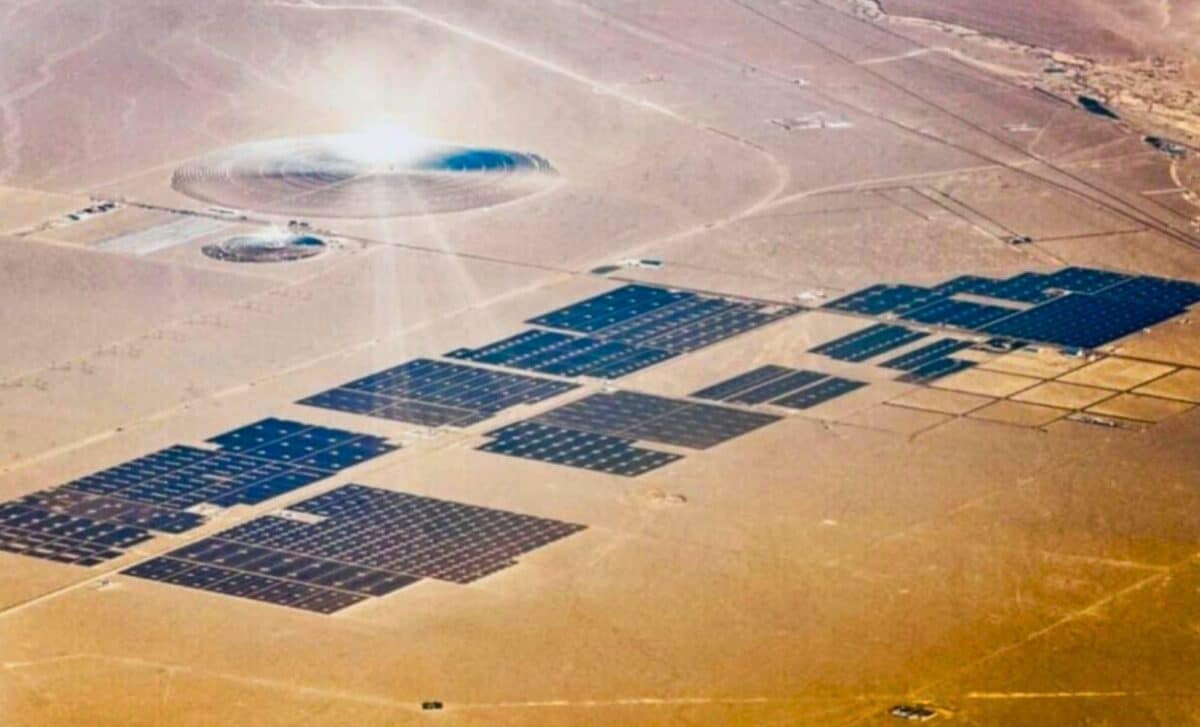
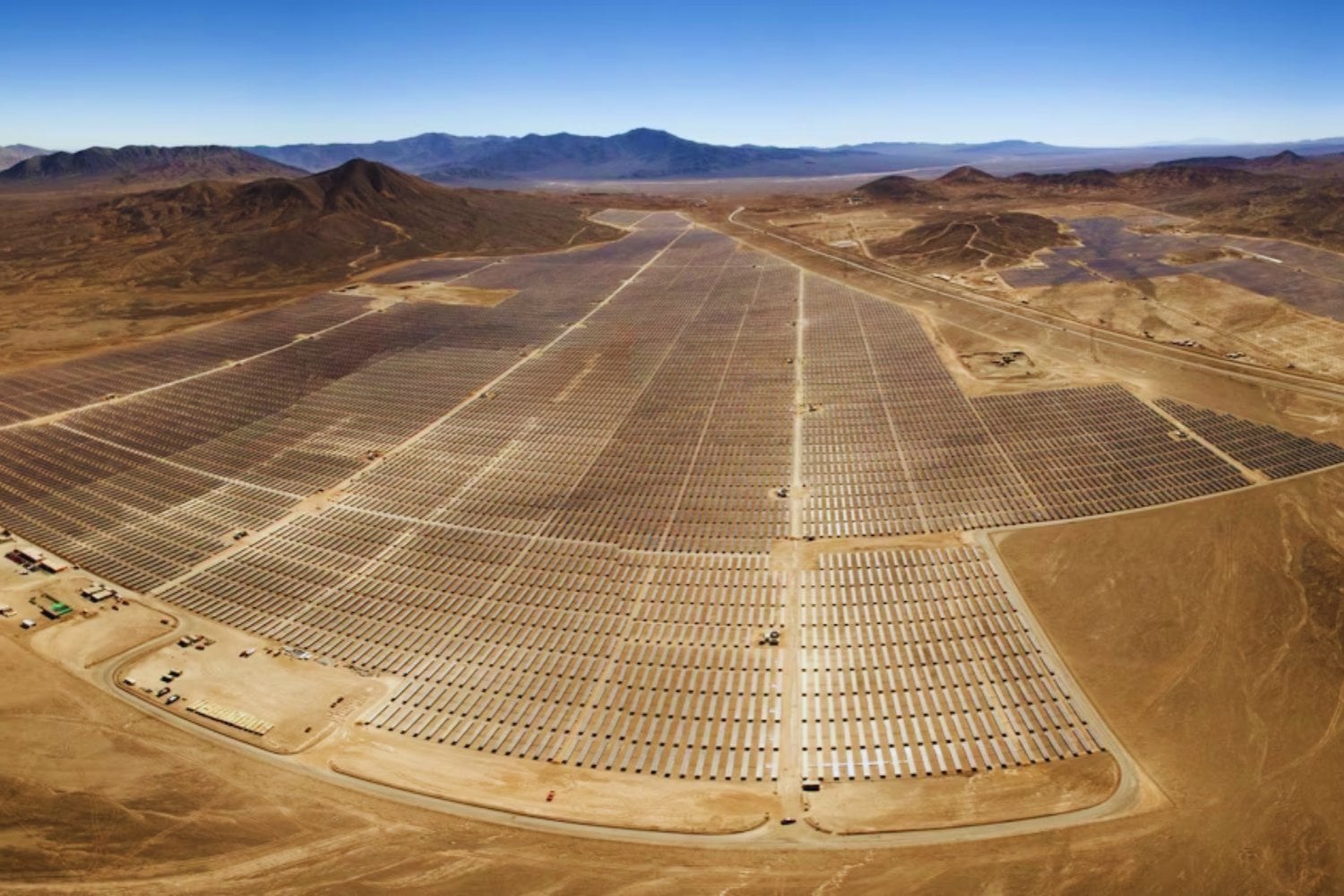
Rows of dark photovoltaic panels stretch across a remote plateau in western China, covering ground that once appeared almost completely barren. The site lies in Talatan Desert in Qinghai Province, where harsh sunlight, thin air, and limited rainfall define the environment. At nearly 2,910 meters above sea level, the plateau experiences dramatic temperature swings between hot daytime conditions and cold nights, leaving the soil dry and fragile for most of the year.
Annual rainfall in this region averages only about 246 millimeters, making the land vulnerable to wind erosion and gradual desert expansion. Strong winds often sweep across the plateau, carrying loose soil and preventing plants from gaining a stable foothold. The dry climate and shifting sands meant that ecological recovery was extremely slow, even in areas where human activity was limited. Scientists studying the plateau long described the terrain as one of the harsher desert environments in western China.
That landscape began changing after the construction of the Qinghai Gonghe Photovoltaic Industrial Park, one of the largest solar energy projects built in a desert region. Thousands of solar panels were installed across roughly 64 square kilometers, transforming the remote plateau into a major renewable energy site. The installation was designed primarily to generate electricity using the region’s intense sunlight, part of China’s broader expansion of large-scale renewable energy infrastructure.
At first, the solar installation appeared to be simply occupying unused land. But researchers working in the region began noticing subtle differences in the ground beneath the arrays. Soil temperatures behaved differently from nearby desert areas, and moisture seemed to remain longer after the rare rainfall events that reached the plateau.
A Natural Laboratory Inside a Massive Solar Farm
Curious about these observations, researchers led by W. Wu began a detailed investigation of environmental conditions within the solar facility. Their results, published in Scientific Reports, revealed measurable ecological changes occurring within the solar park. By analyzing the site as a controlled landscape, the team was able to track how environmental factors varied across relatively small spatial distances within the facility.
To understand the impact of the infrastructure, the team divided the area into three distinct zones. They studied land directly beneath the solar arrays, the spaces between panel rows, and nearby sections of untouched desert outside the installation. This structure allowed scientists to observe how the presence of solar infrastructure influenced soil and vegetation in areas only meters apart.
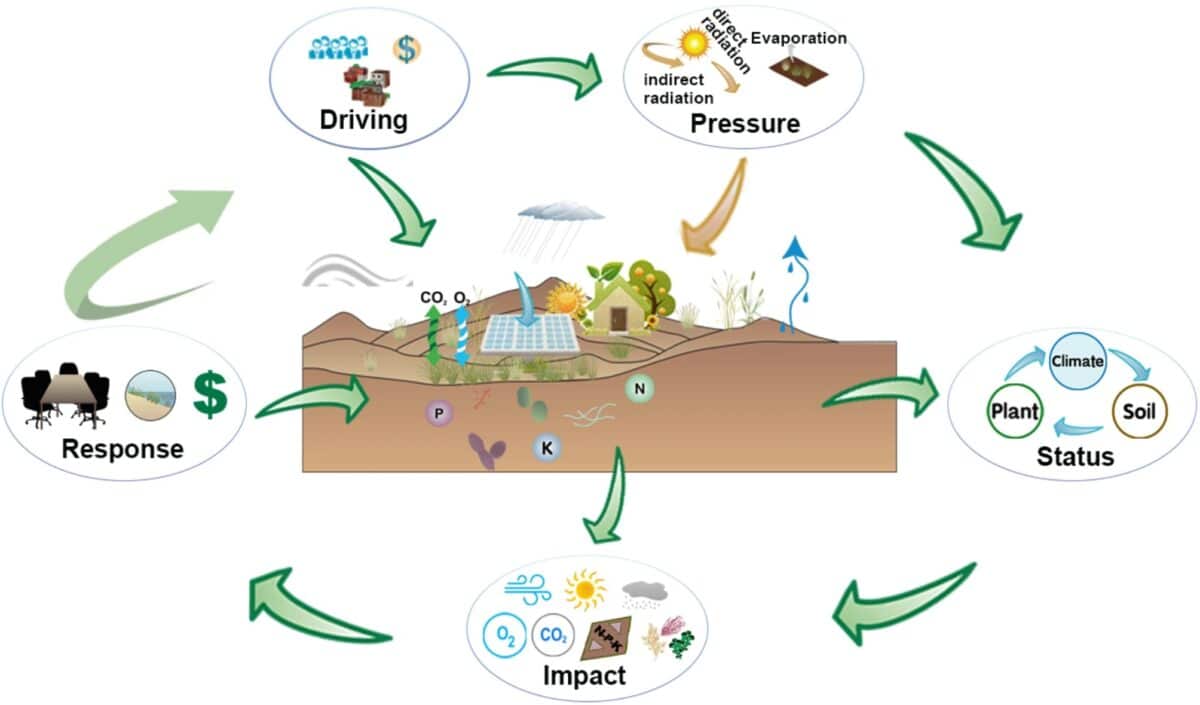
The researchers applied the DPSIR framework, an environmental analysis method that evaluates how human systems interact with natural ecosystems. Using this approach, the study measured 57 ecological indicators, including soil moisture, vegetation growth, microbial activity, temperature patterns, and environmental stability. The dataset allowed scientists to compare ecological performance across the three zones inside the solar facility.
The measurements revealed that the solar installation had effectively created several microclimate zones within the desert. Conditions beneath the panels differed noticeably from those in the open desert landscape nearby, indicating that the infrastructure was actively reshaping environmental processes at ground level.
How Solar Panels Altered Soil Conditions
One of the most significant changes came from the shade produced by the photovoltaic arrays. Solar panels block a portion of incoming sunlight, creating shifting shadow patterns across the desert floor throughout the day. These shadows reduce direct heating of the soil surface and slow the evaporation process that normally dries desert ground within hours after rainfall.
With less heat reaching the soil, moisture remains in the ground for longer periods. In desert environments where rainfall is rare, even a small increase in soil moisture can influence biological activity. The study found that shaded areas beneath the solar arrays maintained cooler temperatures and slightly higher humidity compared with exposed desert soil.
Over time, these differences began affecting the soil itself. Higher moisture levels allowed microorganisms to remain active for longer periods, which helps regulate nutrient cycles in desert ecosystems. The moderated temperature conditions also prevented the rapid drying that normally leaves desert soil cracked and biologically inactive.
When researchers calculated ecological performance scores for each zone, the contrast became clear. Land beneath the solar panels recorded an ecological score of 0.4393, compared with 0.2858 in the transitional areas between panels and 0.2802 in the surrounding desert. The results indicated that shaded areas beneath the solar arrays were developing noticeably stronger environmental conditions.
Vegetation Begins Returning Beneath the Panels
Plant growth was one of the most visible changes observed inside the solar installation. The cooler, more stable soil conditions beneath the panels allowed hardy grasses and desert plants to establish themselves more easily than in the surrounding open desert. While vegetation remained sparse, the presence of plants marked a clear shift from the previously barren landscape.
Even limited vegetation can play an important role in desert ecosystems. Plant roots stabilize loose soil and reduce erosion caused by strong winds that frequently sweep across the plateau. As plants grow and eventually decompose, they contribute organic material that gradually improves the soil’s structure and nutrient content.
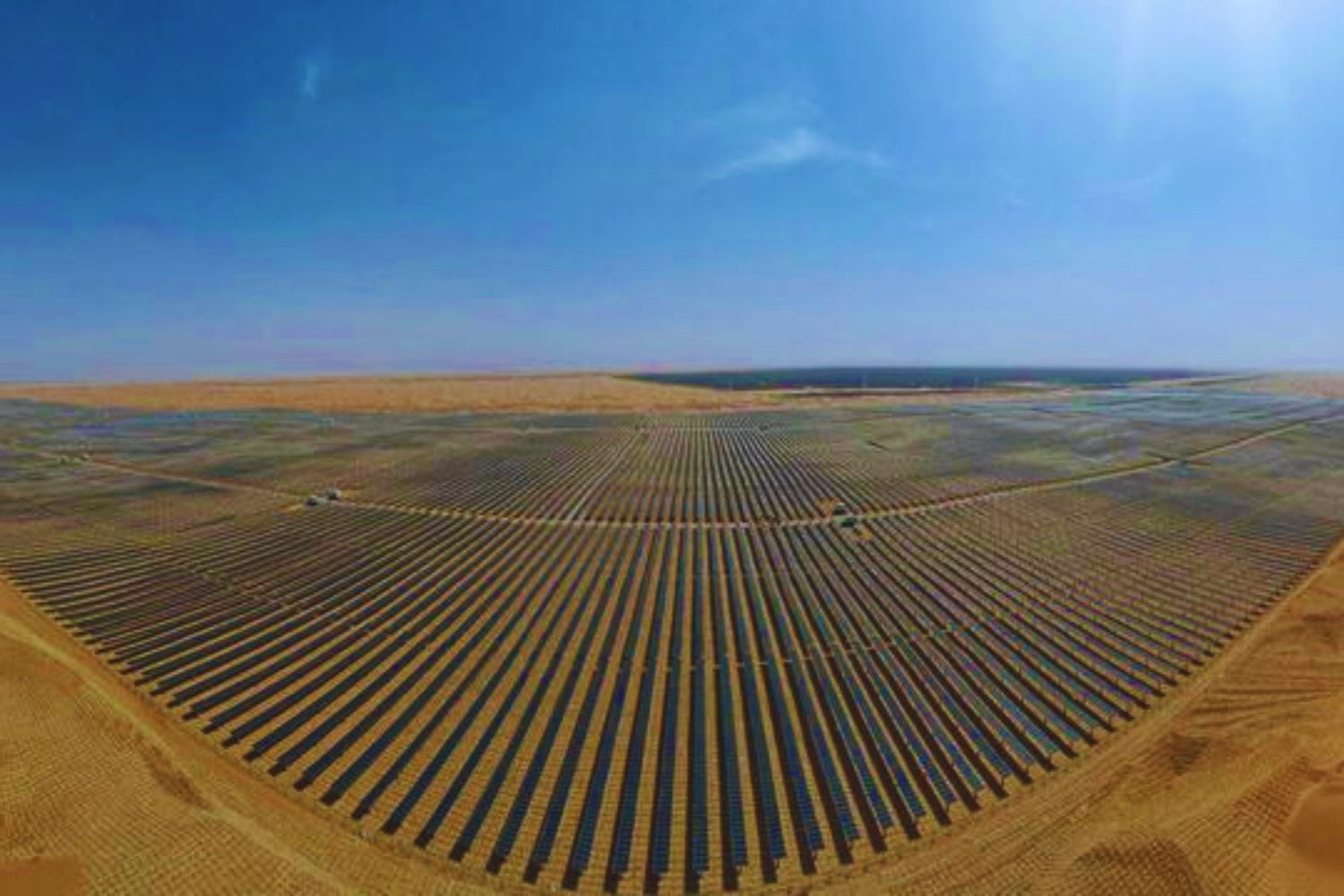
Researchers also observed that the physical structure of the solar arrays influenced wind patterns near the ground. Rows of solar panels act as partial wind barriers, reducing airflow across the surface of the desert floor. Slower wind speeds help prevent sand from being carried away and give young plants a better chance to survive long enough to establish root systems.
Together, these changes began forming a small but measurable desert ecosystem beneath the solar arrays. Soil moisture, plant growth, and microbial activity gradually reinforced each other, creating conditions that differed from the surrounding desert terrain.
Solar Farms and Desert Restoration Potential
China has increasingly built solar energy projects in arid regions because deserts provide vast areas of open land and strong sunlight for electricity generation. At the same time, the country faces a growing challenge with desertification, which affects roughly one quarter of its total land area. Large solar installations therefore occupy landscapes that are already environmentally fragile.
Some projects are now exploring ways to combine energy production with land management strategies such as agrivoltaics, where solar infrastructure and vegetation systems operate together. These approaches aim to stabilize soils, support plant growth, and maintain ecological balance while producing renewable electricity.
The observations from the Qinghai Gonghe Photovoltaic Industrial Park show that large solar installations can influence desert landscapes in several interconnected ways. By altering sunlight exposure, wind movement, and soil moisture, photovoltaic infrastructure can gradually reshape local environmental conditions.
Researchers say continued monitoring will be needed to understand how these ecological changes develop over longer periods. For now, the solar arrays in Qinghai continue generating electricity while the ground beneath them slowly evolves into a more stable desert environment.
First Appeared on
Source link






Leave feedback about this