

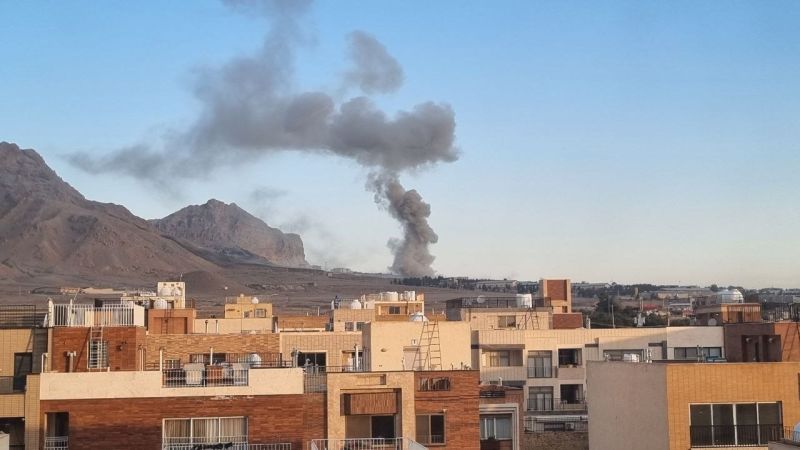
Recovering Iran’s remaining highly enriched uranium stockpile believed to be sitting in a storage facility deep underground, an objective the Trump administration has been discussing, would require a significant number of US ground troops beyond a small special operations footprint, seven current and former officials familiar with the military planning told CNN.
The US bombing campaign that struck three Iranian nuclear facilities last June did not destroy all of that country’s highly enriched uranium stockpile, the material needed to create a nuclear weapon. Much of it is believed to be at Iran’s Isfahan nuclear site, said three of the sources. President Donald Trump has made complete elimination of Iran’s nuclear capability one of his stated aims of the war.
If the Trump administration went ahead with an operation to retrieve the uranium, it could mark the first major commitment of US ground forces as part of the campaign, an escalation that would put a large number of troops in harm’s way as part of a complex mission to move or render safe tons of highly radioactive material.
The uranium at Isfahan is accessible to the Iranians, who had been working for months after the US military strikes last year to clear the rubble of the facility’s aboveground structures and access the underground tunnels where the uranium was hidden, two of the sources said. UN nuclear watchdog chief Rafael Grossi said on Monday that around 200 kilograms of Iran’s highly enriched uranium is probably still at Isfahan, with some also at Iran’s Natanz nuclear facility.
Highly enriched uranium is a dual-use material, and Iran has said it produces it only for peaceful energy purposes. But enriching it above a certain threshold — around 90% —means it can be used to create nuclear weapons. Iran’s uranium is currently enriched at around 60%, according to the International Atomic Energy Agency.
The White House and Pentagon did not respond to a request for comment ahead of publication.
Trump has repeatedly said that Iran can never be allowed to have a nuclear weapons program. “One thing is certain: I will never allow the world’s number one sponsor of terror, which they are by far, to have a nuclear weapon,” he said last month.
‘The logistics and risk involved would be prohibitive’
US military airstrikes alone can’t penetrate the Isfahan tunnels, primarily because the facility does not have ventilation shaft openings like some of Iran’s other nuclear sites, which serve as weak points for a storage structure. That has led to discussions within the Trump administration about deploying elite units within the US military’s Joint Special Operations Command, potentially in coordination with Israeli commando forces, to physically infiltrate the tunnels and secure or destroy the enriched uranium, the sources said.
A mission like that, however, would require dozens if not hundreds of additional troops on the ground to help support the core special operations team tasked with finding the uranium, the sources said, particularly given the Iranian military’s continued control over the sites and surrounding area. That support could entail not just troops to secure the area, but also logistical support given the challenges of working with nuclear material deep underground.
Delta Force and Seal Team 6 operators receive training in countering weapons of mass destruction, and US Special Operations Command has been the lead group for the Pentagon’s counter-WMD mission for nearly a decade. Several elements of the US government also have teams that are designated “render safe units” that can handle radiological material, one of the sources said. JSOC also has contingency plans to either “render safe” the material underground and/or render the facility unusable.
One retired special forces officer not involved in the planning told CNN that in their experience, a mission like this would probably require a tier one special operations unit; specialized explosive ordnance disposal personnel attached to that team; outer security which could be either the 75th Ranger Regiment or the 82nd Airborne Division depending on how large the area is and how many people are needed; exfiltration and infiltration assets like MC-130J aircraft or MH-47 Chinook helicopters; and consistent air cover overhead throughout the mission.
“The logistics and risk involved would be prohibitive, to say the least,” said one person familiar with the discussions.
In a sign that the US could be keeping its options open, at least six MC-130Js are now flying out of RAF Mildenhall in the United Kingdom, according to flight data and satellite imagery reviewed by CNN, positioning them closer to Iran if called upon.
These variants of the C-130 cargo plane are specially equipped to support covert infiltration and exfiltration of US commandos into hostile environments.
A satellite image captured over the airbase on March 5 appears to show several MC-130Js parked on the tarmac.
Three of the six aircraft identified are newly arrived to RAF Mildenhall, having flown in from across Europe in recent weeks. Three others have been based out of RAF Mildenhall for months.
The same dataset suggests nearly every aircraft has participated in training missions over the United Kingdom and North Sea in recent weeks.
The Iranian regime, meanwhile, is proving resilient in the face of relentless US-Israeli airstrikes. Mojtaba Khamenei, the second son of former Supreme Leader Ali Khamenei, has been installed as Iran’s new ayatollah — a signal that Iran’s leadership has no intention of folding to American pressure.
Without the outright collapse of the regime, some level of diplomatic engagement rather than just sheer military power will likely be required to eliminate Iran’s enriched uranium stockpile, multiple sources said.
First Appeared on
Source link





Leave feedback about this