

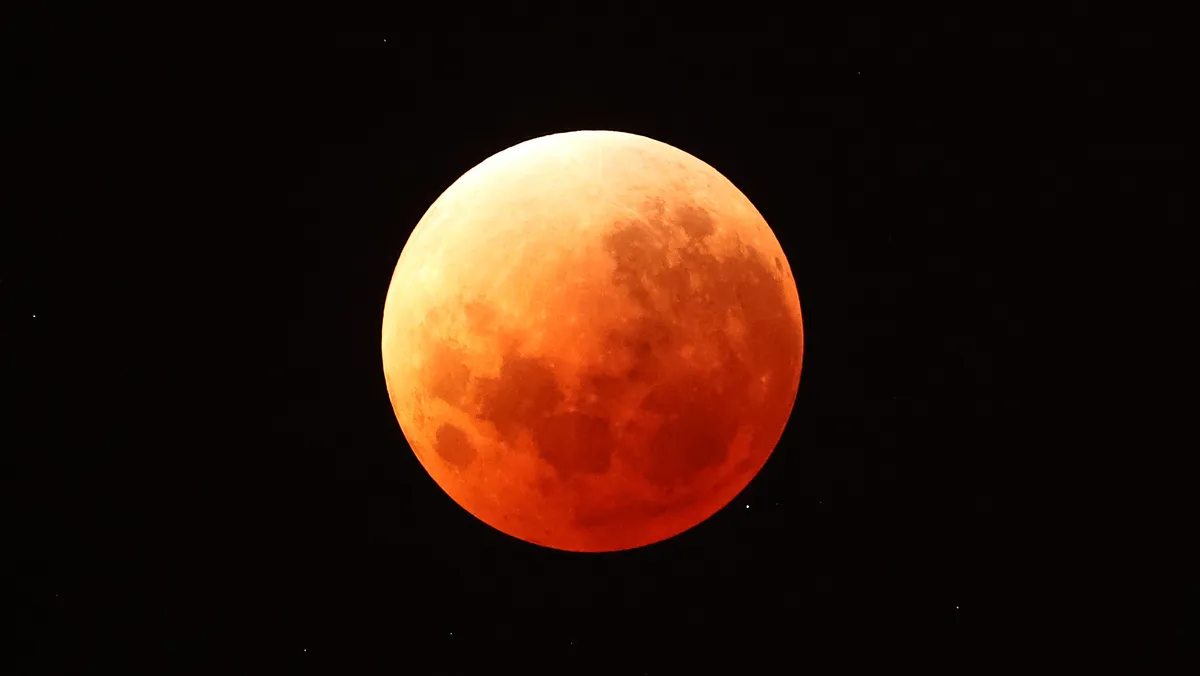
March’s full moon, also known as the Worm Moon, put on a show, and backyard astronomers who woke up early enough got to see the total lunar eclipse and “blood moon”.
In the pre‑dawn hours of Tuesday, March 3, the full moon slid into the Earth’s shadow, creating a total lunar eclipse. And because it’s also March’s full moon, it was a two‑for‑one treat for skywatchers.
So why does the moon turn red? As Earth moves between the Sun and the Moon, it blocks direct sunlight. But a little light still sneaks through Earth’s atmosphere, where blue light gets scattered, and red light bends around the planet. That reddish glow reaches the Moon, giving it that coppery look or “blood moon” glow.
The eclipse was visible across much of North America and parts of Central Asia, while South America saw a partial eclipse. It will not be visible in Europe or Africa, according to NASA.

Top astronomy stories of 2026
Astronomy stories of 2026 include the return of a total solar eclipse to the Artemis II mission that aims for humans returning to the moon in the future.
Below are photos of the total lunar eclipse for those who didn’t get out of bed in time to see the spectacular show.
See photos of the March full moon, total lunar eclipse
Julia Gomez is a Trending reporter for USA TODAY and covers popular toys, scientific studies, natural disasters, holidays, and trending news. Connect with her on LinkedIn, X, Instagram, and TikTok: @juliamariegz, or email her at [email protected].
First Appeared on
Source link






Leave feedback about this