

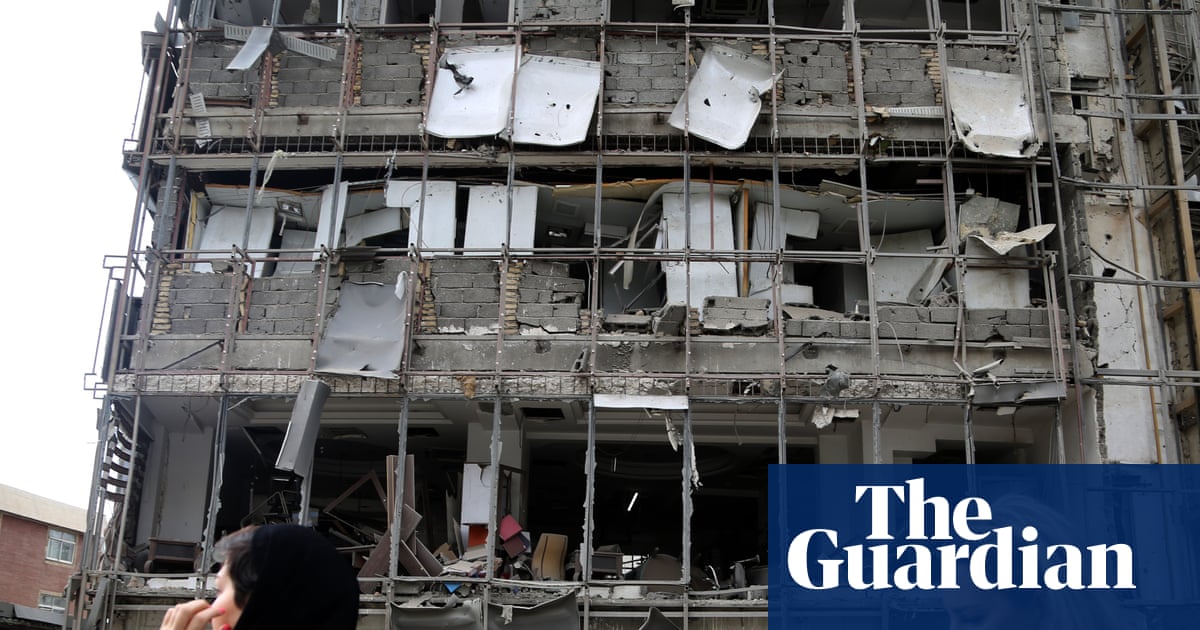
At least 13 hospitals and other health facilities have been hit during the US-Israel attacks on Iran, global health chiefs have said.
The World Health Organization (WHO) said it was checking reports that four medics had been killed and 25 others injured.
At least 1,230 people have been killed in Iran, more than 100 in Lebanon and 13 in Israel since the war began, according to official statements. Thousands more have been injured across the region. Six US troops have also been killed.
The death toll includes dozens of schoolchildren killed in a strike on Shajareh Tayyebeh school in Minab, southern Iran on Saturday.
The WHO warned that the conflict was jeopardising international humanitarian supply chains, and operations had been suspended at its global emergency logistics hub in Dubai.
At a briefing on Thursday, Tedros Adhanom Ghebreyesus, director general of WHO, said it had “verified 13 attacks on health care in Iran and one in Lebanon”.
Ghebreyesus did not give further details, or attribute blame, but said: “Under international humanitarian law, healthcare must be protected and not attacked.”
Dr Hanan Balkhy, WHO’s regional director for the eastern Mediterranean, told the same briefing that four ambulances in Iran had been affected and that hospitals and other health sites suffered minor damage due to strikes nearby, citing Iranian authorities.
Hospitals and clinics in Lebanon have been forced to close because of evacuation orders, she said.
WHO had previously said a hospital in Tehran, Iran’s capital, was evacuated after explosions nearby.
In a letter to Ghebreyesus earlier this week, Iran’s ambassador to the UN in Geneva alleged that 10 facilities had been hit by military strikes.
“The impact goes beyond the immediately affected countries,” Ghebreyesus said. “Operations at WHO’s logistics hub for global health emergencies in Dubai are currently on hold due to insecurity.”
The hub processed more than 500 emergency orders for 75 countries last year, Balkhy told reporters, but was unable to operate “due to insecurity, airspace closures and restrictions affecting access to the strait of Hormuz”.
She warned: “Humanitarian health supply chains are now being jeopardised.”
The disruption, she said, was preventing access to $18m (£13.5m) in humanitarian health supplies while another $8m in shipments cannot reach the hub.
She said $1.6m in polio laboratory supplies were being held up, which could have dire impacts for Afghanistan and Pakistan, where the disease is endemic.
It was also affecting more than 50 emergency supply requests from 25 countries, as well as $6m in medicines destined for the Gaza Strip.
Humanitarian groups had already expressed concern about the impact of the war, after Israel closed all crossings into Gaza when it attacked Iran.
Ghebreyesus added that the conflict was causing significant displacement, with an estimated 100,000 people leaving Iran so far and 60,000 displaced in Lebanon, even before evacuation orders were issued for Beirut’s southern suburbs.
The threat of nuclear facilities being affected was also concerning, he said, with the potential for serious public health consequences.
Additional reporting by Reuters and AFP
First Appeared on
Source link



Leave feedback about this