

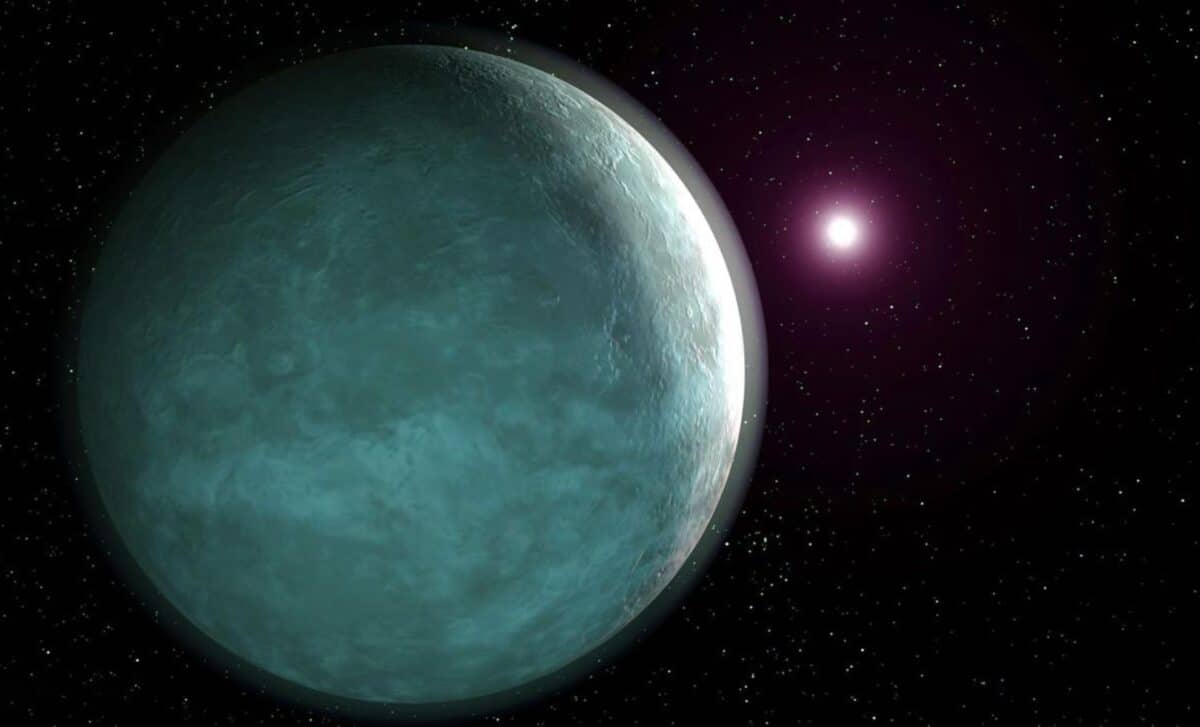
A newly discovered planet orbiting the nearby star GJ 887 is being hailed as one of the most promising candidates in the search for extraterrestrial life. This super-Earth, with a mass over six times that of our own planet, lies within its star’s habitable zone, an area where conditions could support liquid water.
Located just 10.7 light-years away, GJ 887 is one of the closest stars to the Sun. In recent years, astronomers have focused on planets around stars like GJ 887, as these could be some of the best places to study conditions conducive to life. However, confirming the planet’s habitability will require further research.
The Super-Earth That Could Support Life
The planet, known as GJ 887 d, is a super-Earth, meaning its mass is significantly larger than Earth’s. According to NASA, with a mass at least 6.1 times that of Earth, GJ 887 d is a notable discovery in the search for potentially habitable exoplanets.
This planet’s orbit around GJ 887 takes just 50.7 days, much shorter than Earth’s 365-day orbit, but its proximity to a relatively cool star means it would likely experience tropical temperatures. Despite the intense gravity of a super-Earth, its size could help the planet retain a thick atmosphere, which is key to maintaining liquid water and, possibly, supporting life.
Why GJ 887 Remains Calm?
Unlike many red dwarf stars, which are known for their flare activity, GJ 887 is relatively placid. These flares, common among low-mass stars, can strip planets of their atmospheres, making life impossible. In contrast, GJ 887 has very low flare activity, increasing the chances that GJ 887 d could have an atmosphere that protects any potential life.
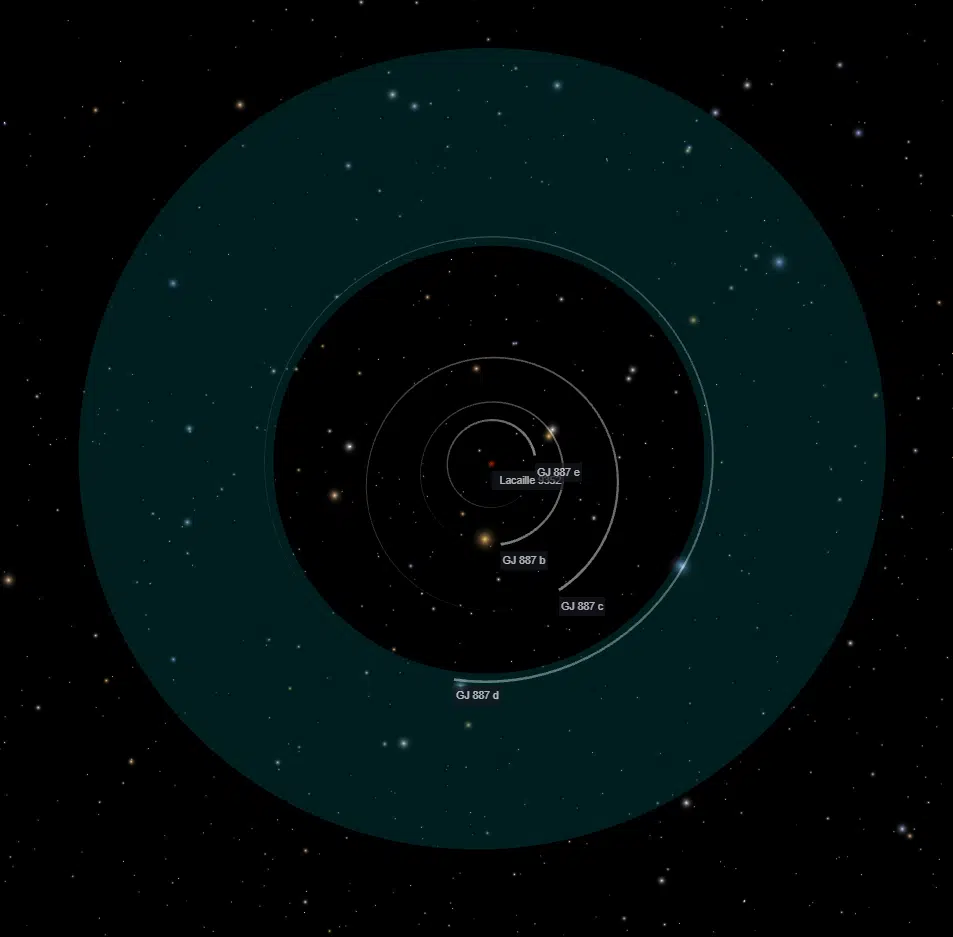
This relative calmness is one of the key reasons why scientists are so eager to study this system, as it could offer a stable environment for long periods, ideal for supporting life. According to a study published in Astronomy and Astrophysics, this low flare activity is a crucial factor in determining whether GJ 887 d can retain an atmosphere conducive to life.
What Makes GJ 887 d Difficult to Study
Despite its proximity, GJ 887 d presents some challenges for astronomers trying to study it. The planet does not transit across its star, which means scientists cannot directly measure the planet’s atmosphere by observing how it blocks the star’s light, a common method for analyzing exoplanet atmospheres.
Instead, GJ 887 d was discovered using the radial velocity method, which measures the star’s subtle wobble caused by the gravitational pull of the planet. As stated by the experts, GJ 887 d may be on the edge of detectability for future space telescopes, such as the proposed Habitable Worlds Observatory.
First Appeared on
Source link






Leave feedback about this