

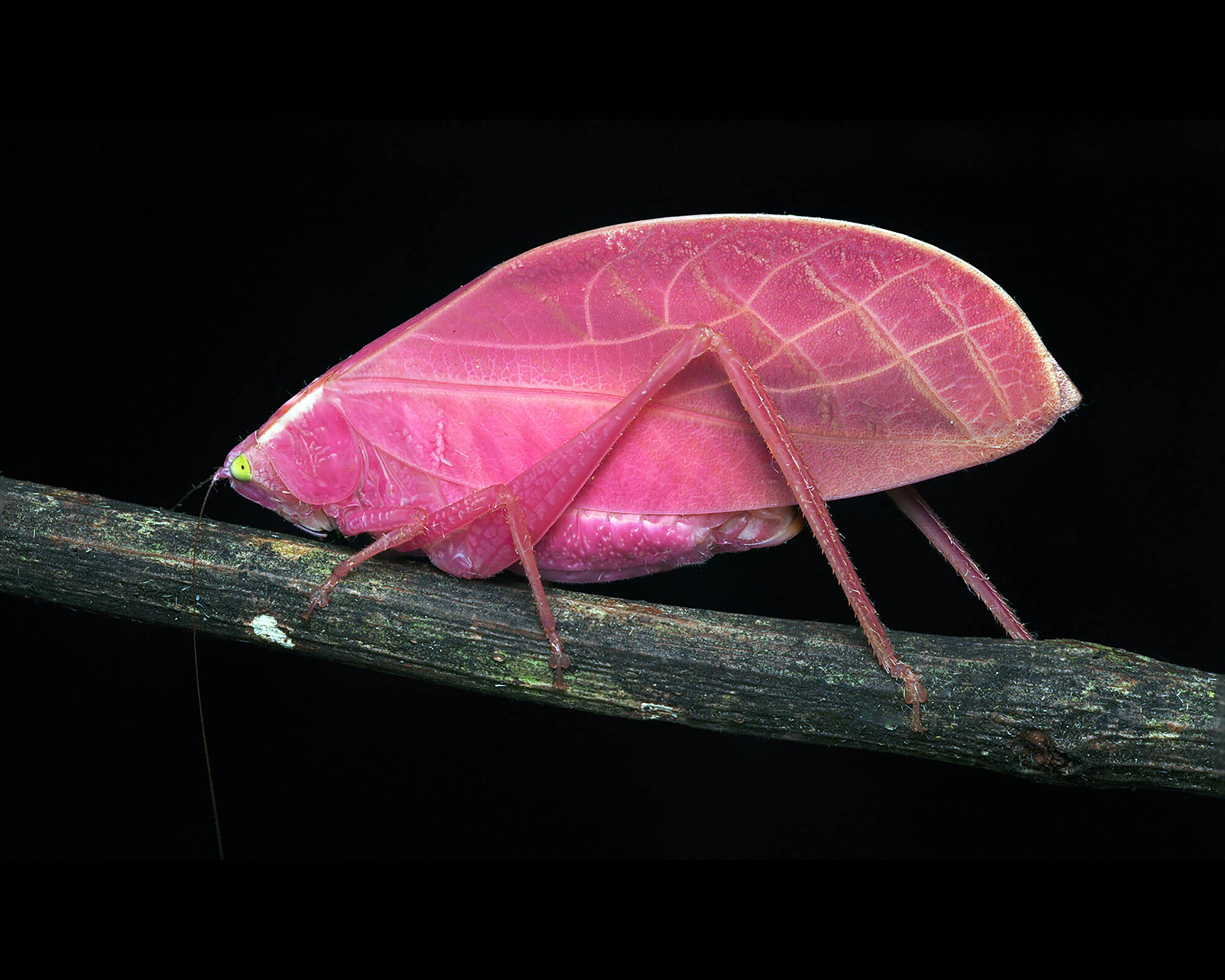
A bright pink insect in a green rainforest seems impossible to hide. Anyone walking through the forest might expect such an insect to stand out immediately.
Yet scientists recently discovered that this unusual color may actually help the insect survive. Even more surprising, the insect slowly changes color over time.
This discovery shows how animals can adapt to complex environments like tropical forests. The study describes how one rainforest insect can change from hot pink to green within about two weeks, helping it blend into the changing colors of leaves.
Arota festae in the rainforest
Scientists studied a tropical insect called Arota festae. This species belongs to a group of insects known as katydids, often called bush crickets. The insect lives in rainforests across Panama, Colombia, and Suriname.
Researchers from the University of St. Andrews and several institutes noticed something unusual while working on Barro Colorado Island in Panama. Late one night, an adult female katydid appeared under a research station light.
The insect immediately caught their attention because of its color. Its body showed a vivid hot pink shade, something rarely seen in insects that live among green leaves.
According to the study, this species normally appears light green and has broad wings that resemble plant leaves. The pink individual looked completely different from the common green form usually found in the forest.
Arota festae slowly changes colors
Scientists decided to observe the unusual insect carefully. The research team kept the katydid in natural conditions on Barro Colorado Island. The insect lived in a cage with green plants, water, and fruit, while researchers photographed it every day.
“Finding this individual was a genuine surprise. Because it was so rare, we kept it in natural conditions and found it changing color from hot pink to green,” said the study’s lead author, Dr. Benito Wainwright of the University of St. Andrews.
“Rather than a bizarre genetic quirk, this may actually be a finely tuned survival strategy that tracks the life cycle of the rainforest leaves this insect is trying to resemble.”
The change happened slowly. After four days, the bright pink color faded into a softer pastel shade. By the eleventh day, the insect had turned completely green and looked just like other katydids in the forest.
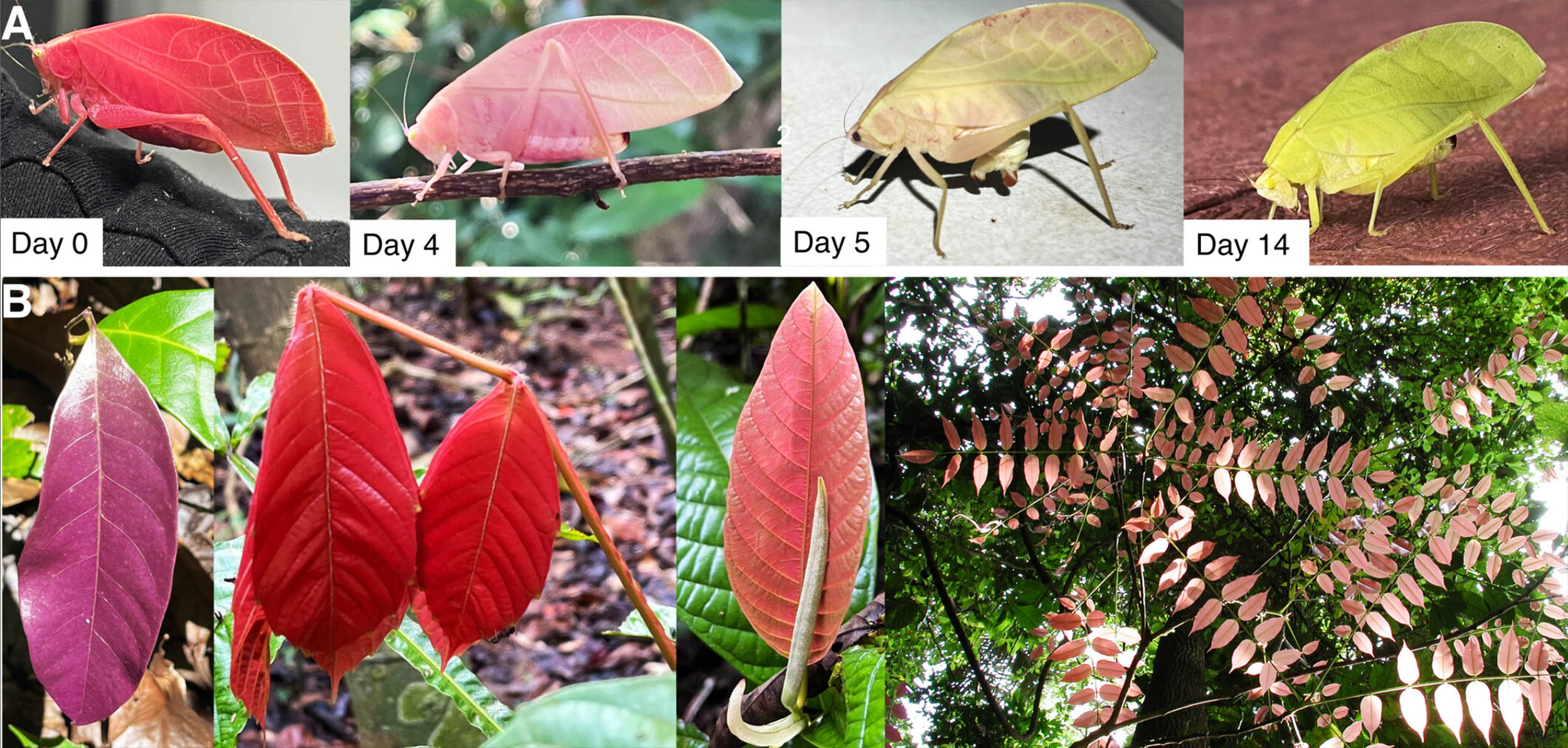
Color change takes days
Many people know animals such as chameleons or octopuses that can quickly change color. However, some animals change color much more slowly. In such cases, the change may take days or weeks instead of seconds.
The katydid in this study showed a slow color shift. Scientists believe the color change likely happens through gradual changes in pigments inside the insect’s body rather than through rapid nerve signals.
The insect measured about 27 millimeters (1.06 inches) in body length and weighed about one gram. Despite its small size, the color transformation revealed a complex biological process that scientists had rarely observed before.
The study also recorded another unusual color form that resembled damaged or dying leaves. This discovery suggests that the species may show several different camouflage patterns in the wild.
Surviving as a hot pink insect
At first, a pink insect might seem like an easy target for predators. For many years, scientists believed pink katydids resulted from a rare genetic mutation called erythrism, which causes excessive red pigment.
However, the new observation suggests that the color may actually serve a useful purpose.
“Tropical forests are extraordinarily complex environments, and this discovery hints at just how precisely some animals have evolved to exploit them,” said study co-author Dr. Matt Greenwell of the University of Reading.
“You would think that a bright pink insect in a mostly green forest would stand out to predators like a worker in a high-vis jacket.”
“The idea that an insect might gradually shift color to keep pace with the leaves it mimics shows how dynamic the rainforest can be, and is a remarkable example of camouflage in action.”
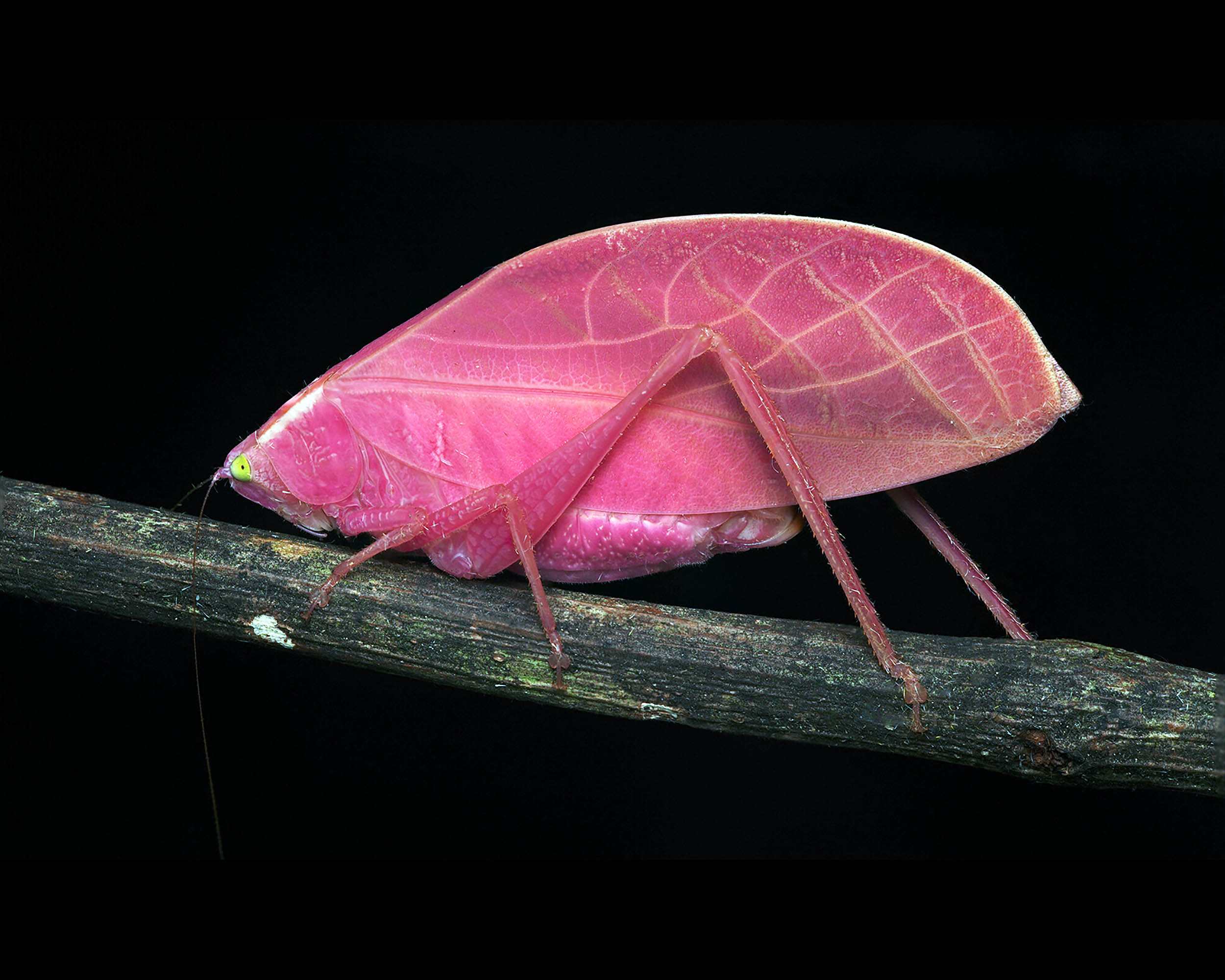
Arota festae mimics leaves
Scientists believe the insect’s pink color may help it copy young rainforest leaves. In many tropical plants, new leaves first appear in bright colors such as red, white, or pink before turning green as they mature.
This process is called delayed greening. On Barro Colorado Island, more than one-third of plant species show this trait. Young leaves with bright colors appear throughout the year in tropical forests.
By starting life as pink, the katydid can blend in with these colorful young leaves. As the leaves grow older and turn green, the insect also changes to green.
Scientists also found that the insect eats a variety of rainforest plants, including species such as Inga that produce pink young leaves. This behavior strengthens the idea that the insect’s color helps it hide among the leaves it lives near.
Lessons from Arota festae
Rainforests contain thousands of plant species, many of which produce leaves at different stages of growth at the same time. As a result, pink and green leaves appear together in a patchwork pattern across the forest.
A gradual color change may help the insect match whichever leaf colors appear most common around it. If the insect rests on pink leaves, the pink color hides it well. Later, when it moves onto green leaves, the new green color offers better protection.
Researchers also suggest that unusual colors might confuse predators or break the search patterns that predators use when looking for prey.
This discovery shows how carefully animals can adapt to their surroundings. Even a tiny Arota festae carries a clever disguise that changes along with the rainforest around it.
The study is published in the journal Ecology.
—–
Like what you read? Subscribe to our newsletter for engaging articles, exclusive content, and the latest updates.
Check us out on EarthSnap, a free app brought to you by Eric Ralls and Earth.com.
—–
First Appeared on
Source link






Leave feedback about this