

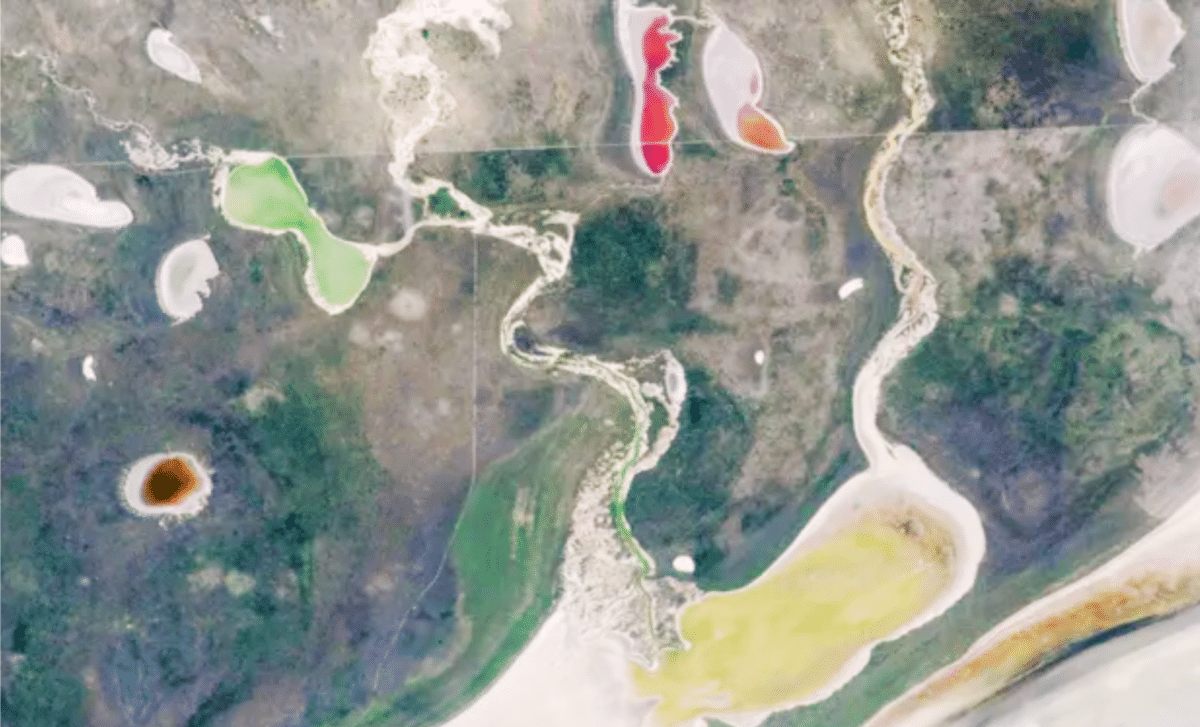
Five vibrant, rainbow-colored lakes emerged from the barren expanse of the Etosha Pan in Namibia. Captured in a stunning 2011 photograph taken from the International Space Station (ISS), the ephemeral lakes are the result of a rare flooding event caused by two rivers overflowing their banks. This extraordinary sight was made possible thanks to NASA’s Earth Observatory, which has provided a closer look at the interplay of natural forces that led to the sudden transformation of this massive salt flat.
The Etosha Pan: A Salt Flat Transformed by Water
The Etosha Pan, known as “The Great White Place,” is one of Africa’s largest salt flats. Spanning 1,800 square miles in northern Namibia, it has long been an inhospitable desert-like region, mostly dry and barren. However, when the Ekuma and Oshigambo rivers flooded during heavy rains in 2011, the area witnessed a rare transformation. For a brief moment, the flat was covered by a thin layer of water, filling depressions scattered across the surface and creating what NASA’s Earth Observatory calls “phantom lakes.” These lakes, however, are fleeting – ephemeral in nature – and will likely evaporate as soon as the water dries out.
NASA’s Earth Observatory captured this stunning event from space, allowing scientists to study the fleeting beauty and ecological impact of these lakes. The bright colors seen in the photo are attributed to the blooming of different species of algae, which thrive in the shallow waters when they occasionally fill. This temporary shift in the landscape brings life to a place that is mostly known for its extreme dryness and salt-covered surface. The lakes’ colors vary, reflecting the diverse ecosystems and microorganisms that inhabit the water.
The Colorful Lakes: Nature’s Ephemeral Art
What makes the appearance of these lakes so striking is their dramatic color differences. The newly-formed lakes range in hues from vibrant green to deep red, yellow, and pink. These colors are not caused by mineral deposits or sediment but by the blooming of algae species that thrive in the unique conditions of these temporary lakes. According to NASA, the algae utilize the fluctuating salinity and mineral-rich water, creating a kaleidoscope effect across the salt flats.
The green lake, which measures around 6.5 kilometers (4 miles) in length, is particularly notable. Scientists believe that algae play a crucial role in this process, converting sunlight into energy and generating pigments that give the lakes their colorful appearance. Each lake is an isolated ecosystem, and these microorganisms thrive in isolation, leading to a vibrant display of color that can only be witnessed during such rare flooding events. For a short period, the Etosha Pan is transformed from a barren, monochrome landscape into a rich tapestry of colors.
Image credit: NASA/ISS program
The Ecological Significance of the Etosha Pan
While the appearance of the rainbow-colored lakes is captivating, it is important to note the ecological significance of the Etosha Pan and its surrounding areas. Despite the flat’s inhospitable conditions, the region supports a thriving ecosystem. Etosha National Park, which surrounds the pan, is one of Africa’s most important wildlife reserves. According to LiveScience, the area is home to diverse species such as lions, giraffes, zebras, and elephants, and it also serves as a critical breeding ground for flamingos. Each year, thousands of flamingos migrate to the region, attracted by the temporary pools of water formed during floods.
The ephemeral lakes also play a role in supporting migratory bird populations. The temporary bodies of water provide an oasis for birds, offering them much-needed hydration and food during their long journeys. While the Etosha Pan is largely inhospitable for most forms of life due to its high salinity, the surrounding wetlands and grasslands make it an essential habitat for many species. The appearance of the lakes further highlights the delicate balance of life in this challenging environment and the vital role water plays in sustaining local ecosystems.
First Appeared on
Source link






Leave feedback about this