

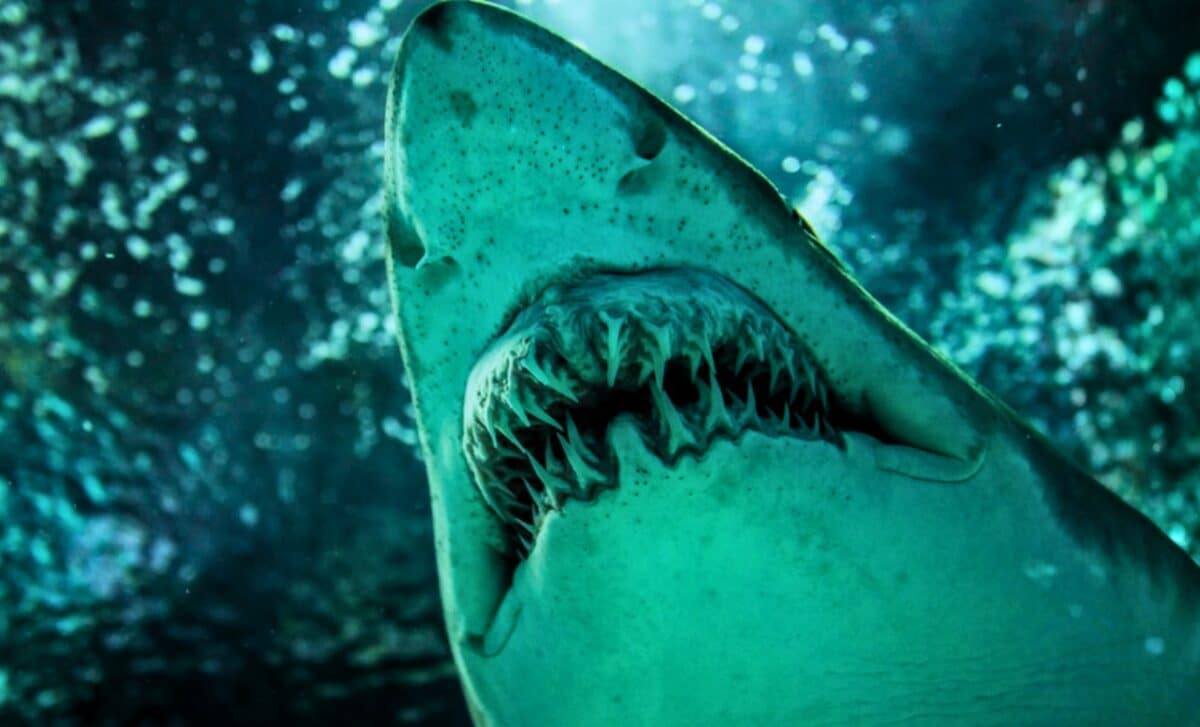
For a shark that vanishes almost as quickly as it appears, the great white has left behind a surprisingly messy family history. Paleontologists have spent decades arguing over which extinct line produced the modern species, often with little more than isolated teeth to work with. Then Peru delivered another clue.
In January 2025, researchers in Lima unveiled a nearly complete Cosmopolitodus hastalis fossil from the Pisco Basin, about 235 kilometers south of the capital. The shark lived roughly 9 million years ago, in waters that covered what is now one of the driest stretches of coastal Peru. Reuters reported that the fossil included a large jaw and evidence of stomach contents, with remains of sardines preserved inside.
That detail matters because complete shark fossils are rare. Cartilage does not preserve as readily as bone, so ancient sharks are usually reconstructed from loose teeth. Mario Urbina, speaking at the Lima presentation, put it plainly: “There are not many complete shark (fossils) in the world.”
A Shark Built for Open Water
The Peru fossil belongs to an extinct mackerel shark closely related to the modern great white, according to Reuters. Adults of the species could reach nearly seven meters in length, while their teeth measured up to 8.9 centimeters, or about 3.5 inches. The fossil was described as nearly complete and exceptionally well preserved, a combination that gives paleontologists more than the usual handful of clues.
Cesar Augusto Chacaltana of Peru’s geological and mining institute, INGEMMET, said the remains showed “exceptional fossilization.” Reuters also reported that the shark likely fed heavily on sardines, with Urbina noting that anchovies had not yet appeared when this predator cruised the southern Pacific.

The setting adds another layer to the story. The Pisco Basin is a desert today, but it is also one of South America’s richest marine fossil regions. Reuters noted that Peruvian researchers have recently presented other major finds from the same broad area, including a juvenile crocodile fossil more than 10 million years old and the skull of an enormous river dolphin that lived around 16 million years ago.
Peru’s Earlier Fossil Already Changed the Debate
This is not the first time Peru has complicated the great white’s backstory. In 2009, the Florida Museum of Natural History described a 4- to 5-million-year-old fossil from Peru that preserved a complete jaw with 222 teeth and 45 vertebrae. For shark paleontology, that kind of specimen is unusually informative. The museum said most ancient shark species are known only from isolated teeth, while this animal preserved the teeth in place, allowing researchers to study how they sat in the jaw and how their shape varied by position.
Based on tooth size and growth rings in the vertebrae, the Florida Museum team estimated that shark was about 20 years old and 17 to 18 feet (5.49 meters) long, placing it in the size range of modern white sharks. Lead author Dana Ehret said, “I think that this specimen will clarify things.” He added that “when we only have isolated teeth to describe, it’s very hard to come to a definitive conclusion.”
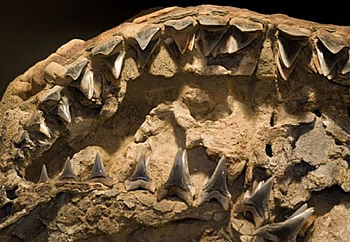
The 2009 study landed squarely in one side of a long-running dispute. One camp had argued that the great white was closely tied to the giant shark historically called Carcharodon megalodon. The other maintained that the modern great white instead descended from the broad-toothed mako shark, often identified in older literature as Isurus hastalis. The Florida Museum team backed the mako connection, concluding that megalodon and great whites were more distantly related than many paleontologists had once believed.
Teeth Tell a Subtler Story than Size
The crucial evidence was not simply that the Peruvian shark was large. It was the pattern in its teeth. The Florida Museum article said the fossil showed coarse serrations, a feature associated with white sharks, but also retained characteristics linked to broad-toothed makos. Ehret described it as a transitional form: “Here we have a shark that’s gaining serrations. It’s becoming a white shark, but it’s not quite there yet.”
That helped narrow the evolutionary path. According to the museum, a transition from megalodon-like sharks to great modern whites would require changes in body size as well as major shifts in tooth serration, thickness, and enamel. By contrast, the route from broad-toothed mako sharks to great whites would require fewer changes, mainly the development of serrations and a shift in tooth orientation.

The Peru fossil unveiled in 2025 does not settle every naming dispute on its own, and the sources use different genus labels for related sharks across time. But taken together, the 9-million-year-old Cosmopolitodus hastalis specimen and the younger Florida Museum fossil point in the same direction: Peru preserves sharks that sit close to the line leading toward the modern great white.
Why These Fossils Matter
Shark evolution is notoriously hard to reconstruct because the fossil record is so fragmentary. That is why nearly complete specimens from Peru keep drawing attention. The Florida Museum called its fossil “the only fossilized partial skull of a white shark that’s ever been found,” while Reuters quoted Peruvian researchers emphasizing how uncommon complete shark remains are.
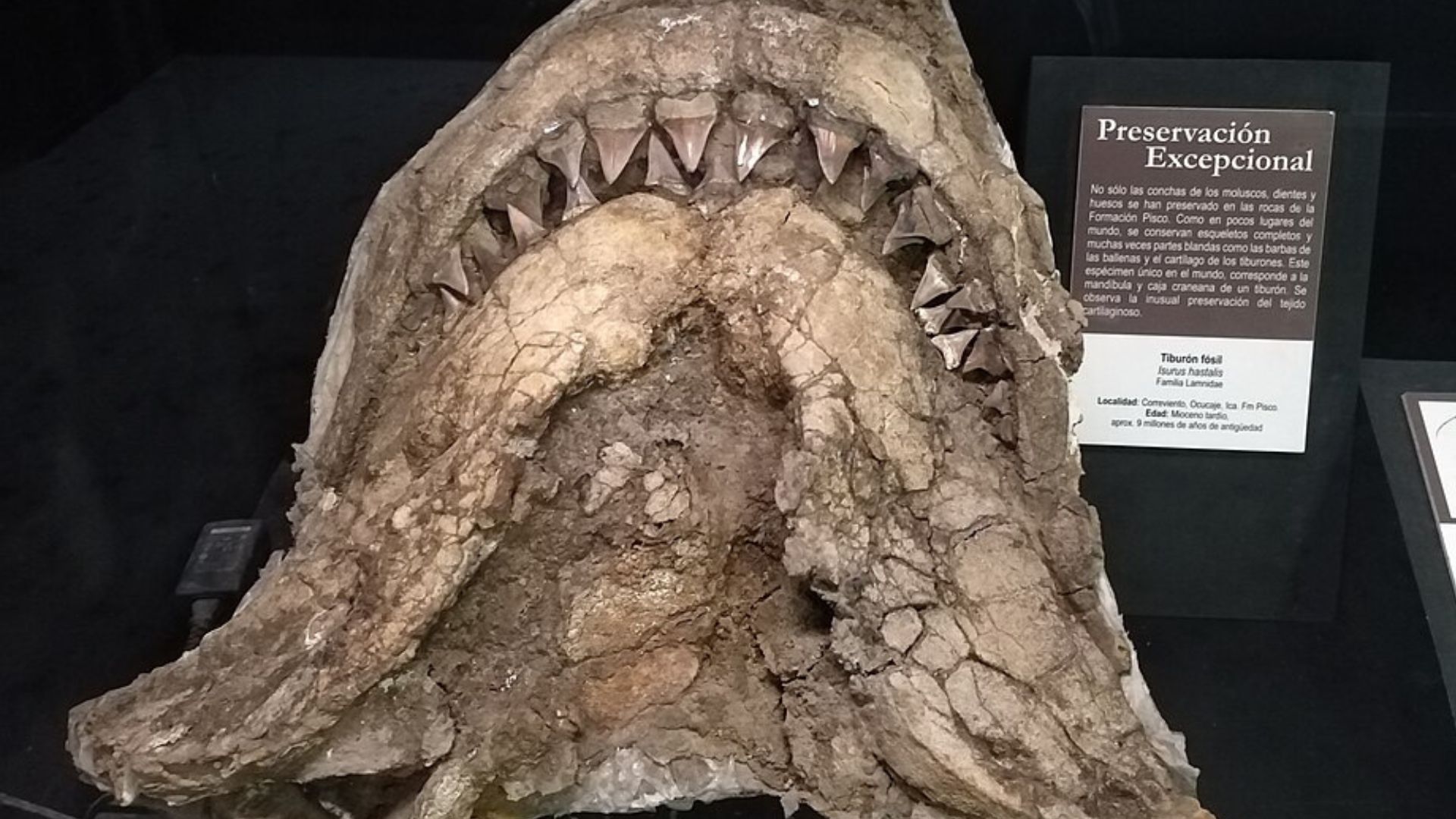
The result is a story told less by dramatic new theory than by unusually stubborn material evidence: teeth still locked in a jaw, vertebrae preserved in sequence, even a stomach meal turned to stone. In a field where single teeth have often carried too much weight, Peru’s shark fossils offer something rarer, a fuller body of evidence for how the great white line took shape.
First Appeared on
Source link






Leave feedback about this