

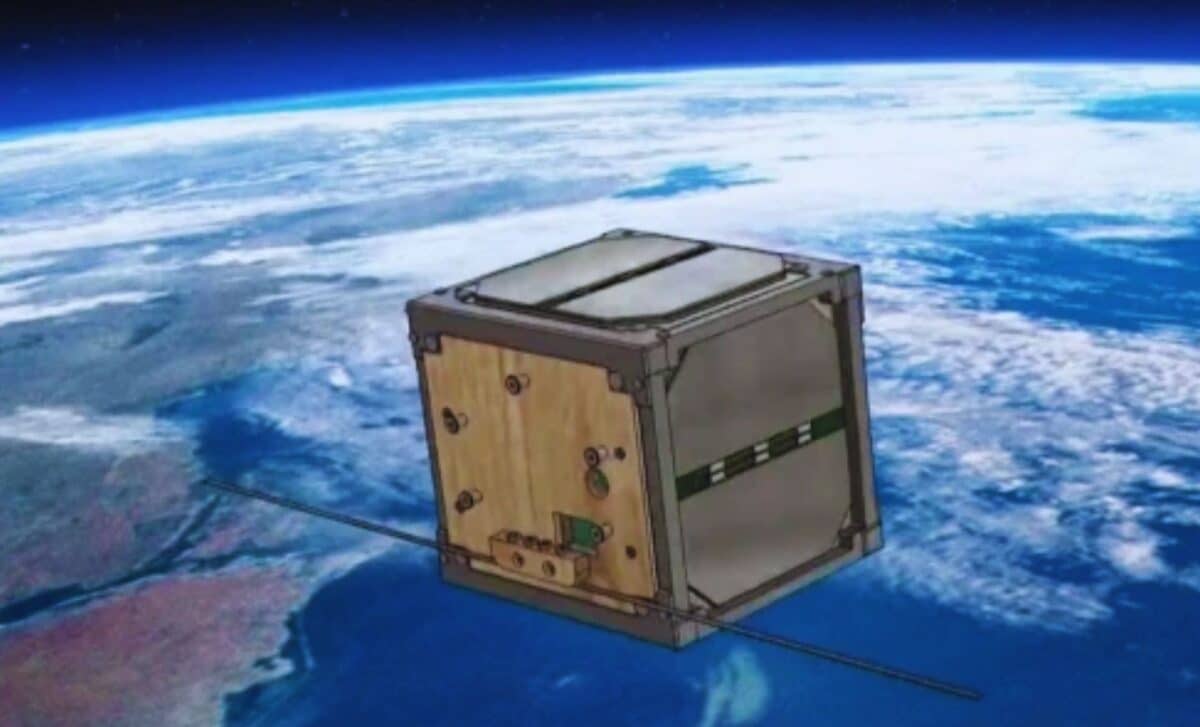
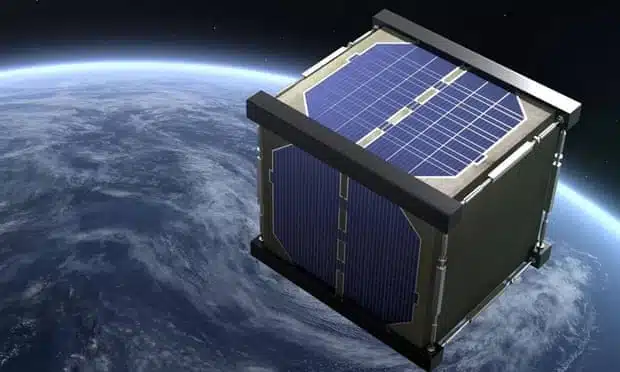
Japan is preparing to launch the world’s first wooden satellite, LignoSat, later this year. Made from magnolia wood, the satellite aims to tackle the growing issue of space pollution, particularly the aluminum particles released when traditional metal satellites burn up during re-entry.
Developed by researchers from Kyoto University in collaboration with Sumitomo Forestry, the LignoSat project explores the potential of biodegradable materials to replace the metals traditionally used in satellite construction.
Exploring the Durability of Wood in Space
Using wood in satellite construction is a revolutionary idea, but it is not as far-fetched as it might seem. According to Koji Murata, the head of the project, previous experiments, such as the study published in Earth, Atmospheric, and Planetary Sciences, have demonstrated that certain types of wood can endure the harsh conditions of space without significant damage.
Wood samples tested on the International Space Station (ISS) were exposed to space conditions for nearly a year and showed little to no signs of degradation. Murata explained this by the lack of oxygen and living organisms in space, which would normally cause wood to decompose on Earth.
LignoSat will undergo similar tests once launched, providing further insights into how wood performs under the extreme temperatures, vacuum, and radiation of space. The satellite, as stated by NASA, features:
“The final design used 10 cm long honoki magnolia wood panels assembled with a Japanese wood-joinery method.”
Combating the Growing Issue of Space Junk
The main environmental concern that LignoSat aims to address is the pollution caused by space debris, particularly aluminum particles. When satellites re-enter Earth’s atmosphere, they burn up and release these particles, which can remain in the upper atmosphere for years. Takao Doi, a Japanese astronaut and aerospace engineer, pointed out that:
“All the satellites which re-enter the Earth’s atmosphere burn and create tiny alumina particles, which will float in the upper atmosphere for many years.” He added, “eventually, it will affect the environment of the Earth.”
Murata stated that one of the missions of the satellite is to measure the deformation of the wooden structure in space.
“Wood is durable and stable in one direction but may be prone to dimensional changes and cracking in the other direction,” he explained.
If successful, this project could pave the way for the use of biodegradable materials in satellite construction.
First Appeared on
Source link






Leave feedback about this