


After years of debate, scientists have finally solved the mystery of the Silverpit Crater beneath the North Sea. New research confirms that a 160-meter-wide asteroid struck the seabed around 43 to 46 million years ago, causing a massive tsunami that reached over 100 meters high.
Located about 700 meters beneath the seabed, Silverpit has been the subject of much debate since its discovery in 2002. While some scientists thought the crater was the result of an asteroid impact, others suggested it could be caused by things like salt movement or volcanic activity. Now, with this new evidence, the case for the asteroid impact theory is settled once and for all.
A Breakthrough in Seismic Imaging
Dr. Uisdean Nicholson from Heriot-Watt University explains that the breakthrough came with the use of new seismic imaging technology. According to a study avaliable on Nature Communications, the team also examined rock samples from below the seabed, which led to the discovery of “shocked” quartz and feldspar crystals, minerals only formed under the extreme pressures of an asteroid impact.
“We were exceptionally lucky to find these,” Nicholson said. “These prove the impact crater hypothesis beyond doubt, because they have a fabric that can only be created by extreme shock pressures.”
This is a big deal because it gives scientists a rare look at what happens after an asteroid strike.
The Explosion That Created Silverpit
The asteroid that caused the Silverpit Crater struck the seabed with such force that it sent a massive plume of rock and water over 1.5 kilometers high. Dr. Nicholson explained that this explosion triggered a tsunami over 100 meters tall, likely causing widespread destruction.
“It created a 1.5-kilometer high curtain of rock and water that then collapsed into the sea, creating a tsunami over 100 meters high.”,” Nicholson said.
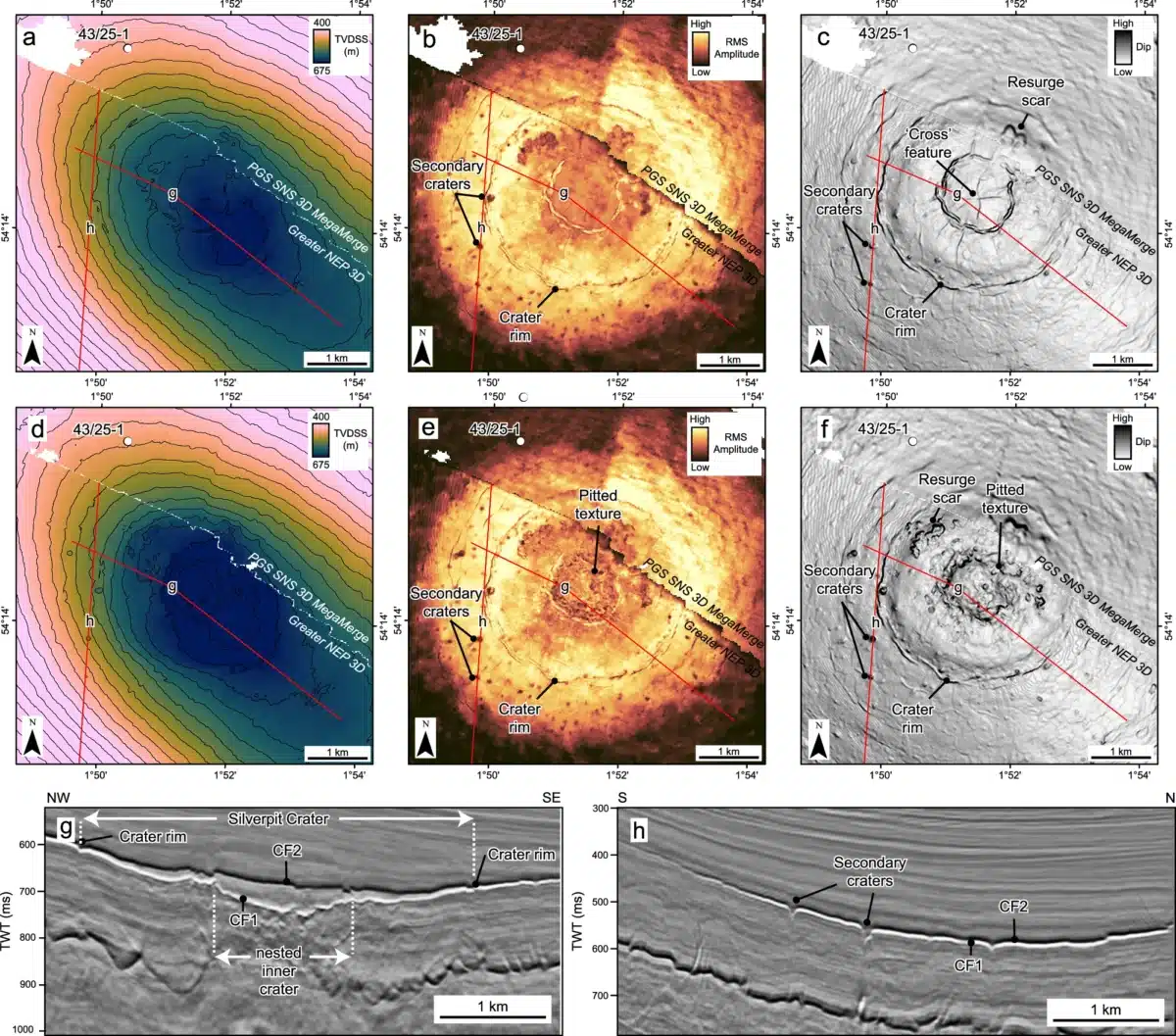
Silverpit: A Crater Like No Other
Scientists are now comparing it to famous craters like Chicxulub in Mexico, which is linked to the mass extinction event that wiped out the dinosaurs. As Professor Gareth Collins from Imperial College London pointed out:
“I always thought the impact hypothesis was the simplest explanation and most consistent with the observations.”
With only around 33 confirmed impact craters under the ocean, Silverpit’s exceptional preservation provides a unique chance for scientists to study the lasting effects of such events. As Dr. Nicholson put it:
“Silverpit is a rare and exceptionally preserved hypervelocity impact crater… These are rare because Earth’s dynamic nature—plate tectonics and erosion—destroys most traces of these events.”
First Appeared on
Source link






Leave feedback about this