

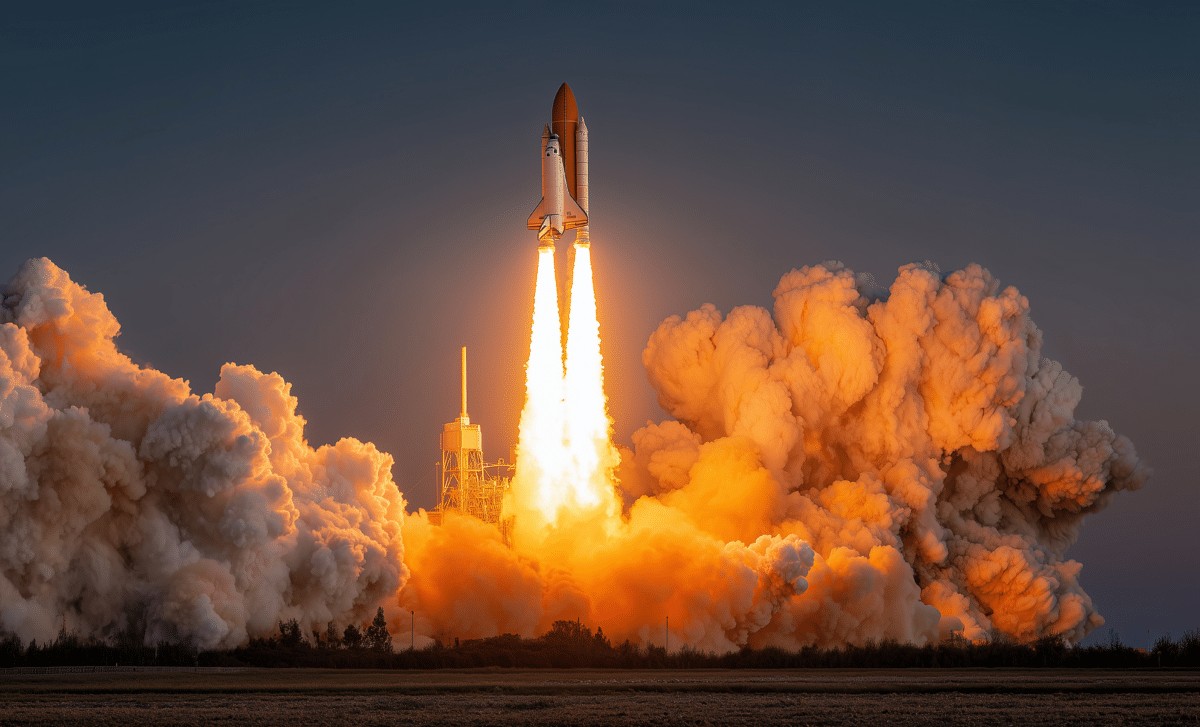
Former SpaceX engineer, Halen Mattison, and his startup, General Galactic, are looking to revolutionize rocket propulsion by turning water into rocket fuel. Their ambitious project, discussed in detail by Wired, promises to explore new frontiers in propulsion technology, with a potential for long-term space travel. This article takes a deeper dive into their visionary plan, the challenges ahead, and the potential for water-powered propulsion in future missions to the Moon, Mars, and beyond.
The Vision of Building a Gas Station on Mars
Space exploration, particularly manned missions to Mars and the Moon, has long been a dream for scientists and engineers. But behind this dream lies a daunting question: how do we fuel these long-distance journeys? The vision of a sustainable, self-sufficient space program often includes the idea of refueling stations that can provide energy for spacecraft far from Earth. As highlighted by Wired, Halen Mattison, CEO of General Galactic, has a unique solution in mind: using water as rocket fuel. As he explains, “Everybody wants to go build a moon base or a Mars base or whatever. Who’s going to pay for it? How does it actually work?” Mattison’s company aims to build a refueling station on Mars, leveraging water as the key resource. This vision could change how future missions are executed, ensuring that astronauts and spacecraft can travel further with fewer logistical hurdles.
The idea revolves around using water found on Mars (or the Moon) as a resource to generate hydrogen and oxygen through electrolysis. These gases can then be used as rocket fuel. This technology, if successful, could open the door for future refueling networks that span the space between Earth, the Moon, and Mars. Mattison envisions not just a single refueling station on Mars but a “refueling network” that connects various stations across space. This could drastically reduce the cost and complexity of space exploration, making it more accessible to future missions and even private enterprises.
This meaningfully changes the economics of spaceflight and space operations. We’re talking about Billions of dollars in savings (today!), and soon to be Trillions of new economic growth opportunity as we build complete mission services and dedicated full-stack operations on top… pic.twitter.com/QVt3PKB6wx
— Halen Mattison (@HalenMattison) February 9, 2026
The Science Behind Water-Powered Propulsion
The process of using water as rocket fuel involves two main technologies: electrolysis and plasma propulsion. By splitting water into hydrogen and oxygen, General Galactic aims to use these gases in both chemical and electrical propulsion systems. In chemical propulsion, hydrogen and oxygen are burned together, generating a high-pressure thrust, similar to how conventional rockets work. In electrical propulsion, a magnetic field accelerates ionized oxygen into plasma, providing thrust. As Mattison explains, “it’s very, very low thrust. People jokingly like to call it a burp in space.” This type of propulsion could be used for small, precise maneuvers, while the chemical propulsion would be more suited for powerful bursts of speed.
However, the challenges of using water as rocket fuel are significant. Water must be purified, electrolyzed, and stored efficiently, and the entire system must be light enough to be feasible in space. The process of turning water into fuel could also introduce potential risks, such as the effect of ionized oxygen on satellite electronics, a concern voiced by General Galactic consultant and former NASA technologist Ryan Conversano. Despite these hurdles, Mattison and his team are determined to prove that using water as fuel is not only possible but could be the future of space travel.
The Economic and Practical Challenges of Mars Exploration
While the technological aspect of water-based propulsion is exciting, the economic side of space exploration is equally challenging. The cost of building infrastructure on Mars, including refueling stations, is astronomical. Mattison points out a key problem: “Who’s going to pay for it?” The vision of a sustainable space program requires collaboration between governments, private companies, and possibly even international space agencies. Mattison’s solution is to build a profitable venture around the refueling network. If they can prove that water-powered propulsion is not only viable but cost-effective, it could open the doors for investors and governments to fund the necessary infrastructure.
Moreover, the idea of a refueling station on Mars raises questions about the long-term sustainability of space exploration. How will humans extract and utilize resources from celestial bodies like Mars and the Moon? How will spacecraft be able to dock, refuel, and continue their journeys back to Earth? These questions remain largely unanswered, but Mattison’s vision represents a first step toward solving them. General Galactic’s project aims to test the feasibility of using water as a sustainable fuel source in the harshest environment imaginable: outer space.
Testing the Concept: Satellite Launch in 2026
To prove the concept of water-based rocket fuel, General Galactic is planning a satellite launch in October 2026. The 1,100-pound satellite will be launched on a SpaceX Falcon 9 rocket, marking the first test of this revolutionary propulsion technology. The company will test the use of water in both chemical and electrical propulsion systems, monitoring how efficiently water can be converted into hydrogen, oxygen, and plasma. This satellite launch represents a bold leap forward, testing a technology that could dramatically change how we think about fuel in space.
If the experiment succeeds, it could pave the way for future missions that rely on in-situ resources, such as water found on other planets, to fuel spacecraft for long-duration missions. This could be a game-changer for space agencies like NASA and private companies planning future manned missions to Mars, as it would remove the dependency on Earth-based fuel supplies.
First Appeared on
Source link





Leave feedback about this