

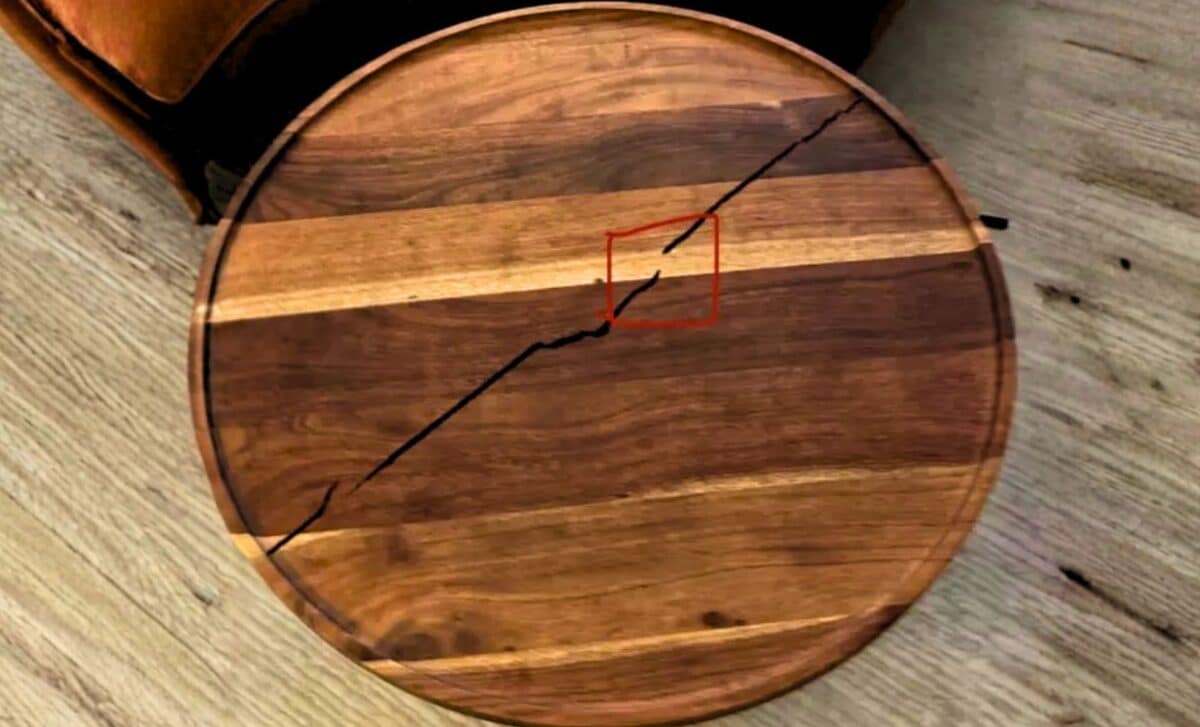
It began with a crack in a wooden coffee table that refused to stay still. In one photograph submitted to Airbnb’s dispute resolution center, the fissure ran deep along the grain. In a second image of the same table, the crack had shifted, changing shape and direction.
To the automated systems and support agents processing the claim, these images were initially accepted as sufficient proof to demand thousands of dollars from a guest. To a digital forensics eye, however, they represented something far more troubling: the crack had likely been “hallucinated” by generative AI.
The incident involving a Manhattan superhost and a London-based academic has since become a seminal case study in the weaponization of synthetic media. It demonstrated that the tools used to create art or edit vacation photos could just as easily be deployed to manufacture evidence of events that never occurred.
The ‘Hallucinated’ Coffee Table
The details of the case followed a pattern that has since become familiar to fraud investigators. A guest checked out of a Manhattan apartment early because she felt unsafe in the area. Shortly after, the host filed a claim through Airbnb’s AirCover protection program, alleging over $9,041 in damages. Reports by The Guardian indicate the list of destroyed items was extensive: a urine-stained mattress, a broken robot vacuum, and the now-infamous cracked table.
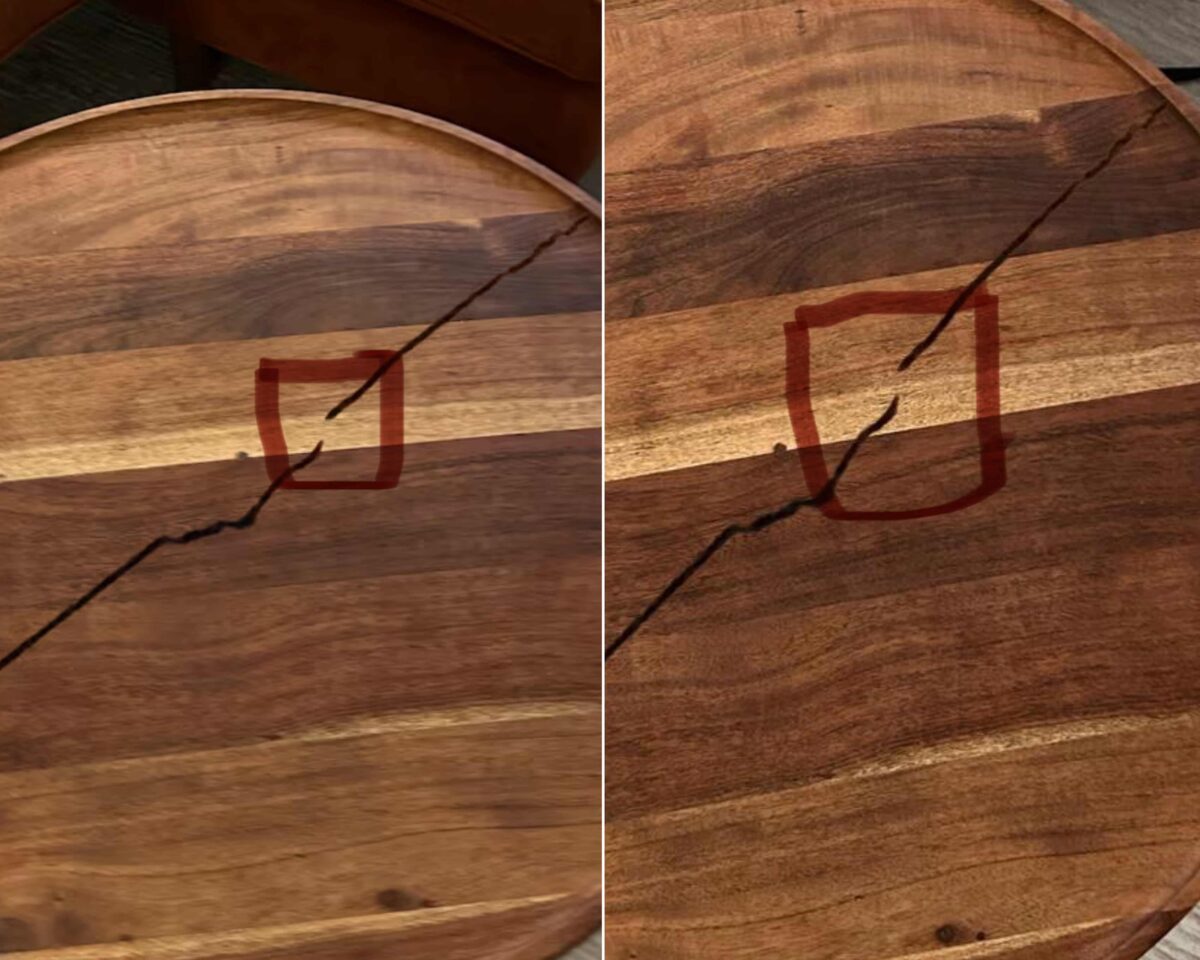
The host’s undoing was not the claim itself, but the visual evidence provided to support it. The guest, an academic who had documented the apartment’s condition upon departure, noticed that the damage to the table appeared visually inconsistent across different photos.
Digital forensic experts note that this is a hallmark of generative in-painting. When a user prompts an AI to add a crack to an object, the model generates a statistically probable image of damage. If the user runs the prompt again for a different angle, the AI generates a new crack rather than rendering the same physical object from a different perspective. The AI understands what a damaged table looks like, but it does not understand object permanence.
In this specific instance, records indicate that Airbnb initially sided with the host, demanding the guest pay nearly £5,314. Analysis from TechSpot confirmed that it was only after the intervention of consumer affairs journalists and the presentation of the visual anomalies that the platform reversed its decision, refunded the guest, and removed the host’s negative review.
Algorithmic Blind Spots: When Automated Trust Fails
For platforms managing millions of bookings, the scalability of dispute resolution relies heavily on automation. Insurance protections like AirCover are designed to be frictionless, often paying out hosts quickly to maintain supply-side loyalty. This speed creates a vulnerability that synthetic evidence exploits.
The core issue is that standard image verification systems in 2025 were largely built to detect metadata manipulation, such as altered dates or GPS tags, rather than pixel-level generation. A photograph of a “broken TV” generated entirely by AI contains no evidence of Photoshop layers because it was never edited in the traditional sense; it was created whole.
Data from the aftermath of the case suggests a pivot in how platforms handle high-value claims. Reports show that the host in question was a superhost, a status that historically granted users a presumption of veracity. The democratization of high-fidelity AI tools has effectively eroded that privilege. If a superhost can generate convincing photos of a wine-stained carpet without ever buying wine or ruining a carpet, the platform’s reputation system ceases to function as a verification layer.
Regarding the lack of initial scrutiny, the guest stated: “This should have immediately raised red flags and discredited the host’s claims if the evidence had been reviewed with even basic scrutiny, but Airbnb not only failed to identify this obvious manipulation, they entirely ignored my explanations and clear evidence that the material was fabricated.”
The Forensic Counter-Strike
The technical challenge facing the industry is that detection tools are currently lagging behind generation tools. While standards like the C2PA (Coalition for Content Provenance and Authenticity) attempt to embed a tamper-evident digital nutrition label into files, these protocols are not yet universally adopted by the cameras or software used by everyday hosts and guests.
Until cryptographically signed photos become the industry standard, the burden of proof has shifted aggressively toward the user. Legal experts in the travel sector now advise that the video walkthrough, a continuous, uncut recording of a property at check-in and check-out, is the only reliable defense against synthetic claims. Unlike static images, video is currently far more resource-intensive to fake convincingly with AI, particularly when moving through complex 3D spaces with shifting lighting conditions.
The Manhattan Incident ultimately ended with a refund and a ban, but it signaled the end of an era of informal trust. The ability to manufacture reality is no longer the domain of state actors or special effects studios; it is a customer service issue. Airbnb has since announced an internal review into its investigative protocols to address the challenge of AI-generated fraud.
First Appeared on
Source link




Leave feedback about this