At first glance, it looked like just another dinosaur fossil, but a closer inspection revealed something unexpected, something that shouldn’t have been there. The specimen, an Edmontosaurus skull found in Montana’s Hell Creek Formation, stands out for one striking reason: the tooth is still lodged deep in the bone.
According to the study published inPeerJ, finds like this are extremely uncommon and allow scientists to observe behavior directly instead of just guessing from clues. Dinosaur ecology is usually pieced together from scattered evidence like isolated bones or bite marks. This fossil, now preserved at the Museum of the Rockies, changes that dynamic.
A Fossil Tooth That Points Straight To T. Rex
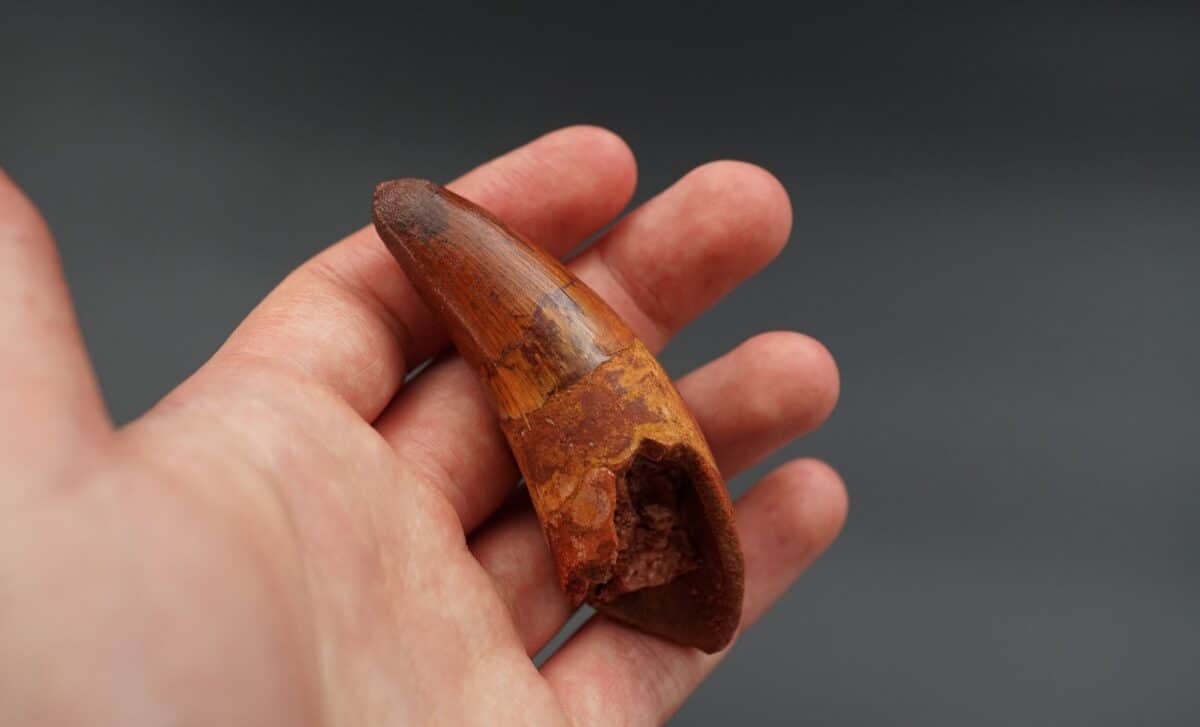
Figuring out which predator made a bite mark is often tricky. Here, things are much clearer. The tooth embedded in the skull gave researchers a chance to study its shape, size, and serrations in detail. As notedTaia C. A. Wyenberg-Henzler, a doctoral student at the University of Alberta:
“Although bite marks on bones are relatively common, finding an embedded tooth is extremely rare.” She added, “The great thing about an embedded tooth, particularly in a skull, is it gives you the identity of not only who was bitten but also who did the biting.”
As stated by the study team, those features matchTyrannosaurus rex from the same region. By comparing it with other known theropod fossils, they were able to rule out other carnivores.
3D model rendering based on CT scan data. Credit: PeerJ
CT scans also showed how the tooth entered the skull. The angle suggests a frontal strike strong enough to snap the tooth on impact. Based on the serrations, the team believes the attacker was an adult T. rex, pointing to a powerful and deliberate bite.
A Moment Right At The Edge Of Death
There are no signs that the wound healed, and that detail matters. John B. Scannella from the Museum of the Rockies said this means the Edmontosaurus either died from the bite or was already dead when it occurred.
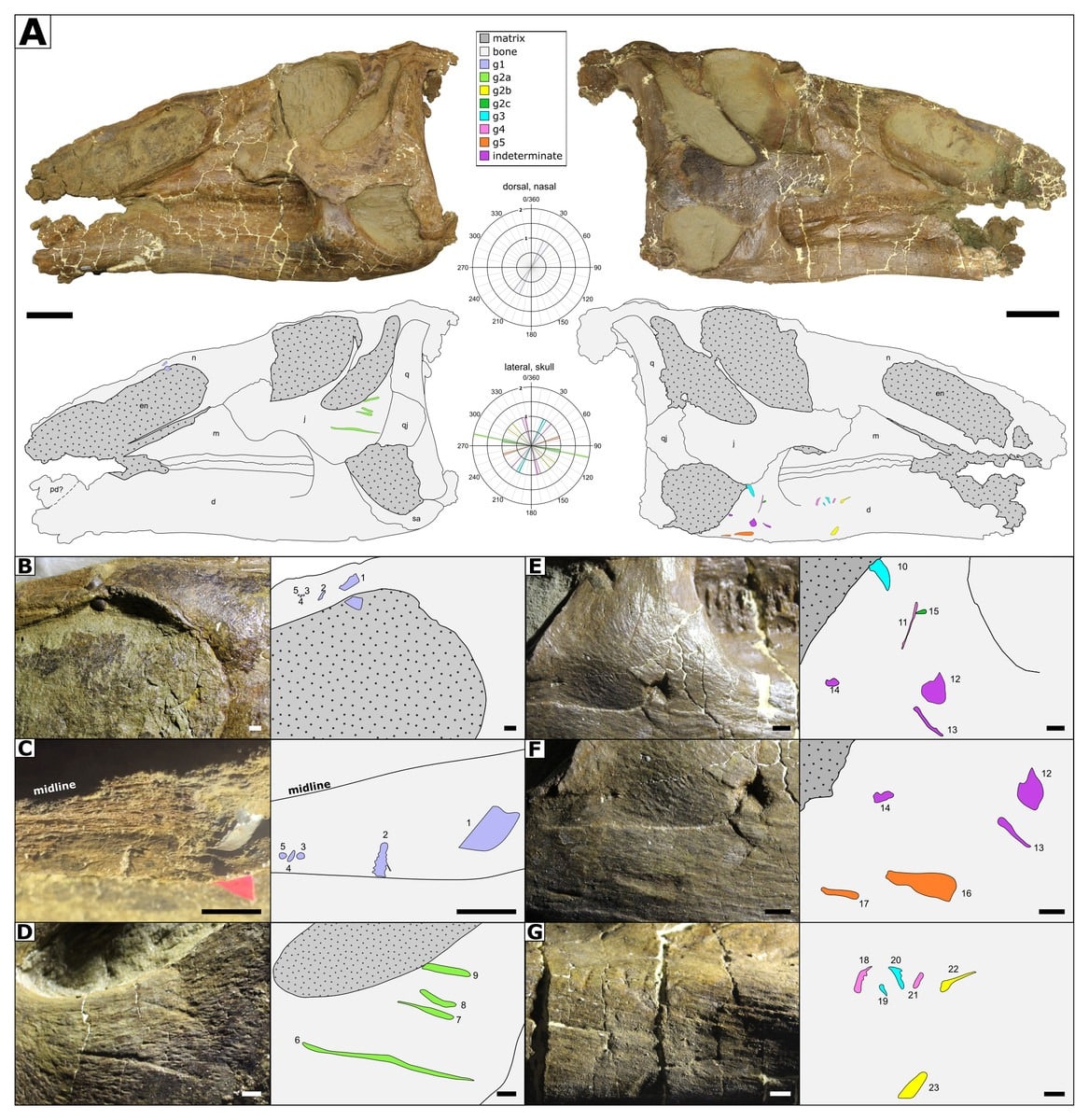
Skull with embedded tooth and associated tooth marks, showing location and orientation. Credit: PeerJ
Both options are still on the table. Still, the location of the bite on the snout suggests a close and forceful encounter. This was not a distant or casual bite. It required direct contact and serious force. The fossil does not settle the long-running debate about whether T. rex was mainly a hunter or a scavenger. What it does show is a moment that looks a lot like a lethal or near-lethal interaction, captured in remarkable detail.
“Looking at the way the tooth is embedded in the nose of the Edmontosaurus suggests that it met its attacker face-to-face, something that usually happens to an animal that was killed by a predator,” he explained.
Bite Marks That Show What Happened Next
The fossil skull also has several bite marks on both sides, behind the eye and along the lower jaw. These are areas rich in muscle in hadrosaurs like Edmontosaurus. As explained in the study, this pattern matches feeding behavior seen in modern carnivores, which go for softer tissues after the initial attack.
“The feeding habits of Tyrannosaurus, one of the largest meat-eating animals to ever walk the Earth, have been the subject of study and debate for decades,” Dr. Scannella explained.
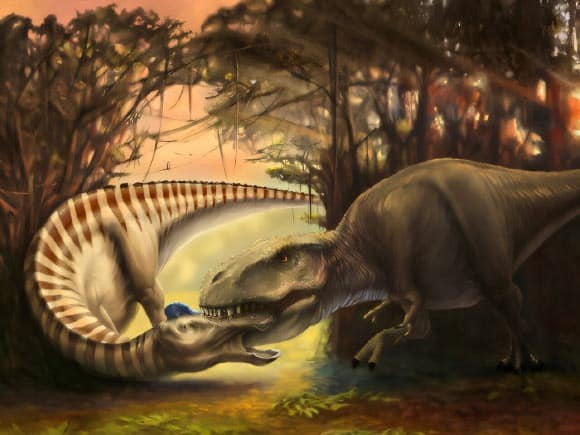
A Tyrannosaurus rex attacking an adult Edmontosaurus. Credit: Jenn Hall/Montana State University/Museum of the Rockies
The marks suggest the predator kept feeding on the head afterward. The fact that only the skull remains adds another clue. It likely means the rest of the body had already been eaten or scattered.







Leave feedback about this