

Who’s really running Iran? Key power players amid Trump’s ‘top’ official talks
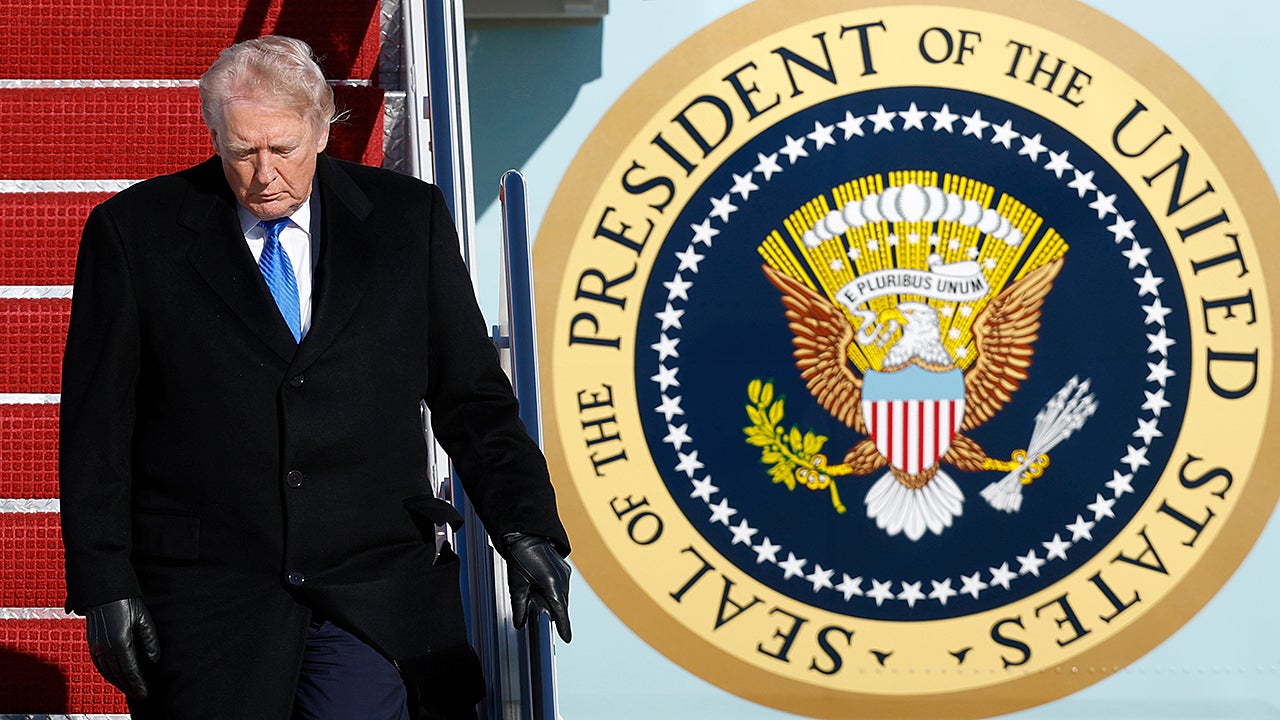
“Nobody knows who to talk to,” President Donald Trump said Tuesday at the White House, describing what he portrayed as both chaos and opportunity inside Iran’s leadership.
“But we’re actually talking to the right people, and they want to make a deal so badly.”
His remarks come as the U.S. claims it is engaged in talks with a “top” Iranian figure, even as Tehran publicly denies negotiations are taking place.
The question now is not just whether talks are happening, but whether anyone in Tehran has the authority to deliver.
With strikes on senior Iranian leadership and growing internal fractures, Iran appears to be operating less like a centralized theocracy and more like a wartime system run by overlapping power centers, with the Islamic Revolutionary Guard Corps (IRGC) at its core.
The IRGC: The real power behind the state
Across intelligence assessments and recent reporting, one conclusion is consistent: the Islamic Revolutionary Guard Corps has emerged as the dominant force in Iran’s political system.
Behnam Ben Taleblu, senior fellow at the Foundation for Defense of Democracies, said the current moment is accelerating a long-standing trend.
“No doubt both the 12-Day war and this current conflict have trimmed the commanding heights of the Islamic Republic’s political and military leadership,” he said. “But it has also expedited the trend lines inherent in Iranian politics, which is the dominance of the security forces and the ascendance of the IRGC.”
The command room: Supreme National Security Council
If the Islamic Revolutionary Guard Corps is the power in Iran, the Supreme National Security Council appears to be the mechanism through which that power is exercised.
The Supreme National Security Council is Iran’s top forum for coordinating military and foreign policy, bringing together senior Islamic Revolutionary Guard Corps commanders and government officials under the authority of the supreme leader. It was established after the 1979 revolution and has played a central role in managing major crises, from nuclear negotiations to wartime operations.
Mojtabā Khamenei: The supreme leader in name
Formally, Iran’s system centers on Supreme Leader Mojtaba Khamenei. But his actual grip on power remains uncertain.
Ghalibaf: The man at the center of Trump’s claim
Trump’s statement that he is speaking to a “top person” has focused attention on one name in particular: Mohammad Bagher Ghalibaf.
Araqchi: The diplomat carrying messages
Foreign Minister Abbas Araqchi remains one of the most visible figures internationally.
If talks were to take place, Araqchi likely would be part of the Iranian delegation alongside Ghalibaf, Reuters reported.
The wider power circle: generals, clerics and enforcers
Beyond the headline figures, a broader group of officials who continue to shape Iran’s direction can be identified.
These include Islamic Revolutionary Guard Corps chief Ahmad Vahidi, Quds Force commander Esmail Qaani, naval commander Alireza Tangsiri, Judiciary Chief Gholamhossein Mohseni-Ejei, President Masoud Pezeshkian, and senior clerical and political figures such as Saeed Jalili and Ayatollah Alireza Arafi.
This is an excerpt from a report by Efrat Lachter.
First Appeared on
Source link
Leave feedback about this