

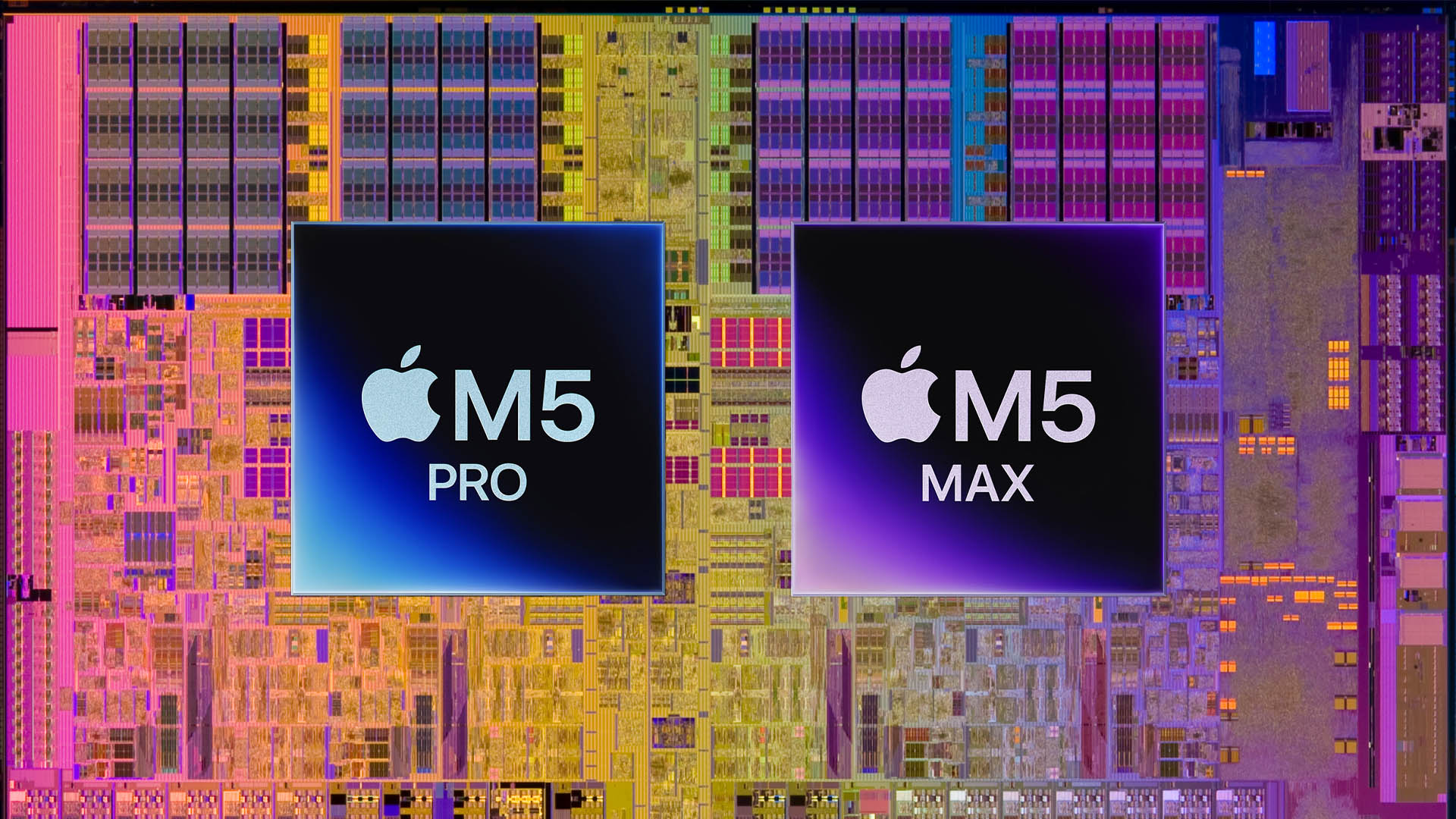
Apple’s new ‘Fusion Architecture’ was utilized for the first time when the company unveiled the M5 Pro and M5 Max, enabling the two SoCs to sport a unique chiplet design that is more advanced than the monolithic architecture that has been incorporated on previous Apple Silicon.
Typically, the new chipsets would sport a 2.5D design where individual blocks are present on separate areas of the die, but one Apple employee hailing from the latter’s platform architecture mentions in the latest interview that the M5 Pro and M5 Max flaunt vertically stacked dies, which comes as a major surprise since this change has a multitude of benefits.
Apple’s Anand Shimpi says the company learned from the M3 Ultra’s UltraFusion interposer, allowing for the M5 Pro and M5 Max to feature newer packaging technology
The former head of Anandtech, Anand Shimpi, is currently on Apple’s payroll and is seated in the firm’s Hardware Technologies department. Shimpi sat down with German publication Heise online to offer more details on the M5 Pro and M5 Max, with one of the biggest changes to the newest Apple Silicon family being the introduction of stacked dies.
Thanks to the experience gained by the M2 Ultra’s and M3 Ultra’s UltraFusion architecture, the new Fusion Architecture was successfully applied to the M5 Pro and M5 Max. While we have yet to take a gander at the die shots to confirm this packaging, chips that are stacked typically mean that each block is placed on top of one another, forming a high-bandwidth, low-latency interface that is also thoroughly power-efficient.
“It’s essentially a newer version of a similar concept. With the earlier Ultra chips, we combined two identical SoCs to create a larger SoC. Now, we’ve actually split a number of functions across two different dies. They aren’t mirror images of each other; we’ve incorporated separate IP blocks for each.”
Stacked dies would mean that the M5 Pro and M5 Max mimic a design similar but not equivalent to 3D packaging, where both CPU and GPU blocks would have other components placed on top of each other in sandwich form, enabling significantly faster communication between each component. However, depending on which parts are vertically stacked, the performance boost has a trade-off of increased temperatures due to the combined heat of the stacked parts.
However, in a previous multi-core stress test, the M5 Max ended up obtaining lower temperatures than the M4 Max. What’s also interesting is that while Heise online says that Anand Shimpi is Apple’s platform architecture employee, an X thread started has a reply from @IanCutress who says that Shimpi is in competitive analysis and optimization. In short, the technology outlet could be incorrect about the stacked dies comment, so we will advise readers to treat this information with a pinch of salt and wait for further updates.
News Source: Heise online
Follow Wccftech on Google to get more of our news coverage in your feeds.
First Appeared on
Source link






Leave feedback about this