

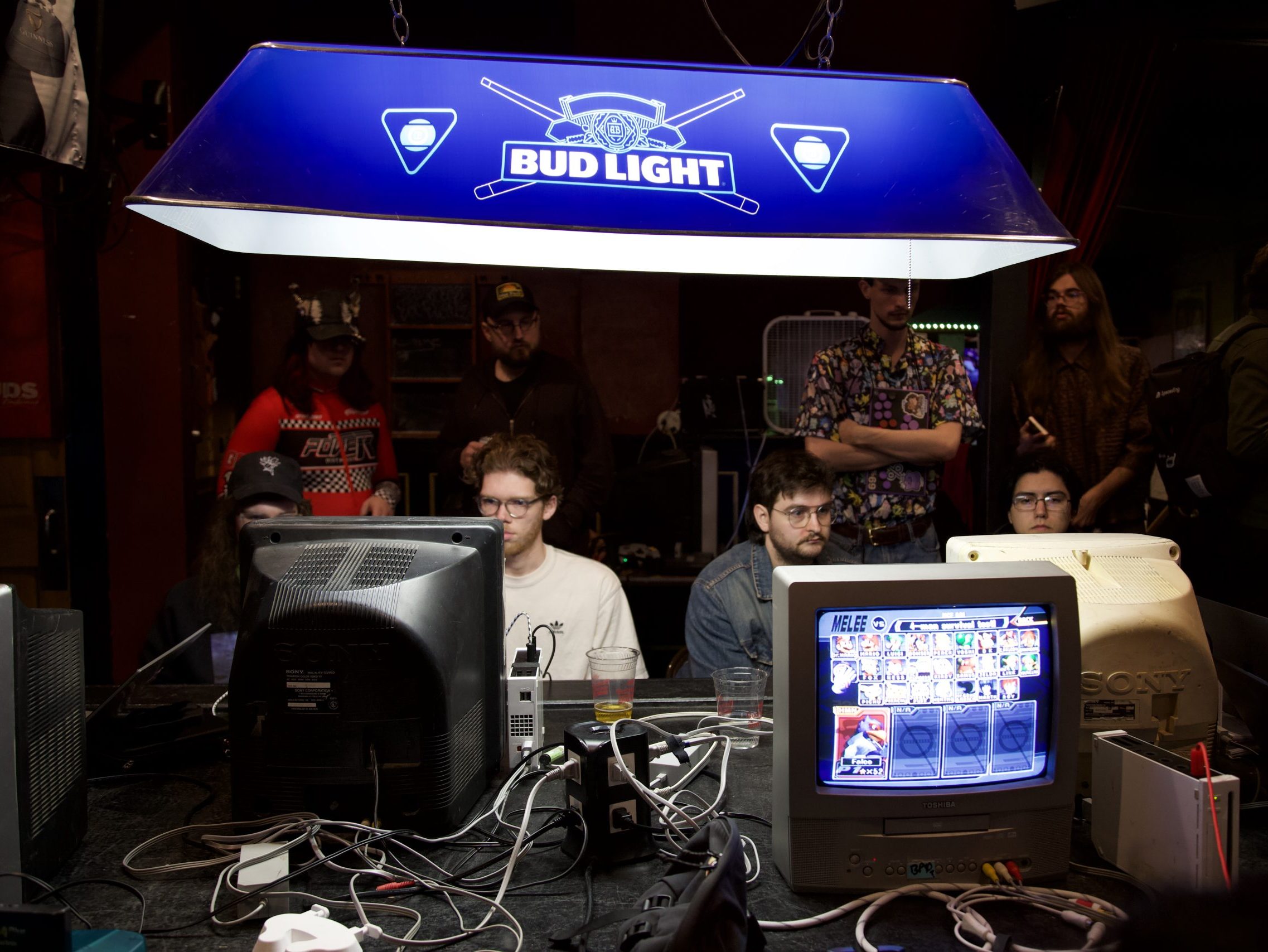
It was Tuesday night at the Abbey Tavern, and Joe hung his head in defeat. He begrudgingly fist-bumped his opponent, checked his phone, and sauntered off to a dark corner of the bar.
This was a scene that likely unfolded at bars the world over that night. Somewhere else, Joe might have been the friend who played a serious game of billiards, or a member of a rather competitive darts league.
Only Joe — better known by his nom de guerre gamer tag, Megaman — was not playing darts or pool, as advertised by the mural at the tavern’s entryway. Here, at 4100 Geary Blvd. in the inner Richmond, he was playing “Super Smash Bros. Melee,” a video game that came out nearly 25 years ago.
Nintendo stopped making the Gamecube, the console it was designed for, almost 20 years ago.
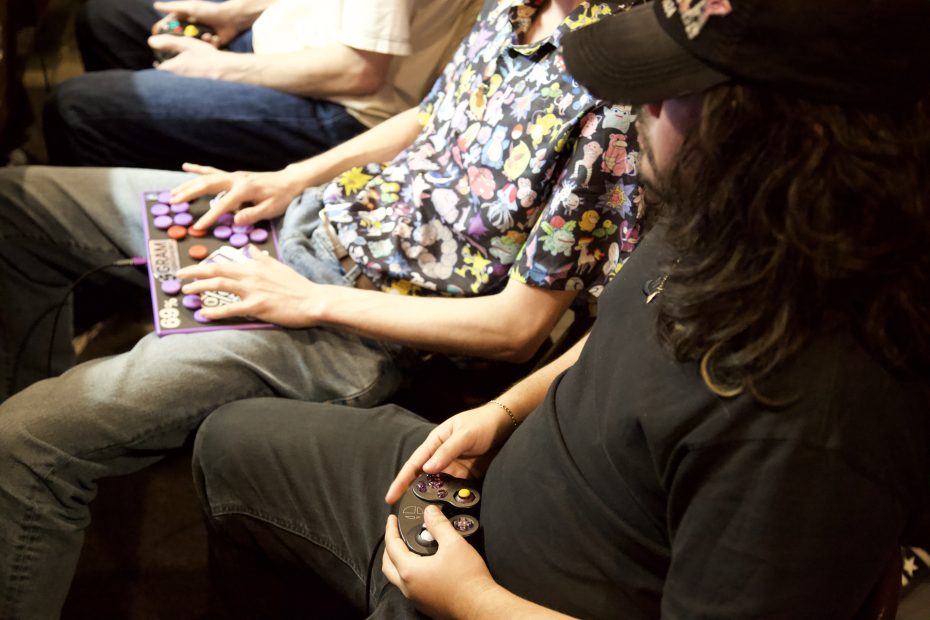
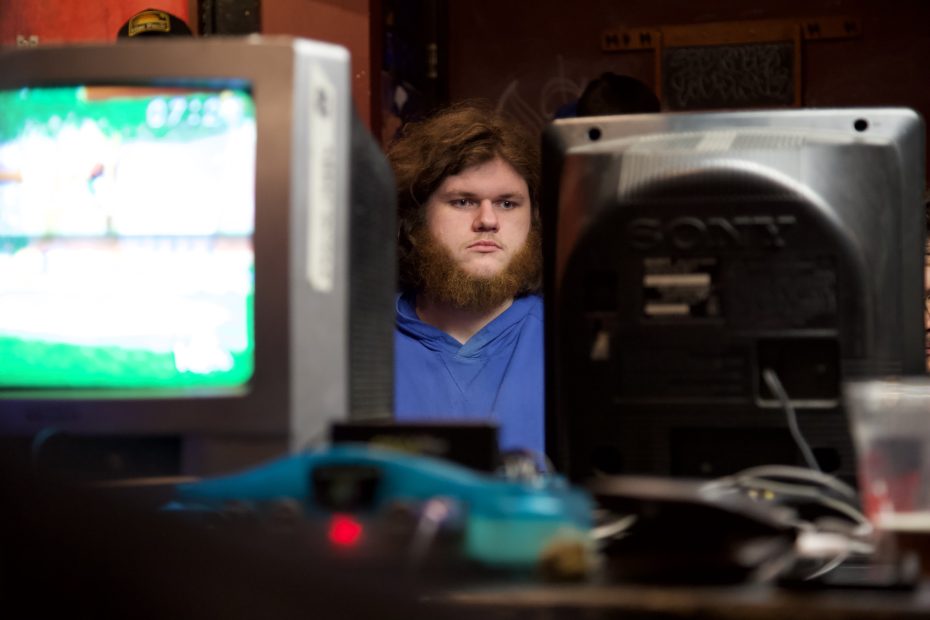
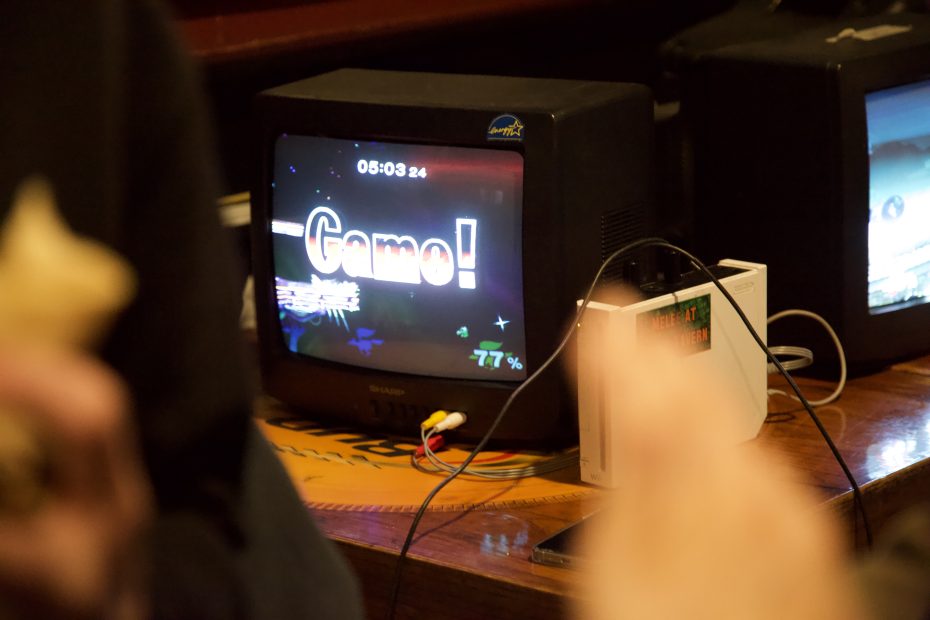
But, on Tuesdays, obsolescence has no match at Abbey Tavern. Boxy cathode ray ‘boob tube’ monitors line the billiards table. Wii consoles (which, thanks to backwards compatibility, can play Gamecube games) are connected to the tubes via a sophisticated if disorganized array of cables. Except for their fingers fiddling (often custom) controllers, players sit ever still on barstools and fold-up chairs. They fix their gazes on the pixels before them, as do the spectators over their shoulders.
Overhead, a flag bears the image of Joe Montana, holding a football in one hand and a pint of stout in the other. “Game Time Guinness Time,” the flag reads. By the looks of it, at least some around the table seem to agree.
“Melee” is the second game in Nintendo’s “Super Smash Bros.” fighting game franchise. Players can choose to play with avatar-characters from games across Nintendo’s intellectual property — ranging from household names like Mario and Pikachu, to more obscure characters like Marth from the Japanese “Fire Emblem” games, or the Ice Climbers duo from their eponymous 1985 game. Each character comes stocked with certain moves and abilities — Pikachu shoots lightning, Marth has a sword. The game is essentially a cage match fight to the death, replete with all the colorful, effusive visuals of the Super Mario games of the early aughts.
But ”Melee” was also a bit of a rushed job. Its developers knew that their design made certain exploits available, but they left them in for players to discover, or perhaps just to meet their deadline. In so doing, however unintentionally, they created what many agree to be the most technically complex competitive video game ever made.
Over the years, players have essentially reverse-engineered the game, figuring out convoluted combinations of perfectly timed button-presses that afford players certain advantages, like faster or more efficient movement. Tournaments allow players to prove their skills, and share notes.
At Abbey Tavern, nearly 50 people weekly surrender the $5 entry fee to be pooled in the “Melee” tournament. Another $5 venue fee also goes to the bar, but is waived for out-of-town carpoolers, of which there are many.
In the last year or two, according to the tournament’s founder Nate Gallagher, the event has consistently reached its maximum of 50 participants almost every week. Sometimes there’s a waitlist. Competitors come from as far as Sacramento, and as nearby as a few blocks away.
“Everybody around the country, if they know about ‘Melee,’ they know about this tournament,” said Gallagher, as the bar filled up with contenders. He’s been organizing “Melee” tournaments since 2019, and holding them at Abbey Tavern since 2023.
It’s all volunteer-run. Organizers source old tech from e-waste recycling sites. On tournament nights, some arrive early to set up, and others stay late to break down. They sign in participants, keep track of games, and take care of technical difficulties. The whole thing goes from 5:30 PM until around midnight. And they stream it all on Twitch. Save the tournament’s victor, nobody earns a dime.
The tavern also gets its cut. Claye Fowler has been behind the bar at Abbey Tavern’s “Melee” nights since 2023, shortly after Gallagher and his team began organizing there.
“It’s become my most lucrative night,” Fowler said. “I know everyone’s name, what they drink, so we’ve got a pretty good rapport going.”
He and some of the regulars call Tuesdays “nerd night“ — a term of endearment, he promised.
A few other grassroots gatherings, Gallagher mentioned, stand to rival Abbey’s popularity — one in New York City and one in Southern California. But neither is quite like Abbey, with its admixture of social levity and intense competition.
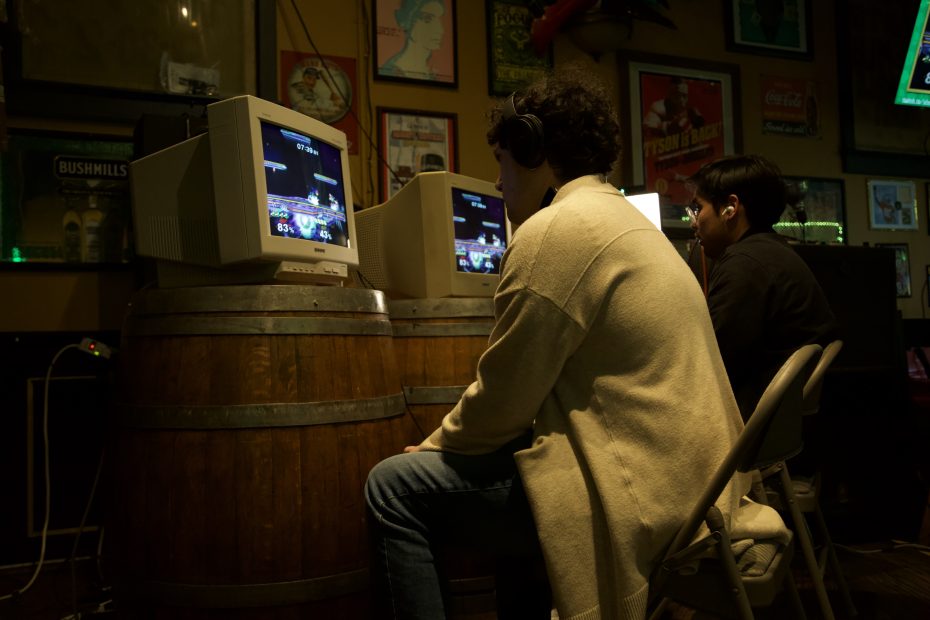
“People who are very, very good at the game, they’re spending a ton of time studying, grinding different matchups and situations to get an edge in this highly competitive field,” Gallagher said. Around the corner, two of the tavern’s decorative beer barrels served as TV stands for a close matchup. “Here it’s a little different, it’s a little more friendly,” he went on, but “we do have some really high-level competition.”
Take organizer and player Katie “Spaghetti” Hambleton, for example: “I’m not super competitive, I’m just here for the homies, and the friends,” she said, early into one evening. At the next week’s tournament, Hambleton revealed that she had “so many pages of notes on, like, every character.”
Many take a sort of athlete’s attitude to the game. Playing “Melee” competitively “teaches you a lot about yourself,” said Luke “MrDittoFazzy” Jozen.
“It teaches you how to take a loss, how to put your ego on the line, how to show up every week and get your ass beat, every week, and to go home, grind, get better, come back, put your ego on the line and lose again.”
Then there’s Aerius. By day, Jefferson Ho, 26, works in his family’s contracting business. At Abbey, though, Aerius is basically the reigning champ and a rising star. At a recent tournament, he wore a varsity jacket. At one before that, he arrived in a 49ers jersey with red pants to match. And he wears an all-American smile to boot.
Aerius has won almost all of Abbey’s tournaments this year, he said. He’s been playing seriously since 2017, and he’s among the top players in Northern California. He spends an hour or two every day practicing.
“This year, I’m focusing on making the top 100 global rankings,” he said. “So I have to travel around to big tournaments around the world.”
For many of those present, “The Smash Brothers,“ a four-hour-eighteen-minute documentary, has become sort of a shared gospel-mythology. Those who were evangelized by the video, first released in 2013, are referred to as “doc kids.” They have the doc to thank for introducing them to the competitive scene, and to the idiosyncrasies in the game’s design. Others have been playing the game since they were kids, or discovered the scene online or in college.
“The whole competitive scene around this is built on your technical skill, and how you can use things in the game to your advantage,” said Olivia “Papa” Meadows, demonstrating the basic “wavedash” move and a character-specific technique they call “the Marth killer.” Meadows also showed how Ice Climbers are capable of something they call “wobbling,” a technique which would grant her a nearly guaranteed kill. Wobbling has been banned from most tournaments.
“It wasn’t intended,” she said of the game’s technical depth, “and now that’s how you have to play the game to get good.”
But there’s the rub — ”Melee” wasn’t designed with this style of competitive play in mind, and Nintendo has been somewhat notoriously protective of its intellectual property over the years. In 2020, a tournament in Michigan was cancelled after its organizers received a cease and desist letter from Nintendo. They were modifying the game for online play during the pandemic using unofficial software.
That said, Gallagher and his team of volunteers seem to do everything by the book: original Nintendo hardware, physical Gamecube Game Discs purchased and owned by the tournament’s organizers. Nothing to raise any eyebrows.
“We’re very grateful that we don’t attract any attention from Nintendo,” said Gallagher, and he left it at that.
First Appeared on
Source link






Leave feedback about this