

Sign up for the Slatest to get the most insightful analysis, criticism, and advice out there, delivered to your inbox daily.
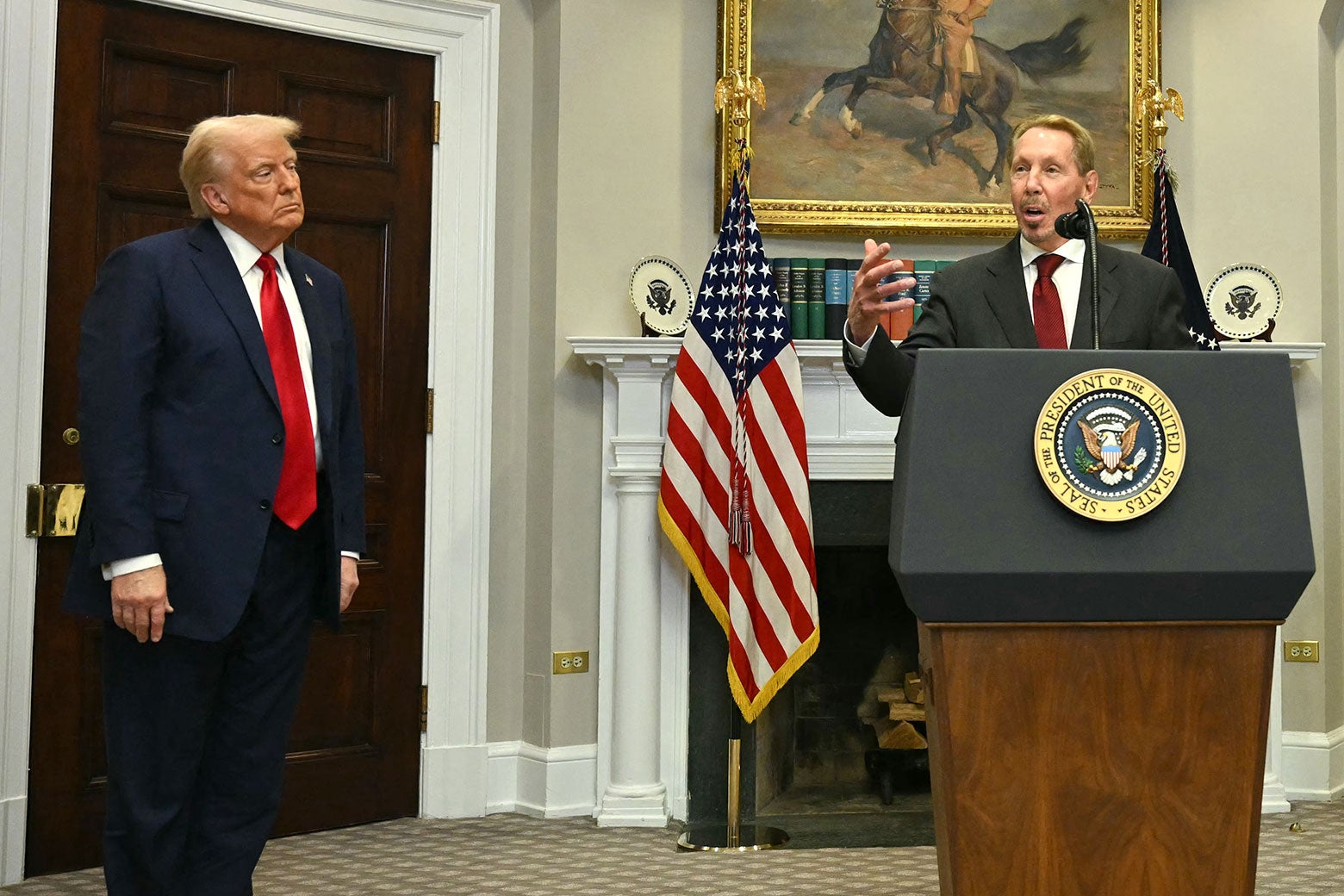
From the view below, Larry Ellison is on top of the world. His longtime friendship with President Donald Trump has paid off literal dividends for his software juggernaut Oracle, winning it a major stake in TikTok, a significant stock-price bump, and a raft of friendly A.I. deals and regulations. Those wins have ballooned his already considerable net worth, allowing him to back his son David’s expensive takeover bids for Paramount and Warner Bros. Discovery. Meanwhile, Trump has also personally supported the Ellisons’ ambitions—pulling out the stops for Paramount Skydance over Netflix in the WBD bidding war, and endorsing the father-son duo’s efforts to ideologically reshape CNN. Altogether, the Ellisons have emerged as stewards of a Trump-friendly media empire.
But if you take a closer view of just how the Ellisons are going about their consolidation effort, you’ll find that their business moves are way riskier than they’re letting on—and that the House of Ellison is much, much shakier than it appears.
For one, the debt load incurred across these purchases is staggering, and the means of covering it are no longer assured. The TikTok deal and the Warner Bros. buyout were both completed with multibillion-dollar guarantees from the sovereign funds of Gulf states like Saudi Arabia, the United Arab Emirates, and Qatar. Lately, those countries have been displeased with their American friends: The United States’ illegal, indefinite war with Iran has spurred that regime to attack its Middle Eastern neighbors in turn, heavily disrupting their economies and their overall stability. (Even worse: Iranian leaders have explicitly named Oracle’s Mideast data centers as potential military targets.) As a result, multiple international outlets have reported, the leaders of those Arab nations are seriously reconsidering their biggest investment pledges in U.S. companies—especially in A.I. and tech.
This does not portend an all-around divestment from America. But even a small pullback in Gulf spending, reoriented from U.S. businesses—like Oracle and Paramount—toward the domestic buildup of defense capacity and economic stimulus, would leave the Ellisons without billions of dollars in needed funds. (For further context: The Arab governments agreed to back at least one-fifth of the Warner Bros. takeover. And the UAE, alongside Oracle, is helping to cover an unprecedented $10 billion fee to the U.S. Treasury as part of the TikTok agreement.)
But their perils aren’t just international. Oracle’s stock, which benefited so greatly from the A.I. boom that its valuations briefly made Larry “Bad Doggy” Ellison the second-richest man in the world, is currently sitting at half the peak it reached last year. These days, there’s just a lot more skepticism over Oracle’s promised technological expansions. A few of its bondholders have sued the company, claiming it hasn’t been transparent about the heaping costs required to meet its data-center-buildout goals. In belated recognition of those construction expenses, Oracle announced earlier this month that it would freeze hiring in certain departments and potentially lay off up to 20 percent of its global workforce, while adding even more debt to its balance sheet in order to placate stakeholders. Nevertheless, investors reportedly remain uncertain that Oracle will meet all its obligations—not least since its Trump-hyped plans for a big Stargate data center complex, in partnership with OpenAI, fell through earlier this month.
Oracle doesn’t just matter here because it fundamentally centers around “One Rich Asshole Called Larry Ellison.” It also matters because Ellison could bankroll his son’s media deals largely thanks to Oracle’s soaring stock. Without that money spigot, David Ellison’s own ventures look much more perilous.
Paramount Skydance isn’t looking great either. The right-wing overhaul of CBS News has not improved the network’s fortunes, with viewership hitting record lows just months into Bari Weiss’ reign as editor in chief. (Her only solution, it appears, consists of massive layoffs rounds.) The film studios’ losses are not turning around, and there aren’t many other assets that could help cover the $14 billion debt incurred during the Paramount Skydance merger. That’s before you get to the whopping $111 billion (plus a few other multibillion-dollar fees—what is money, really?) that it took for PSKY to outbid Netflix for the Warner Bros. Discovery empire. In an attempt to stave off the lawsuits and regulatory probes likely to come his way, David Ellison has gone on a global charm offensive, claiming that PSWBD will not reduce its cinematic output, that it will not sell off the famed studio lots, that it will preserve West Coast union entertainment jobs, and that it will not have to cut costs beyond $6 billion or so.
No one’s buying that—not even Wall Street. Paramount now has a junk rating for its debt and a single-digit stock value. According to a report from the Ankler, investors and insiders are skeptical that the Warner Bros. merger is a good investment—and some also doubt the deal will formally close.
Meanwhile, the expenses keep piling up, the lawsuits are already landing, and the road ahead for PSWBD looks like a rockier haul than ever. That’s not to say the Ellisons still couldn’t pull this off: They have powerful government friends who will make the regulatory approval process much easier for them, they still have plenty of influence with other world leaders, and they could always shore up some extra cash by, say, selling off Larry’s superyacht. (Or his Hawaiian island.) But the core of the Ellison Empire’s trouble is this: It’s saddled with debt, it’s running low on disposable cash and investor confidence, and the very U.S. president who made its media deals possible is endangering them via reckless economic policy and war. Not only does the Ellisons’ gamble look less sturdy, but so do their sources of backup.
First Appeared on
Source link

Leave feedback about this